Closed guard is a fundamental BJJ position where you wrap your legs around your opponent's waist, locking your ankles behind their back. It's the first guard position every beginner learns because the locked ankles prevent your opponent from creating distance — giving you a controlled environment for posture control, grips, and your first submissions.
WHY CLOSED GUARD IS FUNDAMENTAL
Before BJJ evolved the wide spectrum of open guard variations that exist today, closed guard was the guard. It is the position that gave birth to the entire bottom game of Brazilian Jiu-Jitsu, and it remains essential because it works at every level of competition.
The closed guard is unique because it gives you a high degree of control without requiring advanced coordination. By locking your ankles, you prevent your opponent from creating the distance they need to posture or pass. This allows beginners to learn the foundational concepts of guard — posture breaking, hip movement, grip fighting — before introducing the complexity of open guard footwork.
Even at the elite black belt level, closed guard remains dangerous. The position has produced countless world championship victories and submission finishes, and it remains one of the most effective guards in self-defense scenarios where the top player may be throwing strikes.
CONTROLLING POSTURE
Everything in closed guard begins with posture control. When your opponent has good posture — hips forward, back straight, head up — they are difficult to attack. Breaking their posture by pulling their head and upper body toward you is the prerequisite for most closed guard attacks.
To break posture, use your legs to pull their hips toward you while simultaneously pulling their collar or head down with your hands. The combination of leg pressure and arm pull collapses even strong opponents. From broken posture, you have options:
- Attack submissions (triangle, armbar, kimura, guillotine)
- Execute sweeps (hip bump, scissor, flower sweep)
- Work collar chokes in Gi
ATTACKS FROM CLOSED GUARD
Armbar
Isolate one arm — typically after pulling the elbow across your centerline — and swing your leg over their head while controlling the wrist. Hip thrust upward to hyperextend the elbow. The armbar from closed guard was one of the signature finishes of early BJJ competition and remains reliable today.
Triangle Choke
Create a figure-four with your legs around your opponent's neck and one arm. Your thigh cuts across their carotid, your calf locks the position. The triangle is typically set up by pushing one arm away and pulling the head down simultaneously. This submission works in Gi, NoGi, and MMA.
Kimura
Overhook the arm, figure-four the wrist, and rotate the shoulder. From closed guard the kimura is typically used as a sweep (hip bump to kimura) or a submission when the opponent posts their arm far from their body. The kimura grip also controls transitions to other attacks.
Guillotine Choke
When the opponent shoots in or drives their head to the mat, wrap your arm under their chin and lock your hands. The guillotine from closed guard traps them between your legs for increased pressure. It is highly effective in NoGi where collar chokes are unavailable.
Hip Bump Sweep
When the opponent sits back on their heels, sit up explosively into their chest while posting your hand behind you. The momentum knocks them backward and you end up on top in mount. This is often the first sweep beginners learn because it requires no grip setup — just timing and explosiveness.
BREAKING CLOSED GUARD (TOP PLAYER PERSPECTIVE)
For the person on top, closed guard presents specific challenges. The worst mistake is staying hunched forward with your head down — this hands the bottom player all their attack angles. Establishing posture is the top player's first priority.
The standard break involves planting your hand on the hip of the bottom player and standing up one leg at a time. From standing, use elbow pressure on the legs to create space and open the guard. Once open, begin the guard passing sequence. Rushing this process without first achieving posture typically results in being swept or submitted.
CLOSED GUARD IN WEEK ONE
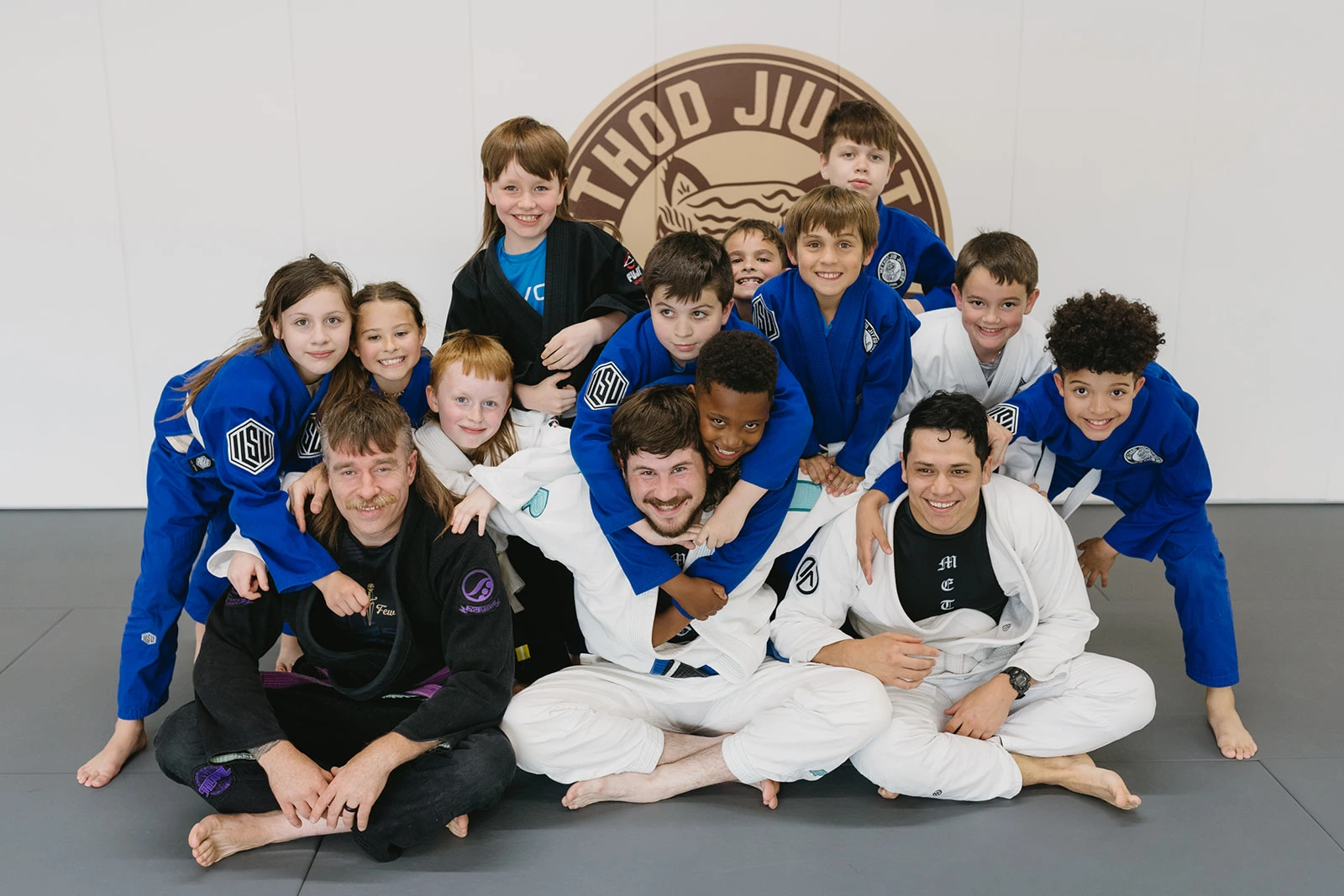
At Method Jiu-Jitsu, new students encounter closed guard in the first weeks of our fundamentals curriculum. We teach it as the foundation before introducing any open guard system. Students learn posture breaking, two fundamental sweeps, and at least one submission — typically the armbar or triangle — before progressing further. This gives beginners a complete, functional closed guard game early, which pays dividends throughout their entire BJJ journey. We teach both sides simultaneously: how to play it and how to pass it.
Try a Free ClassFREQUENTLY ASKED QUESTIONS
Closed guard is a BJJ position where you are on your back with your legs wrapped around your opponent's waist, ankles locked behind their back. It traps them between your hips, preventing them from creating distance while giving you angles for sweeps and submissions.
The best attacks from closed guard are the armbar, triangle choke, kimura, guillotine choke, and hip bump sweep. Most attacks require first breaking your opponent's posture — pulling their head and upper body toward you — before executing. A straight-postured opponent is very difficult to submit from closed guard.
To break closed guard, establish upright posture first (hips forward, back straight, head up), place one hand on their hip or stomach, then stand up one leg at a time. From standing, use elbow pressure on their legs to open the guard. Staying hunched over while trying to open is the most common beginner mistake — it gives the bottom player everything they need to attack.
Yes, closed guard is the ideal starting position for beginners because the locked ankles prevent the opponent from creating distance — you don't have to constantly reestablish your leg position. This controlled environment lets new practitioners focus on learning posture control, grip fighting, and their first techniques without being immediately overwhelmed.