If you're searching for self-defense classes in Tulsa, you'll find no shortage of options. Karate studios, kickboxing gyms, weekend seminars that promise to teach you everything you need in four hours. But if you're serious about learning skills that actually work when it matters most, there's one martial art that stands above the rest: Brazilian Jiu-Jitsu.
At Method Jiu-Jitsu in Tulsa, we've seen firsthand how BJJ transforms the way people think about personal safety. Not through fancy moves or choreographed scenarios, but through real, pressure-tested techniques that work regardless of your size, strength, or gender.
Here's why BJJ is the most effective self-defense system you can learn — and why more people in Tulsa are choosing it.
Most Real Fights End Up on the Ground
This is the foundational truth that separates jiu-jitsu from every striking-based martial art: research consistently shows that the majority of real-world confrontations end up in a clinch or on the ground within seconds.
If your self-defense training only covers punches and kicks, you're preparing for a scenario that rarely plays out in real life. What happens when someone grabs you? What happens when you're taken to the ground? What happens when you're pinned against a wall or held in a bear hug?
Brazilian Jiu-Jitsu answers all of these questions. The entire art is built around ground fighting, positional control, and submission techniques. You learn how to:
- Defend a takedown or control the situation if you're brought to the ground
- Escape from inferior positions like mount, side control, and back control
- Achieve dominant positions where you can control a larger, stronger attacker
- Apply submissions (joint locks and chokes) that can end a confrontation without throwing a single punch
This isn't theory. These are techniques that have been proven in real-world altercations, law enforcement encounters, and professional fighting for decades.
It's Designed for Smaller People to Defeat Larger Opponents
Brazilian Jiu-Jitsu was literally developed to solve the problem of a smaller person defending themselves against a bigger, stronger attacker. The Gracie family, who refined and popularized the art in Brazil, built their entire system around leverage, timing, and technique — not brute force.
This is why BJJ is particularly effective for women's self-defense. In a self-defense situation, a woman is statistically likely to face an attacker who is larger and stronger. Striking-based martial arts put her at a disadvantage in this scenario because power generation depends heavily on body mass.
Jiu-jitsu reverses this equation. On the ground, a skilled practitioner can neutralize size and strength advantages through proper technique and positioning. A 130-pound woman who has trained BJJ for a year has a significant tactical advantage over an untrained 200-pound attacker. That's not marketing — it's physics.
At Method Jiu-Jitsu in Tulsa, we have women training alongside men in every class. They learn the same techniques, drill with partners of all sizes, and develop the practical skills and confidence that come from pressure-testing their abilities in a safe environment.
You Don't Learn Self-Defense from a Weekend Seminar
Here's an uncomfortable truth about the self-defense industry: a four-hour seminar won't prepare you for a real confrontation. The techniques you learn on a Saturday afternoon will evaporate the moment adrenaline hits your bloodstream and your fine motor skills deteriorate.
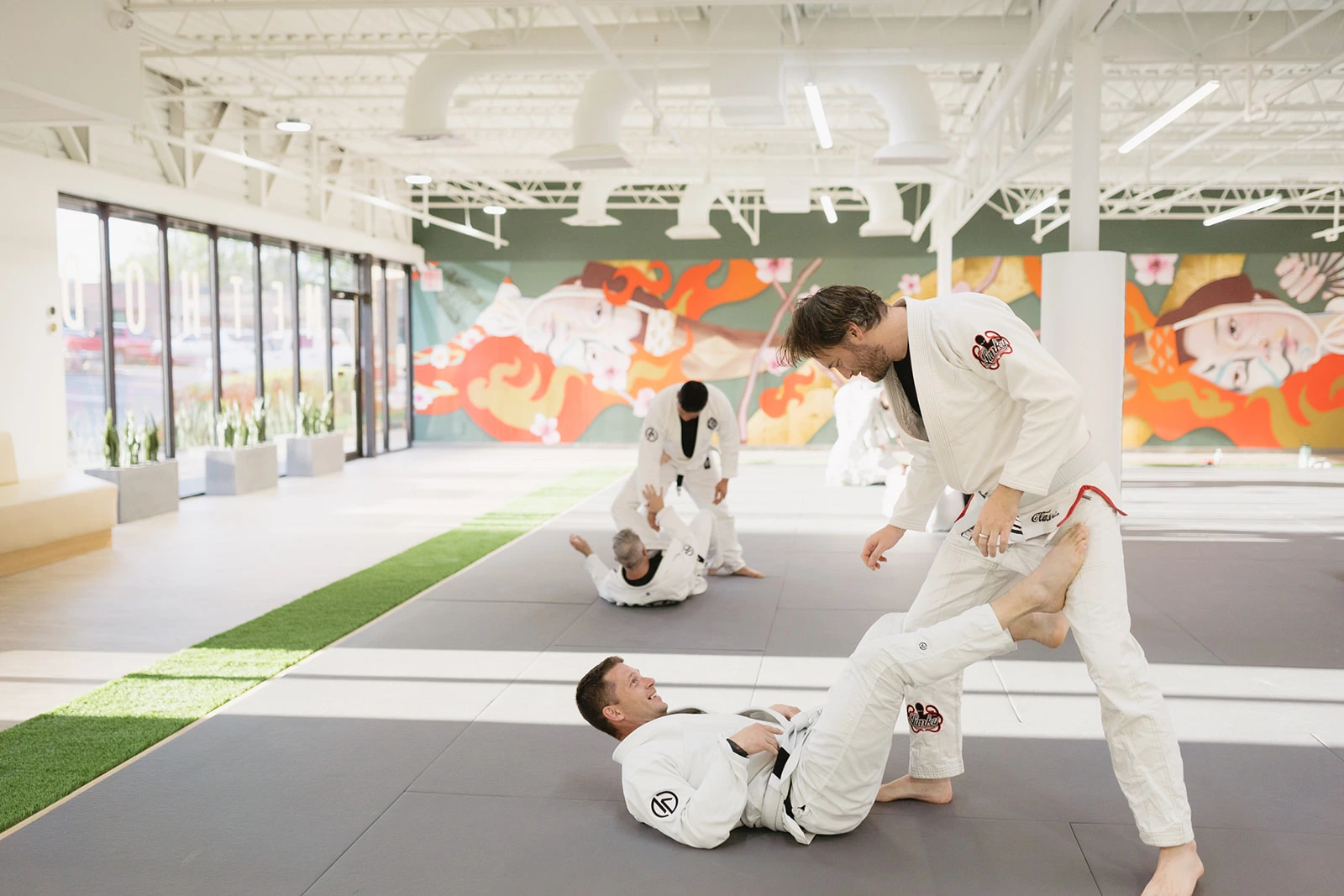
Real self-defense competence comes from regular, consistent training where you practice techniques under progressively realistic conditions. In jiu-jitsu, this happens naturally through sparring (called "rolling"). Every class at Method Jiu-Jitsu includes the opportunity to practice techniques against a resisting partner — someone who is actively trying to counter your moves and apply their own.
This is what separates BJJ from most self-defense programs: you actually test your skills against real resistance. Over time, your body learns to react instinctively. You develop what fighters call "mat intelligence" — the ability to read a situation and respond effectively without conscious thought.
That level of ingrained skill is what you need in a real self-defense situation, where you have zero time to think about which technique to use.
How BJJ Compares to Other Self-Defense Options
Let's be honest about the alternatives:
Striking Arts (Karate, Taekwondo, Kickboxing)
Effective for maintaining distance and delivering powerful strikes. But they require significant speed and power to be effective, and they don't address what happens when distance is closed — which is where most real confrontations end up. If you can keep distance, the best self-defense is to run. If you can't, you need ground skills.
Krav Maga
Marketed heavily as "street self-defense." Many techniques are borrowed from other arts (including BJJ). The challenge is that most Krav Maga schools don't spar with full resistance, which means techniques are practiced in compliant drills rather than against someone who's actually fighting back.
Weekend Self-Defense Seminars
Well-intentioned but limited. You might learn a few escape techniques, but without ongoing practice, retention drops dramatically. These seminars can be a good starting point for awareness, but they're not a substitute for regular training.
Brazilian Jiu-Jitsu
Addresses the most likely self-defense scenario (close-quarters, ground fighting). Trains techniques against full resistance from day one. Develops instinctive responses through regular sparring. Effective regardless of size or gender. The downside? It requires commitment — this isn't a quick fix. But the skills you develop are real and lasting.
What Self-Defense Training Looks Like at Method Jiu-Jitsu
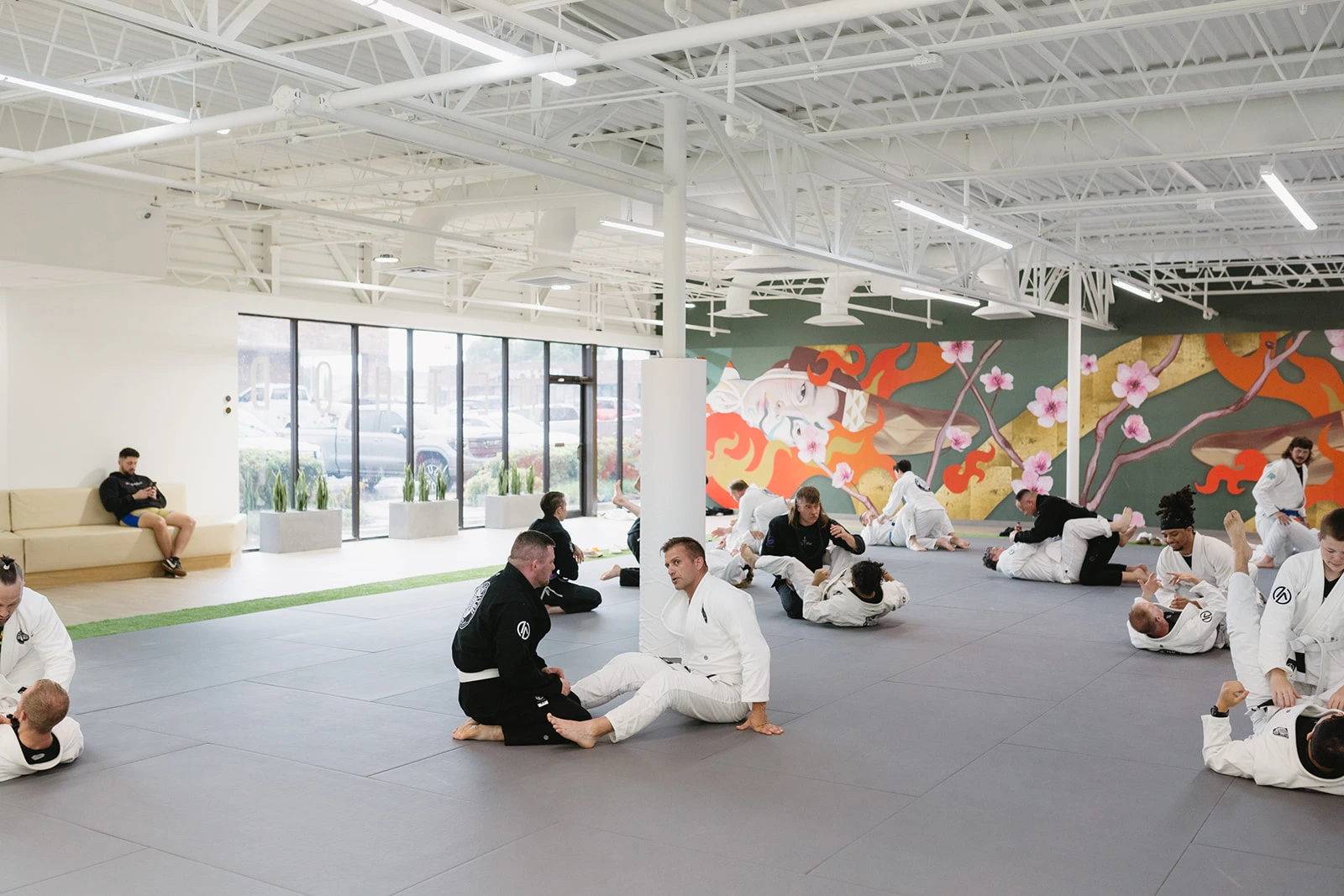
At Method Jiu-Jitsu, our adult classes blend sport jiu-jitsu with practical self-defense applications. Here's what a typical class covers:
Warm-up (10 minutes): Fundamental movements — hip escapes, bridging, guard recovery drills. These aren't just warm-ups; they're the movements you'll use in actual self-defense situations.
Technique (20-25 minutes): The coach demonstrates 2-3 related techniques. For example, a self-defense focused class might cover escaping a headlock, transitioning to a dominant position, and applying a control hold. You drill each technique with a partner.
Positional Sparring (10 minutes): Practice specific scenarios with increasing resistance. "Start in this bad position — work to escape." This is where your self-defense skills get pressure-tested.
Rolling / Live Sparring (15-20 minutes): Full sparring at whatever intensity is appropriate for your level. Beginners are paired with experienced partners who help guide them through the experience safely.
You don't need any prior experience. You don't need to be in shape. You don't even need a gi (we offer both gi and no-gi classes). All you need is the willingness to show up and learn.
Who Our Self-Defense Training Is For
The short answer: everyone.
- Women looking for practical skills that work against larger attackers
- Men who want real combat-tested techniques, not choreographed routines
- Parents who want their kids to be able to protect themselves against bullies
- Professionals (nurses, teachers, security, law enforcement) who need physical control skills for their jobs
- Seniors who want confidence and body awareness in addition to self-defense
- Anyone in Tulsa who believes that knowing how to defend yourself is a fundamental life skill
Try It for Free
Method Jiu-Jitsu is located at 8011 S Sheridan Rd, Suite B, Tulsa, OK 74133, just minutes from south Tulsa, Broken Arrow, Jenks, and Bixby. We offer morning and evening classes six days a week, so there's always a time that fits your schedule.
Your first class is completely free. No contracts, no pressure, no experience required. Come see for yourself why Brazilian Jiu-Jitsu is the most practical self-defense system available — and why hundreds of Tulsa residents trust Method Jiu-Jitsu to teach it.
Book your free trial class today and take the first step toward real self-defense confidence.
Questions? Call us at (918) 221-9827. We'd love to hear from you.