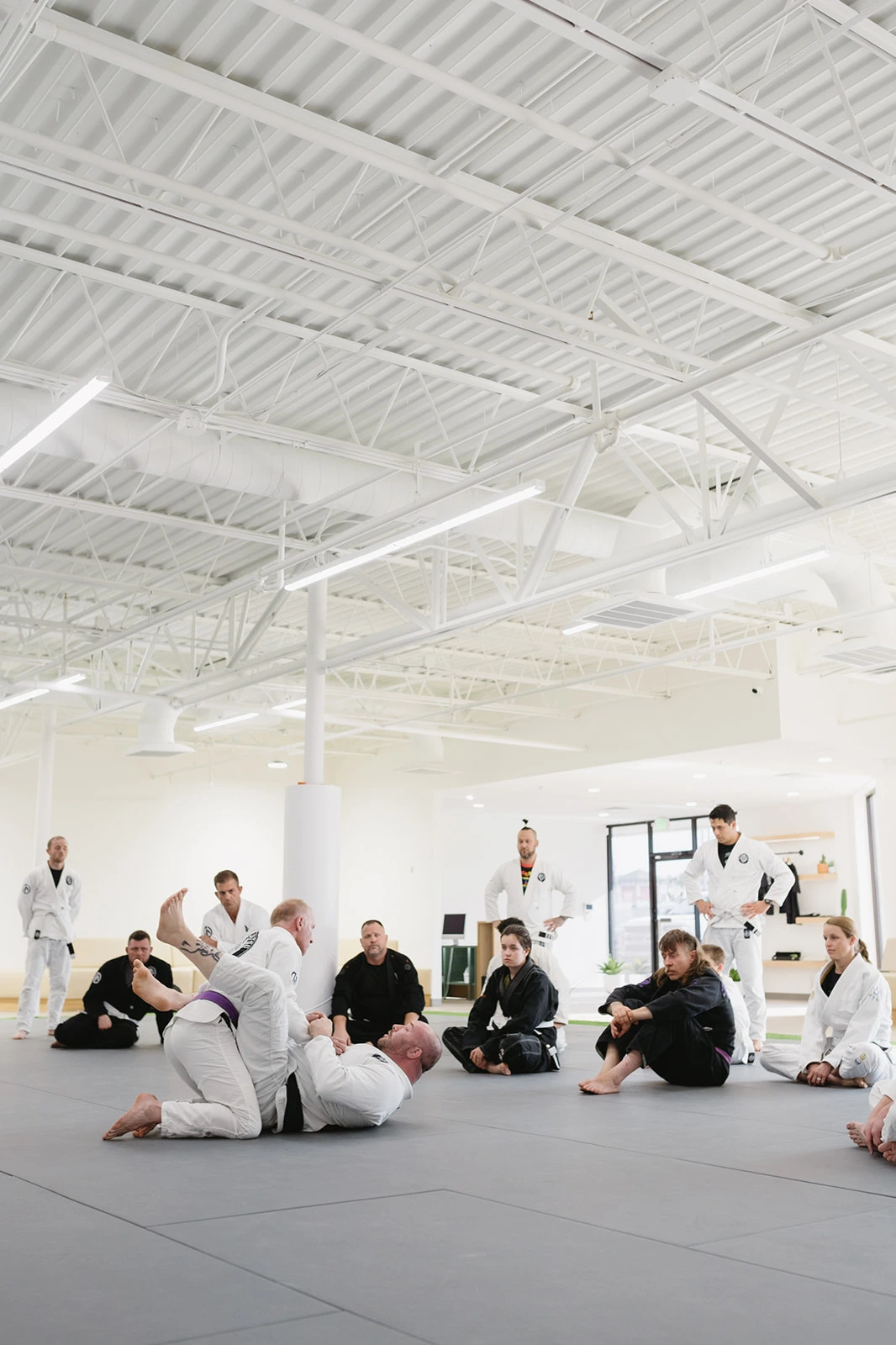
BJJ submissions are techniques that force your opponent to "tap out" through joint locks or chokes. The most common submissions include the rear naked choke, armbar, triangle choke, kimura, and guillotine.
WHAT IS A SUBMISSION?
A submission is any technique that puts your training partner or opponent in a position where they must concede — either by tapping out, verbally submitting, or going unconscious (in the case of chokes). The goal of Brazilian Jiu-Jitsu is not to strike an opponent but to control them and apply a submission that leaves them no choice but to acknowledge defeat.
Submissions fall into two broad categories: chokes and joint locks. Each has distinct mechanics, entry points, and defensive considerations. Leg attacks — heel hooks, ankle locks, and knee bars — form a third category that is increasingly emphasized in modern competition BJJ.
CATEGORY 1: CHOKES
Chokes work by restricting blood flow to the brain (blood chokes) or by blocking the airway (air chokes). Blood chokes are more effective and safer — they cause unconsciousness in 8 to 12 seconds but leave no lasting injury when released promptly. Air chokes are less efficient and more uncomfortable; most practitioners learn to avoid them.
Common choke setups include the rear naked choke (back control), triangle (guard), bow and arrow (back control with gi), Ezekiel (mount), and guillotine (front headlock). The gi fabric opens up an additional world of collar chokes unavailable in no-gi grappling.
CATEGORY 2: JOINT LOCKS
Joint locks apply force in the opposite direction of a joint's natural range of motion. When the technique is applied correctly the joint reaches its limit and pain signals the person to tap — or risk ligament or tendon damage. The most targeted joints in BJJ are the elbow (armbar, kimura, americana), shoulder (kimura), and wrist (wrist lock).
Tapping early is critical with joint locks. Unlike chokes, which must be held for several seconds to cause unconsciousness, a joint lock can cause ligament damage in a fraction of a second if you delay. Experienced practitioners tap the moment they feel a lock tighten — ego is the most common cause of joint injuries on the mat.
CATEGORY 3: LEG ATTACKS
Leg attacks target the ankle, knee, and hip joints. Straight ankle locks and heel hooks are the primary weapons. Heel hooks in particular — both inside and outside heel hooks — are considered advanced submissions because they apply rotational force to the knee without the defender feeling much pain until damage has occurred. For this reason many gyms restrict heel hooks until practitioners reach a higher level.
TOP 10 SUBMISSIONS EVERY PRACTITIONER SHOULD KNOW
1. REAR NAKED CHOKE
Blood ChokeApplied from back control. One arm crosses the throat while the other arm locks behind the head, creating a figure-four squeeze that cuts blood to the carotid arteries. The most used submission in MMA history.
2. ARMBAR
Joint LockApplied across the elbow from guard, mount, or back. Your legs pinch the opponent's arm across your hip while you extend, hyperextending the elbow. One of the first submissions taught at most academies.
3. TRIANGLE CHOKE
Blood ChokeApplied from guard. Your legs wrap the opponent's neck and one arm in a figure-four position. Their own shoulder compresses the carotid artery, making this an incredibly efficient blood choke.
4. KIMURA
Joint LockA figure-four shoulder lock targeting internal rotation. Applied from guard, half guard, or top positions. Named after Masahiko Kimura, who used it to defeat Helio Gracie in 1951.
5. AMERICANA
Joint LockA figure-four shoulder lock applied from mount or side control targeting external rotation — the opposite direction of the kimura. Often one of the first submissions beginners learn from top position.
6. GUILLOTINE
ChokeApplied from a front headlock position, often when the opponent shoots a takedown or tucks their head in. Can finish as an air choke or, when combined with hip positioning, a blood choke.
7. OMOPLATA
Joint LockA shoulder lock applied from guard using your legs rather than your arms. Your leg wraps the opponent's arm while you sit up and drive forward, compressing the shoulder. Also a strong sweep position.
8. EZEKIEL CHOKE
ChokeApplied from mount or guard using your own sleeve (in gi) or the inside of your forearm. A tight, short-range choke that works when taller or longer submissions are unavailable.
9. BOW AND ARROW
Blood ChokeA gi-specific collar choke applied from back control. One hand grips the collar while the other controls the leg, creating a bowing tension across the throat. Considered one of the tightest gi chokes.
10. STRAIGHT ANKLE LOCK
Leg AttackApplied by cradling the foot against the chest and extending your hips, compressing the Achilles tendon. The first leg attack most practitioners learn and legal at all belt levels in competition.
HOW TAPPING WORKS
Tapping is the universal signal to stop. You can tap your partner's body twice, tap the mat twice, or verbally say "tap." Any of these signals must be respected immediately and without hesitation by your training partner. There are no exceptions — in a healthy training environment, the tap is law.
If for any reason you cannot use your hands — because both arms are trapped — you can tap with your foot, slap the mat with any body part, or shout "tap." Coaches at reputable gyms watch rounds and will call stop if they see a submission fully locked in and the tapping response is delayed.
In competition, tapping to a submission concedes the match to your opponent. In training, tapping simply resets the round — there is no shame and no consequence. Experienced practitioners tap hundreds of times in a week of training. The tap is what makes it safe to train submissions at full intensity.
WHEN DO BEGINNERS LEARN SUBMISSIONS?
Most BJJ curriculums introduce submissions in the first few weeks of training — usually starting with the most mechanically simple techniques: the rear naked choke, the americana, and the basic armbar. The sequence typically follows position-before-submission logic: you learn how to get to a dominant position first, then the submissions available from that position.
Beginners practice submissions through repetitive drilling — doing the technique on a compliant partner hundreds of times before attempting them in live sparring. Once a student has the basic mechanics and an understanding of when to apply them, submissions become a natural part of their sparring game.
More advanced submissions — heel hooks, flying triangles, wrist locks, and advanced collar chokes — are introduced progressively as the practitioner's positional awareness and defensive instincts develop. There is no rush. The foundational ten submissions above will serve a practitioner through every belt level.
LEARN SUBMISSIONS THE RIGHT WAY
At Method in Tulsa, submissions are introduced with proper mechanics, context, and safety protocols from day one. Our structured curriculum ensures you learn when to apply a submission, not just how — and our coaches oversee every round to maintain a safe training environment.
Your first class is free. Come see how we teach.
Claim Your Free ClassFREQUENTLY ASKED QUESTIONS
The rear naked choke (RNC) is the most common submission in BJJ and MMA. Applied from back control, it cuts blood flow to the brain and causes unconsciousness in seconds if the opponent does not tap.
A choke restricts blood flow or air to cause unconsciousness or discomfort. A joint lock applies force against a joint's natural range of motion, threatening ligament or tendon injury. Both are submissions — the opponent taps to signal they give up.
Most gyms introduce basic submissions — the armbar, rear naked choke, and triangle — within the first few months of training. Beginners learn the mechanics first in drills before applying them live in sparring.
Yes. The tap-out system makes submissions safe to practice at full resistance. When you feel a submission tightening, you tap your partner, the mat, or say "tap" — and your partner releases immediately. Training partners respect taps without exception.
Tapping out means physically tapping your partner, the mat, or yourself twice or more to signal submission. It stops the match or drill immediately. In competition it concedes the match; in training it's a communication tool that keeps both partners safe.