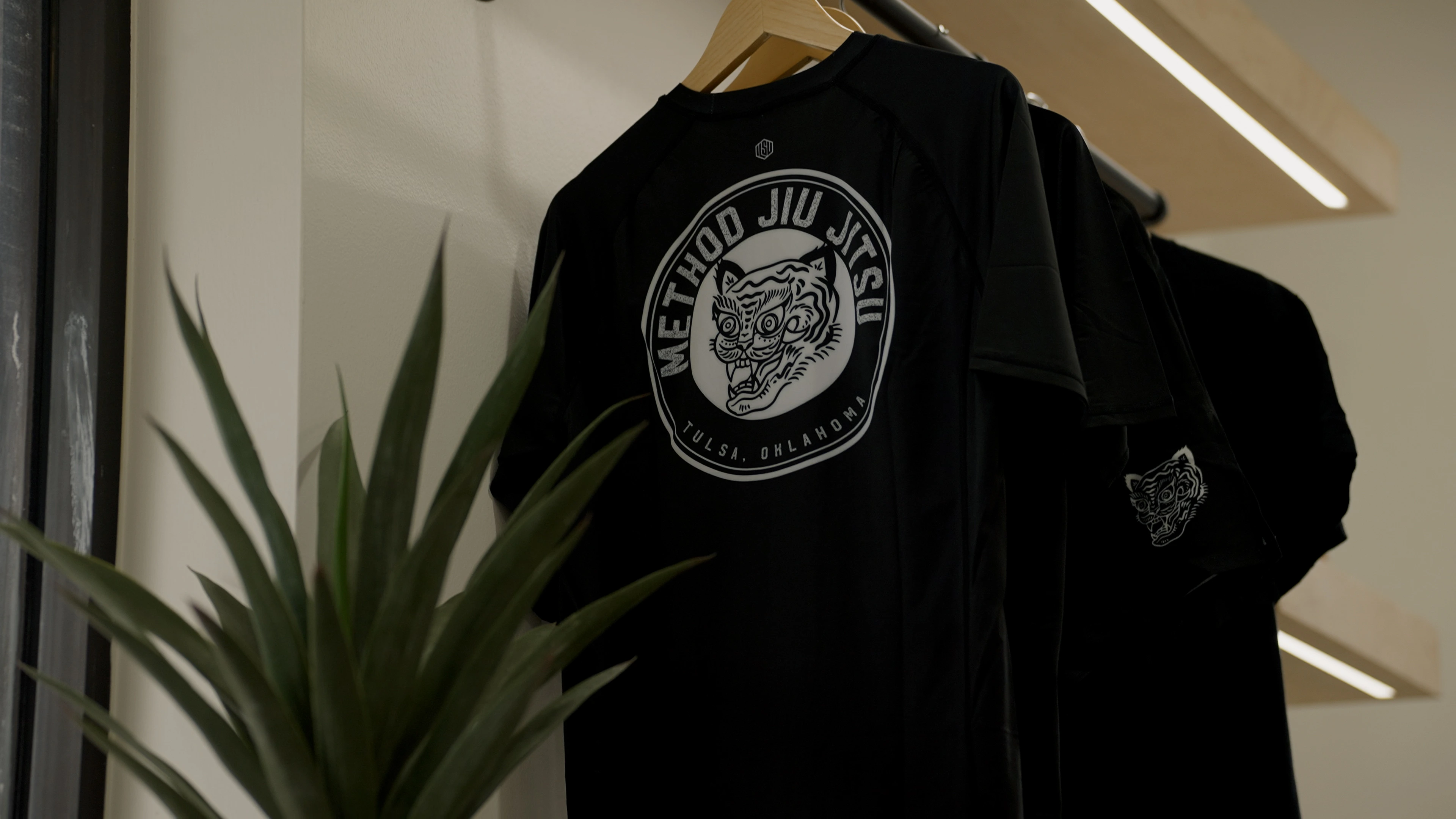
For gi class, wear a BJJ gi (kimono) with a rash guard underneath. For no-gi, wear a rash guard and grappling shorts or spats. Remove all jewelry before training, and bring flip-flops for walking off the mats. For your first trial class, athletic clothing is perfectly fine — you do not need to own gear yet.
WHAT TO WEAR FOR YOUR FIRST CLASS
If you are attending your very first BJJ class, do not let gear be a barrier. You do not need a gi, a rash guard, or any specialty equipment to walk through the door. At Method Jiu-Jitsu, we provide everything you need for your free trial class. Just show up.
If you do want to wear something from your own wardrobe, wear comfortable athletic clothing — the same type you would wear to a gym or yoga class. Fitted athletic shorts or pants work well. Avoid anything with zippers, belt loops, pockets, or hard hardware, as these can catch on your training partner and cause discomfort or injury.
Two practical items to bring from day one: a full water bottle and a pair of flip-flops. The flip-flops are for transitioning between the mats and the bathroom or locker room — bare feet should never touch anything off the mat, and shoes should never touch the mat surface. This is standard etiquette at every BJJ gym in the world.
GI CLASS ATTIRE
The gi (also called a kimono) is the traditional uniform of Brazilian Jiu-Jitsu. It consists of a heavy-duty cotton jacket, drawstring pants, and a colored belt that indicates rank. In competition and many training environments, the gi is mandatory for gi-class training.
The Gi Jacket and Pants
A quality beginner gi is typically made of single- or double-weave cotton. Single weave is lighter and better for warm climates or intense training sessions. Double weave is heavier and more durable. Most beginners start with a single-weave gi — it is easier to move in and dries faster after washing.
Gi colors at most academies are limited to white, blue, and black for regular training. Check with your school for specific requirements — some academies allow additional colors; others prefer uniformity. At Method Jiu-Jitsu, white, blue, and black gis are all welcome on the mat.
Rash Guard Under the Gi
Wearing a rash guard underneath your gi jacket is strongly recommended and at many academies required. The rash guard serves multiple purposes: it wicks sweat away from your skin, reduces mat burn on your torso and arms, and provides a layer of protection against skin infections like ringworm or staph, which can spread through direct skin-to-mat contact in any contact sport.
Choose a fitted rash guard that does not bunch up under the gi jacket. Long-sleeve or short-sleeve are both acceptable — long sleeve provides more skin coverage. Color is generally a personal choice unless your academy has a specific uniform policy.
Belt
When you join an academy, you will be provided with a white belt (or instructed when to purchase one). Your belt color reflects your rank. Never purchase a belt above white for yourself — rank is awarded by your instructor based on demonstrated skill and time on the mat.
NO-GI CLASS ATTIRE
No-gi BJJ is practiced without the traditional kimono. Because there is no collar, sleeve, or lapel to grip, no-gi training emphasizes different techniques and is often faster-paced. The attire reflects this: less fabric, more compression.
Rash Guard
A rash guard is the foundational top for no-gi training. It should be compression-fit — loose athletic shirts are uncomfortable under the pressure of grappling and tend to ride up constantly during movement. Most practitioners prefer short-sleeve for mobility or long-sleeve for added skin coverage. Board shorts or loose-fit clothing are not appropriate as a top in no-gi training.
Grappling Shorts or Spats
For your lower body in no-gi, you have two primary options: grappling shorts (also called fight shorts or MMA shorts) or spats (compression tights similar to athletic leggings). Both are acceptable. Many practitioners wear spats under grappling shorts for maximum coverage and protection, especially in cooler training environments.
Grappling shorts are specifically designed with a flat, Velcro-free waistband and no pockets or hard hardware — standard gym shorts with pockets are not suitable because the pockets catch fingers during training. Spats should be compression-weight and free of zippers or external seams that could rub during extended rolling.
WHAT NOT TO WEAR
A few items are universally prohibited on the BJJ mat and for good reason:
- Jewelry — rings, necklaces, earrings, and bracelets can injure you or your training partner during grappling. Remove all jewelry before every class, every time.
- Shoes on the mat — shoes track bacteria and debris onto the training surface. Always remove shoes before stepping on the mat and put them back on whenever you step off.
- Shorts with pockets or zippers — pockets catch fingers; zippers scratch skin and damage gi fabric.
- Untrimmed fingernails and toenails — long nails scratch training partners and tear during gripping. Trim them before training.
- Strong cologne or perfume — with close-contact training, strong scents are extremely unpleasant for training partners. Deodorant is encouraged; heavy fragrances are not.
- A dirty gi — always train in a clean gi. There are no exceptions to this rule in any respectable academy.
RASH GUARDS EXPLAINED
If you are new to grappling sports, a rash guard is a compression-fit athletic top made from spandex, polyester, or a blend. It was originally designed for surfing and water sports to prevent rashes from board contact — hence the name. In BJJ, it serves an almost identical function: it reduces friction between skin and mat (or skin and gi), wicks sweat efficiently, and creates a barrier between your skin and the training surface.
Rash guards are available in short-sleeve and long-sleeve versions. Long-sleeve provides more protection from mat burns and skin exposure. Short-sleeve offers more mobility and breathability. The choice between them is largely personal preference and temperature — many practitioners own both and choose based on the day.
Quality rash guards for BJJ run from $25 to $80. Look for a four-way stretch fabric with flatlock stitching (seams that lie flat rather than raised) to prevent rubbing. Avoid cheap versions with thick seams — they will cause discomfort quickly during extended rolling sessions.
MOUTH GUARD RECOMMENDATIONS
A mouth guard is not required for every training session, but it is strongly recommended for live rolling. In no-gi training especially, accidental contact with a knee, elbow, or head is a possibility in any grappling context. A basic boil-and-bite mouth guard costs under $20 at most sporting goods stores and is a worthwhile investment once you begin sparring regularly. Practitioners who compete should invest in a custom-fit mouth guard from a dental professional for maximum protection and comfort.
GEAR MAINTENANCE — WASHING YOUR GI
The single most important maintenance habit for any BJJ practitioner is washing your gi after every single training session. This is non-negotiable. A gi worn to class and tossed in a gym bag will develop bacteria and odor that no amount of washing can fully reverse after a certain point.
- Wash in cold water to prevent shrinking — most gis shrink in hot water
- Use a standard detergent; avoid fabric softener, which degrades cotton fibers over time
- Add white vinegar to the wash occasionally to neutralize lingering odors
- Hang to air dry when possible — high heat from a dryer causes shrinkage, especially in the jacket
- Never leave a wet or sweaty gi compressed in your bag for more than an hour
Rash guards, spats, and grappling shorts should be washed after every session as well. Compression garments can be machine-washed on cold and air-dried — avoid the dryer for anything with spandex content, as heat degrades the elasticity over time.
For the full routine, including drying, odor, stains, shrinking, and your belt, read our guide on how to wash a BJJ gi.
WHERE TO BUY GEAR
For a first gi, reliable beginner brands include Fuji Sports, Tatami Fightwear, Sanabul, and Scramble. These brands offer durable, well-constructed gis in the $60–$130 range that will last through years of training. You do not need to spend $200 on a premium gi to start — save that investment for when you know you are committed to training long-term.
For rash guards and no-gi gear, the same brands listed above produce quality options. Hayabusa, Hyperfly, and Gold BJJ also make excellent no-gi training apparel. When shopping online, pay attention to sizing charts — BJJ gis often run in athletic-specific sizes (A0, A1, A2, etc.) rather than standard small/medium/large.
SHOW UP — WE HANDLE THE REST
For your free trial class at Method Jiu-Jitsu, you do not need to bring or buy anything. We provide loaner gear for new students and will walk you through every aspect of your first class — including mat etiquette, warm-up, and technique. After your trial, our team can help you identify the right starter gear based on which programs you want to train and your budget.
We want nothing standing between you and your first class. Come in what you have.
Claim Your Free TrialFREQUENTLY ASKED QUESTIONS
No. For your first trial class, you do not need to own a gi. Method Jiu-Jitsu provides everything new students need for their free first session. Once you decide to continue training regularly, purchasing your own gi is recommended — usually within the first month of consistent attendance.
Yes. For your free trial class, Method Jiu-Jitsu provides everything you need to get on the mat. Just arrive in comfortable athletic clothing and bring a water bottle and flip-flops if you have them. We will take care of the rest and make sure your first experience is comfortable and welcoming.
A quality beginner BJJ gi typically costs between $60 and $130. Reliable brands at this price point include Fuji, Tatami, Sanabul, and Scramble. You do not need to invest in a premium gi to start — a durable mid-range option will serve you well through your early years of training. Save the premium investment for when you know BJJ is a long-term pursuit.
A mouth guard is not required for every class, but it is strongly recommended for live rolling (sparring). Accidental contact with a knee, elbow, or training partner's head does occur in grappling — not frequently, but enough that dental protection is worthwhile. A basic boil-and-bite guard costs under $20 at most sporting goods stores and is a sensible investment once you begin sparring regularly.
Wash your gi after every single training session — no exceptions. Use cold water to prevent shrinking and avoid fabric softener, which degrades cotton fibers. Hang to air dry rather than using a dryer when possible, as high heat causes significant shrinkage. Never leave a sweaty gi compressed in your bag — bacteria and odor set in quickly and become very difficult to remove.