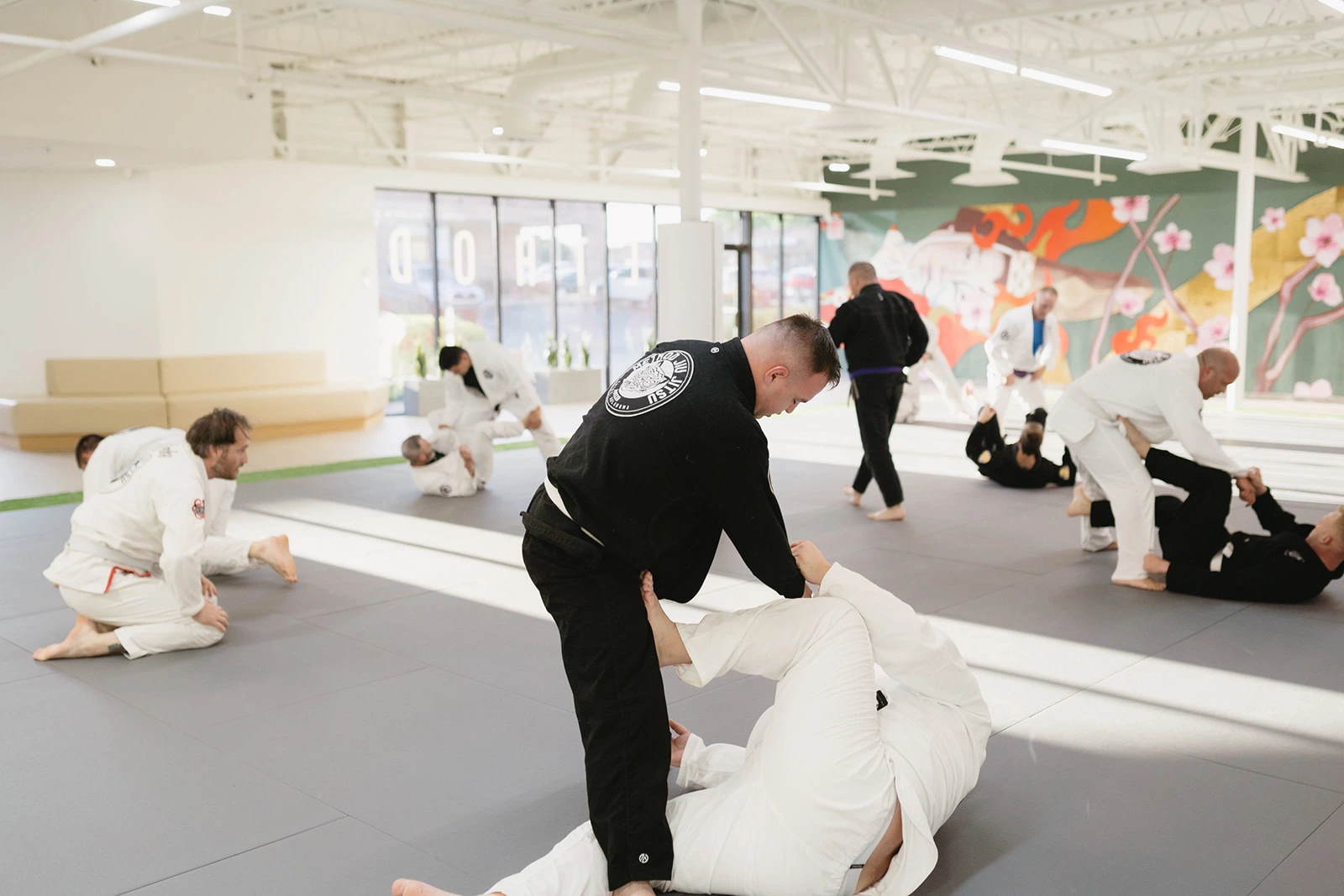
BJJ improves cardiovascular fitness, builds functional strength, reduces stress and anxiety, develops problem-solving skills, and creates lasting friendships. It is a complete mind-body discipline that benefits every area of life — and those benefits compound the longer you train.
WHY BJJ DELIVERS RESULTS OTHER ACTIVITIES CANNOT
Most fitness activities isolate one dimension of health. Running builds cardio. Weightlifting builds strength. Yoga builds flexibility. Brazilian Jiu-Jitsu does all three simultaneously — and layers in cognitive challenge, emotional regulation, and genuine human connection on top of the physical work.
This is the reason BJJ practitioners often describe it as "the most complete thing I have ever done." The benefits are not limited to the gym floor. The changes you make on the mat — in how you think, how you carry yourself, how you respond to pressure — follow you into every corner of your life.
Below is a thorough breakdown of what consistent BJJ training actually delivers, backed by what coaches, sports scientists, and practitioners have observed over decades of the sport's growth.
PHYSICAL BENEFITS
Cardiovascular Conditioning
A single round of live sparring (rolling) is one of the most demanding cardiovascular activities you can do. Unlike a jog at a steady pace, rolling involves constant bursts of high-intensity effort separated by brief moments of position management. This interval-style demand trains both the aerobic and anaerobic energy systems simultaneously.
New students are often surprised at how winded they become in their first few sessions — not because they are out of shape, but because BJJ uses muscles and movement patterns they have never trained before. Within six to eight weeks of consistent training, cardiovascular endurance improves noticeably. Within six months, many practitioners report their resting heart rate dropping and their ability to sustain effort in all areas of life increasing significantly.
Functional Strength and Muscle Development
Grappling builds strength differently than traditional weightlifting. Because you are always working against a resisting human body, every movement is loaded in a functional, multi-joint way. You develop grip strength, hip drive, core stability, and pushing and pulling strength through the full range of motion — not just the narrow angles a machine allows.
This type of strength translates directly to daily life. Carrying groceries, moving furniture, playing with kids — practitioners often notice these tasks become noticeably easier after a few months of training.
Flexibility and Mobility
BJJ demands range of motion that most adults have not used since childhood. Hip flexibility, shoulder mobility, and spinal rotation all improve through the natural demands of grappling positions. Many practitioners who start with significant stiffness report meaningful flexibility gains within their first three to six months without ever stretching outside of class.
Weight Loss and Body Composition
A typical BJJ session burns between 400 and 800 calories depending on body weight and training intensity. Equally important, the muscle development that comes from grappling increases resting metabolic rate — meaning you burn more calories even when not training. The combination of caloric expenditure during class and improved body composition over time makes BJJ one of the most effective activities for sustainable fat loss.
Unlike dieting or isolated cardio, the motivation to train is social and skill-driven. You come back because you want to get better, not just because you want to burn calories. That intrinsic motivation is what makes the physical results stick.
Coordination and Body Awareness
BJJ is a complex movement skill. Learning to place your body in specific positions, transition between them efficiently, and respond to an opponent's movements builds proprioception — the brain's sense of where the body is in space — at a level that most activities simply cannot match. Practitioners often notice improved coordination, balance, and body control that carries over into sports, recreational activities, and everyday movement.
MENTAL BENEFITS
Stress Relief
BJJ is one of the most effective stress-relief tools available because it demands total presence. When you are on the mat, you cannot think about your email, your mortgage, or your difficult coworker. The cognitive demand of tracking positions, responding to movement, and managing your breathing forces your mind completely into the present moment.
This produces a flow state — the same psychological state associated with peak performance and deep satisfaction in all domains of life. Practitioners frequently describe the mat as the one place where daily stress completely disappears. The endorphin release from physical exertion amplifies this effect.
Confidence and Self-Efficacy
Nothing builds genuine confidence quite like knowing you can handle yourself under physical pressure. This is not about ego or aggression — it is about the quiet internal certainty that comes from having been in uncomfortable situations, worked through them, and come out the other side. That certainty transfers to how you carry yourself in job interviews, difficult conversations, and new social situations.
Many practitioners also report that the early months of BJJ — when you tap out constantly and struggle to make techniques work — teaches a profound lesson about growth. You learn that being a beginner is not shameful; that progress is made through repeated failure; and that patience and consistency beat raw talent every time. This mindset shift is one of the most powerful things BJJ delivers.
Problem-Solving and Cognitive Development
BJJ is often called "human chess." Every position presents a problem with multiple solutions, and your opponent is simultaneously trying to solve their own problems while creating new ones for you. Training your brain to stay calm, assess a situation, and select the best response under physical and psychological pressure is a cognitive skill that improves over time — and one with obvious applications outside the gym.
Research on cognitively demanding sports suggests that activities requiring rapid tactical decision-making under physical load support long-term brain health and may help preserve cognitive function as we age.
Resilience and Emotional Regulation
BJJ is humbling. You will tap. You will have bad days. You will be submitted by people who started after you. Learning to stay composed in those moments — to not quit, to reset and try again, to find what went wrong without self-pity — builds a type of psychological durability that is increasingly rare and genuinely valuable. Practitioners who have been training for several years consistently report that they handle adversity better in all areas of life.
Focus and Discipline
The structure of BJJ training — warm-up, technique drilling, positional drilling, live rolling — requires showing up consistently and putting in focused repetitions. Over time, this builds the habit of deliberate practice. The same focus that lets you drill a guard pass fifty times transfers to how you approach work tasks, learning new skills, and achieving personal goals.
SOCIAL BENEFITS
Genuine Community and Belonging
The BJJ community is unlike almost any other social group. When you train with someone, you face physical and psychological challenge together. You tap each other out. You help each other improve. You share the experience of struggling toward something difficult. This creates a type of bond that is hard to replicate through casual social settings.
Most practitioners describe their training partners as some of the best friends they have ever made. The gym becomes a genuine community — a place where your rank at work, your income, and your social status are irrelevant. What matters is that you showed up, you worked hard, and you respected your partners.
Accountability and Consistency
Because your training partners notice when you are absent, BJJ naturally creates accountability. You show up not just for yourself but for the people who expect to see you on the mat. This social accountability is one of the primary reasons BJJ practitioners train more consistently than people pursuing solo fitness activities.
Mentorship and Growth
The belt ranking system in BJJ creates a clear hierarchy of experience. Higher belts are expected to help lower belts improve. This culture of mentorship means every session is an opportunity to learn from someone more experienced — and eventually to pass that knowledge on to others. Many practitioners describe the experience of mentoring newer students as one of the most rewarding aspects of their continued training.
LONG-TERM BENEFITS
BJJ is a lifelong practice. Unlike sports that require peak athleticism, BJJ can be trained well into your 60s, 70s, and beyond. Technique and timing replace athleticism as your primary tools, which means older practitioners can remain effective and continue to improve. The physical, mental, and social benefits compound over years of consistent training in a way that makes BJJ one of the highest-return activities you can invest time in.
Practitioners who begin in their 30s or 40s often report that their physical health and mental wellbeing at 50 or 60 significantly exceed what they expected — and they attribute much of that to their BJJ practice. The self-defense capability that develops over years of training is a practical bonus, but for most long-term practitioners, it is the community and the continued growth that keeps them coming back.
AN ENVIRONMENT BUILT FOR RESULTS
At Method Jiu-Jitsu in Tulsa, our training environment is specifically designed to maximize every one of these benefits. Our class structure ensures you get effective cardio, technical drilling, and live rolling every session. Our instructors create a culture where beginners feel safe to struggle and experienced students feel challenged to grow. We deliberately build the community aspect — because we know that the relationships you form on the mat are what keep you training long enough to change your life.
Whether your primary goal is fitness, stress relief, self-defense, or competition, our curriculum delivers. Your first class is completely free — no experience required and no equipment needed.
Try a Free ClassFREQUENTLY ASKED QUESTIONS
BJJ improves cardiovascular fitness, builds functional strength, increases flexibility, reduces stress and anxiety, develops problem-solving skills, and builds lasting friendships. It is a complete mind-body discipline that improves physical health and mental wellbeing simultaneously — often more effectively than any single fitness activity.
Yes. A typical BJJ session burns 400–800 calories depending on intensity and body weight. Combined with the muscle-building effect of grappling, BJJ creates an excellent environment for fat loss and body composition change. Because the motivation to train is skill-driven and social — not just calorie-based — practitioners tend to be far more consistent than people pursuing traditional cardio or diet-only approaches.
Absolutely. BJJ requires complete mental focus during training, which forces practitioners into a flow state where daily stress disappears. Rolling also triggers endorphin release and teaches practical emotional regulation under pressure. Many practitioners report BJJ is the most effective stress-relief tool they have found, superior to yoga, running, or therapy alone — though it works well alongside all of those.
Most people notice improved cardiovascular endurance within 4–6 weeks, meaningful weight loss and muscle tone within 8–12 weeks, and significant confidence and stress-relief benefits almost immediately. Technical skill develops over months and years, but physical and mental benefits begin from your very first class.
Yes. BJJ is one of the best martial arts for older practitioners because it relies on technique and leverage rather than strength or speed. Many people begin BJJ in their 40s, 50s, and beyond and go on to train for decades. The intensity can be dialed up or down, and the community aspect is especially rewarding for adults seeking meaningful social connection. Training consistently in your later years also supports joint health, balance, and cognitive function.