Look for qualified instructors with verifiable lineage, clean facilities, a welcoming culture, structured curriculum, a class schedule that fits your life, and a free trial class. Avoid gyms with ego-driven cultures, instructors who cannot account for their credentials, or high-pressure sales tactics before you have trained once.
WHY CHOOSING THE RIGHT GYM MATTERS
Your gym is where you will spend hundreds or thousands of hours over the coming years. It will shape your technique, your mindset, your social circle, and your relationship with the sport. A bad gym — one with unqualified instruction, unsafe culture, or exploitative business practices — can set your development back years or put you at risk of injury.
The good news is that most of what makes a gym worth your time can be evaluated in a single visit. You do not need to commit before you know what you are committing to. Any gym that pushes back on that principle is telling you something important about how they operate.
Here are the eight criteria that matter most when evaluating a BJJ academy.
THE 8 CRITERIA
Your head instructor should hold a legitimate BJJ black belt. This sounds obvious, but BJJ is an unregulated industry — anyone can claim any rank. Ask directly: what belt are you, who promoted you, and when? A legitimate black belt will answer this without hesitation. If the answer is vague, deflected, or involves self-promotion, walk away.
BJJ lineage traces back through a chain of instructors to the founders of the art. Your instructor's black belt must have come from a recognized practitioner — someone who can be verified and whose own lineage is clear. This chain cannot be self-awarded or purchased. Look up the instructor's name online; well-credentialed practitioners have a verifiable competition and teaching history.
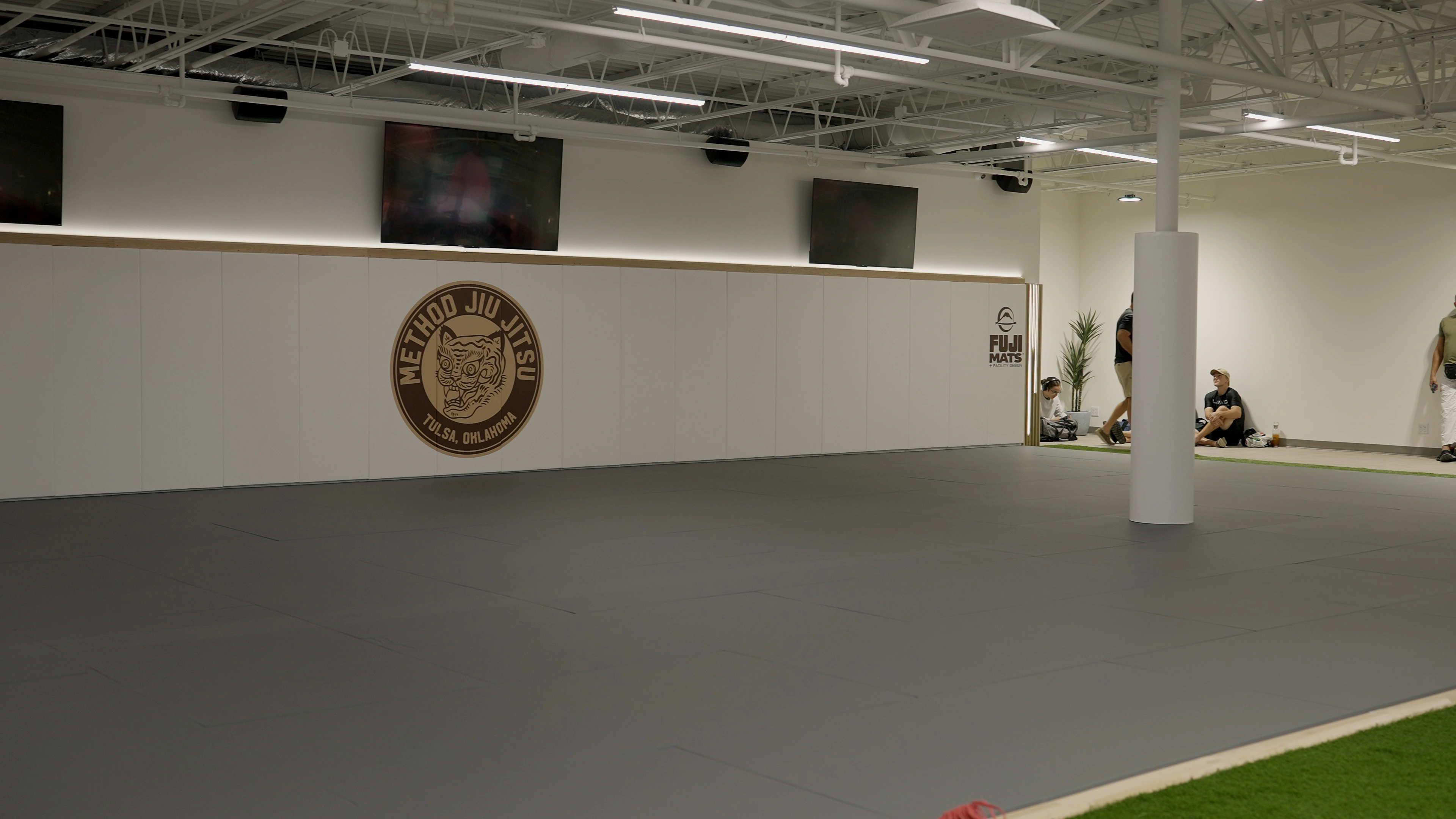
Mats should be clean, dry, and free of debris. The facility should have ventilation, adequate lighting, and enough space for the class size. Ask how often mats are cleaned. Skin infections spread rapidly on dirty mats — a gym that does not prioritize hygiene in its facility is communicating something about how it prioritizes its students.
Sit and watch a class before joining. Are experienced students welcoming to newer ones, or dismissive? Is the atmosphere competitive in a healthy way, or is there an undercurrent of ego and aggression? Do training partners communicate, laugh, and learn together — or do they just try to crush each other? Culture is the single most important factor in whether you will keep showing up three years from now.
The best gyms teach BJJ systematically — not just "whatever the instructor felt like drilling today." Look for a gym that has a clear fundamentals program for new students, progressions for intermediate and advanced practitioners, and a teaching philosophy that is articulated and consistent. Beginners especially benefit from structure because the art is too vast to learn effectively without one.
The best gym in the world does you no good if you can never make the classes. Check the full weekly schedule — are there classes in the morning, evening, and weekend that realistically fit your life? Look for a mix of fundamentals, all-levels, and open-mat sessions. A gym with only one class per day has limited ability to serve practitioners at different levels and different schedules.
A fundamentals class with 30 students and one instructor means very little individual feedback and less supervision during live rolling. Healthy class sizes allow instructors to see what students are actually doing wrong and correct it. Ask what a typical class looks like on a Tuesday evening and how many coaches are on the mat. The answer tells you a lot about whether the gym is trying to maximize profit or quality of instruction.
A gym that is confident in its training will let you come in for a free trial class before asking you to sign anything. Pricing should be clearly stated — monthly costs, any enrollment fees, and what happens if you need to pause or cancel. Gyms that hide pricing until you are already emotionally invested in signing up are using a sales tactic that should make you pause.
RED FLAGS TO AVOID
- Instructor cannot or will not name who promoted them
- High-pressure sales tactics before your trial class has ended
- Annual contracts required for beginners with no month-to-month option
- Dirty mats, poor ventilation, or inadequate mat space for class size
- Experienced students being excessively rough with beginners during rolling
- No clear curriculum — just random technique selection every class
- Instructor rarely present on the mat or delegates all teaching to unqualified assistants
- Dismissive attitude toward questions about credentials or lineage
- Gym culture that discourages tapping or treats injuries as weakness
WHY FREE TRIALS MATTER
The free trial class is not just a marketing tactic — it is a meaningful signal about how a gym operates. A gym that requires a payment or a contract commitment before a single session knows that its product may not sell itself. A gym that says "come try it, no strings attached" is confident in the experience they deliver.
Use your trial class to evaluate all eight criteria above. Take notes afterward. Compare your gut feeling with any other gyms you tried. The right gym will feel right in a way that is hard to fake — you will feel welcomed, engaged, and appropriately challenged. If you leave a trial class feeling like you were just processed through a sales funnel, that feeling is accurate information.
LOCATION AND CONVENIENCE
Proximity matters more than most people admit when they are first starting. The best BJJ gym in the world is the one you actually show up to. If a gym is 40 minutes away and requires a specific commute window that does not exist in your life, you will find reasons not to go. A solid gym that is ten minutes from home or work and has classes that fit your schedule will almost always produce better long-term results than a prestigious gym that is inconvenient to access.
That said, do not compromise on the eight core criteria above just for convenience. A nearby gym with unqualified instruction or a toxic culture is not worth the time saved in travel. Look for the best gym within a reasonable distance — usually within 20 minutes — and use the trial class to verify the quality.
EIGHT FOR EIGHT
Here is how Method Jiu-Jitsu in Tulsa addresses each of the eight criteria above.
FREQUENTLY ASKED QUESTIONS
BJJ lineage refers to the chain of instructors tracing back to the founders of the art — specifically the Gracie family and their students. A verifiable lineage means your instructor received their black belt from a recognized, legitimate source. BJJ black belts cannot be self-awarded or purchased — they must be earned under a credentialed practitioner. An instructor who cannot clearly state who promoted them should raise serious questions.
A legitimate BJJ gym will have an instructor with a verifiable black belt, a clear lineage that can be traced to recognized practitioners, a physical facility with dedicated mat space, visible safety protocols, and a willing attitude toward letting new students observe or trial a class before committing. Affiliation with a reputable team is also a positive indicator.
Yes, if you have options in your area. Most reputable gyms offer a free trial class. Taking a trial at two or three gyms before committing lets you compare instructor quality, culture, class structure, and your gut feeling about each environment. The gym where you actually show up consistently is the right gym — and culture fit matters more than prestige in the long run.
As a general guide, 10 to 20 students per instructor is a healthy range for a fundamentals class. Larger classes can work if there are multiple coaches on the floor. Very large classes with one instructor often mean less individual feedback and less safe supervision during live rolling. Ask what a typical evening class looks like — not what the gym looks like on their best marketing day.
Many gyms offer both month-to-month and long-term options. Long-term contracts are often discounted but lock you in regardless of life changes or dissatisfaction. Be cautious of gyms that pressure you into annual contracts before you have trained more than once. A gym confident in their training should be comfortable with a month-to-month option for new students.