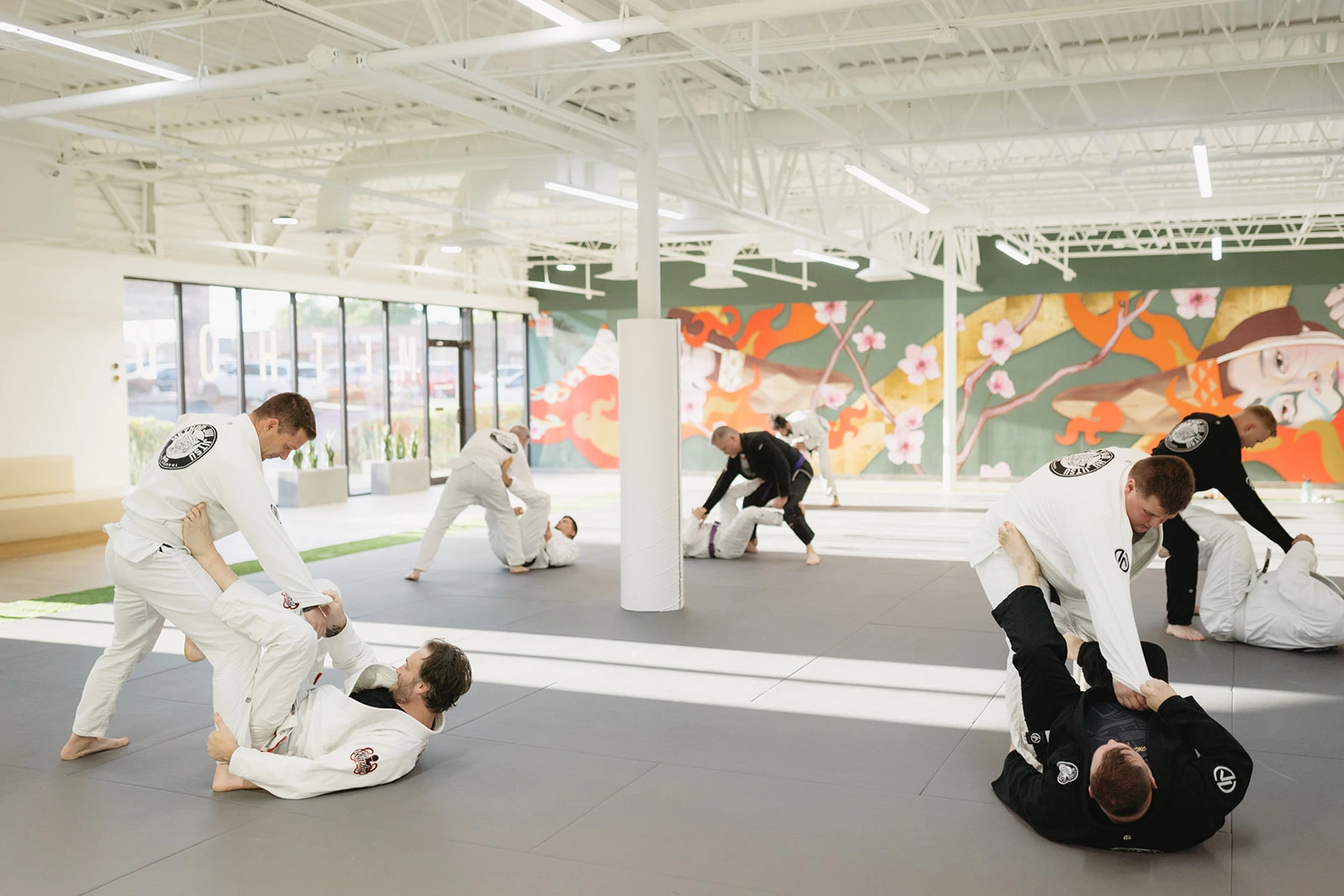
Brazilian Jiu-Jitsu (BJJ) is a grappling-based martial art that focuses on ground fighting, positional control, and submissions like chokes and joint locks. Unlike striking arts, BJJ emphasizes technique and leverage over size and strength — allowing a smaller person to defend against a larger opponent.
A Brief History of BJJ
Brazilian Jiu-Jitsu traces its roots to Japan. In the early 1900s, a Japanese judoka named Mitsuyo Maeda immigrated to Brazil, where he befriended Gastao Gracie and began teaching judo and jiu-jitsu to Gastao's sons. Carlos Gracie and, most notably, Helio Gracie adapted these techniques into a distinct system built around leverage and ground fighting — not brute strength.
Helio Gracie was smaller and less athletic than most of his students, which forced him to develop techniques that could work against larger, stronger opponents. The result was a martial art that prioritized positional control, patience, and technique over physical dominance — principles that still define BJJ today.
For decades, BJJ was largely unknown outside Brazil. That changed on November 12, 1993, when Royce Gracie entered the first Ultimate Fighting Championship (UFC) in Denver, Colorado. Royce — undersized compared to many of his opponents — defeated fighter after fighter from different martial arts disciplines using BJJ, submitting them with techniques most Americans had never seen. It was a public demonstration of the art's effectiveness that shocked the combat sports world and sparked a global surge of interest in ground fighting.
"Royce Gracie proved at UFC 1 what the Gracie family had known for decades: that a technically superior grappler can control and submit an untrained opponent of almost any size."
Today, Brazilian Jiu-Jitsu is practiced in every country in the world. It is the technical backbone of modern mixed martial arts (MMA) and has established itself as the fastest-growing martial art globally. Millions of practitioners — from law enforcement and military personnel to high school students and retirees — train BJJ for self-defense, sport competition, fitness, and community.
How BJJ Works
BJJ is a grappling art, meaning there are no punches, kicks, or other strikes involved in training. Instead, the goal is to take your opponent to the ground, gain a dominant position, and submit them with a choke or joint lock.
The Objective
A BJJ match — whether live sparring ("rolling") or a formal competition — plays out in a sequence of stages. Practitioners begin standing and work to take the opponent to the ground through trips, throws, or pulling guard. Once on the ground, each athlete attempts to improve their position while the other attempts to prevent it or reverse it.
Key Positions
Understanding position is fundamental to BJJ. The most important positions include:
- Guard — You are on your back with your legs controlling the opponent. Dozens of variations exist, each with distinct attack and sweep opportunities.
- Mount — You are seated on top of your opponent's torso, one of the most dominant offensive positions in BJJ.
- Side Control — You are alongside your opponent on the ground with your chest across their chest, controlling their upper body.
- Back Control — You are behind your opponent with hooks in, the highest-value position in BJJ and the gateway to the most powerful chokes.
Submissions
Submissions are techniques that force the opponent to "tap" — signaling that they concede — before they are injured. BJJ submissions fall into two categories:
- Chokes — Compress the arteries of the neck, cutting blood flow to the brain. The rear-naked choke, triangle, and guillotine are the most well-known.
- Joint Locks — Apply controlled pressure against a joint beyond its natural range of motion. The armbar, kimura, Americana, and heel hook are common examples.
Training: Drilling and Rolling
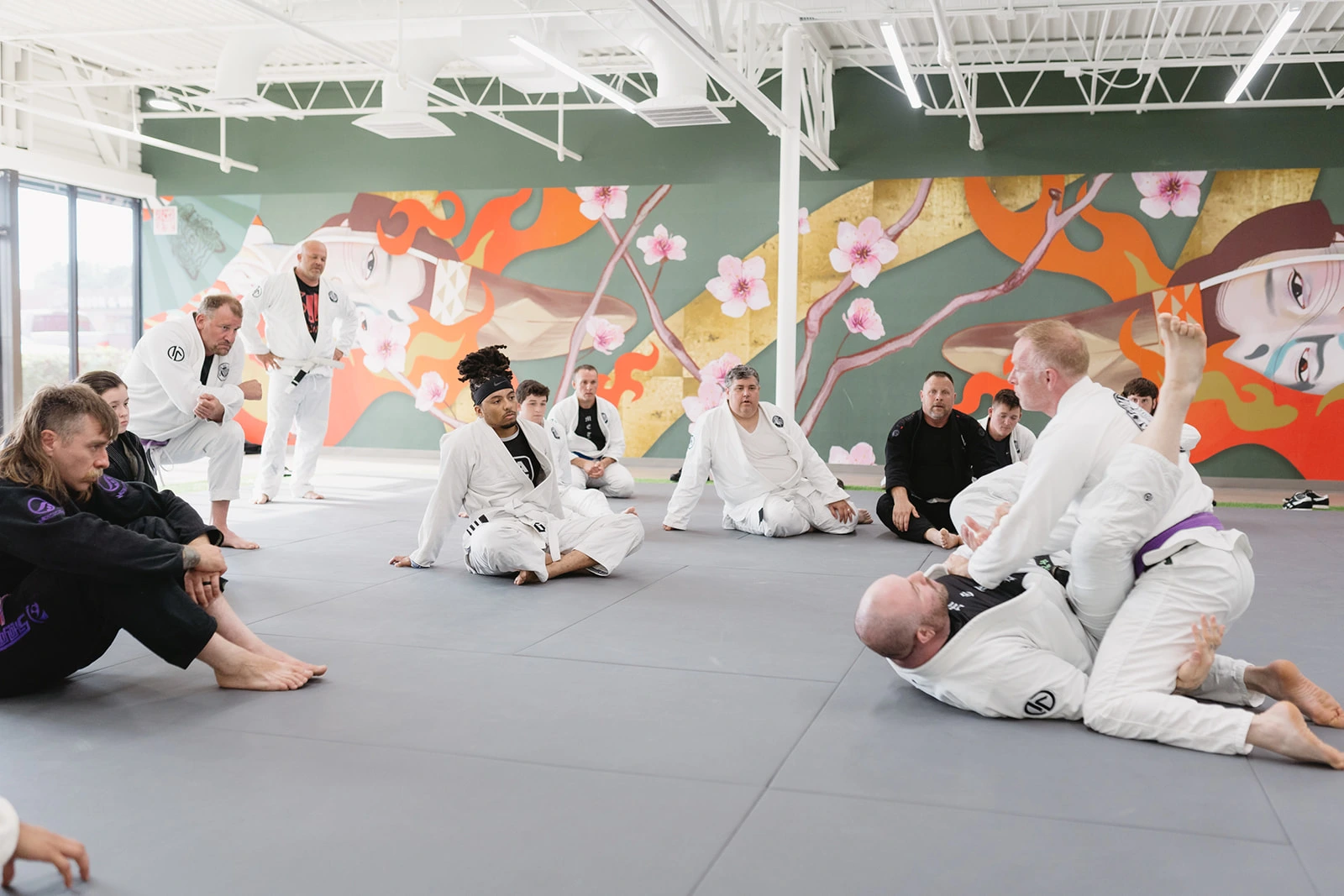
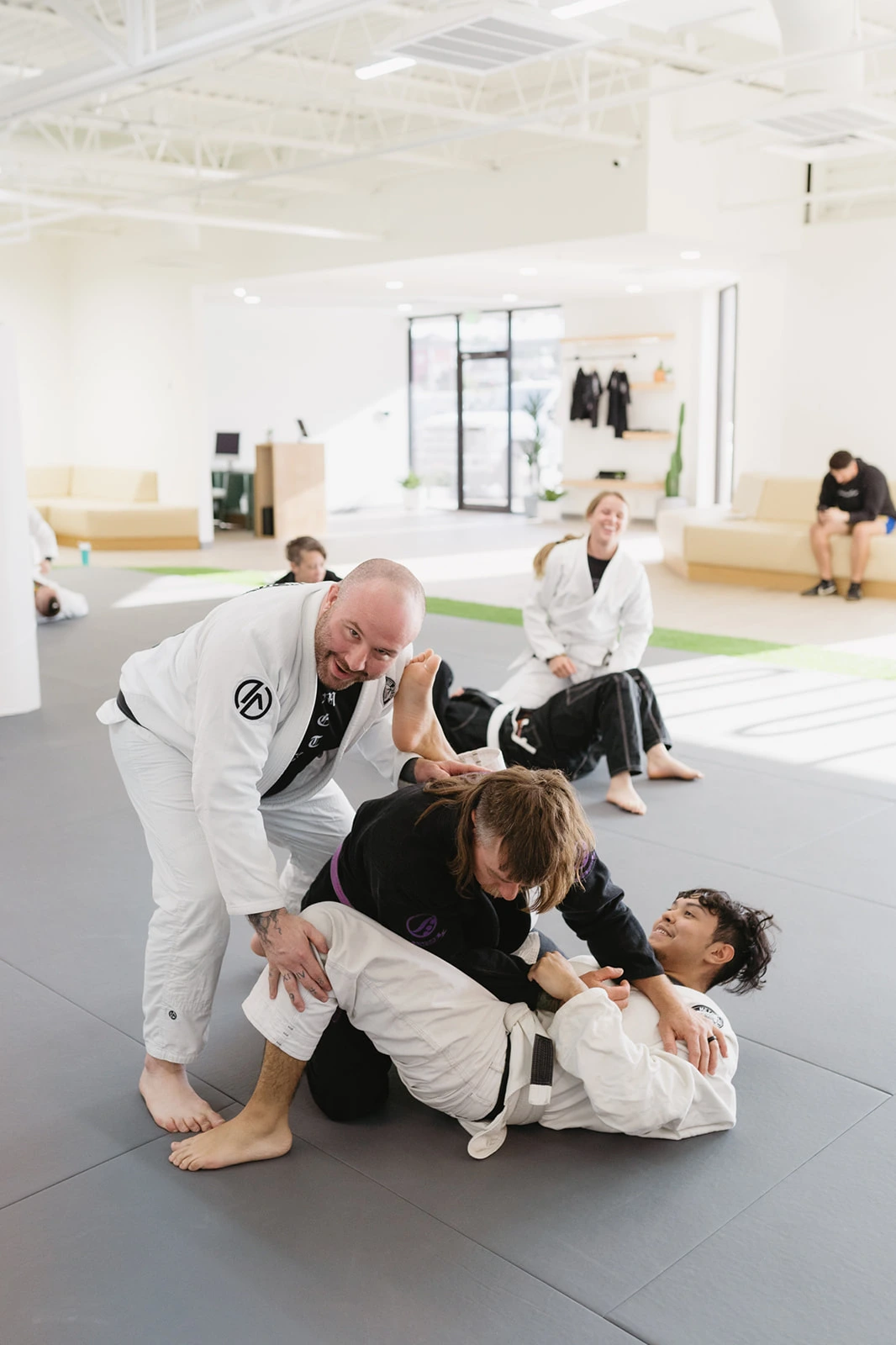
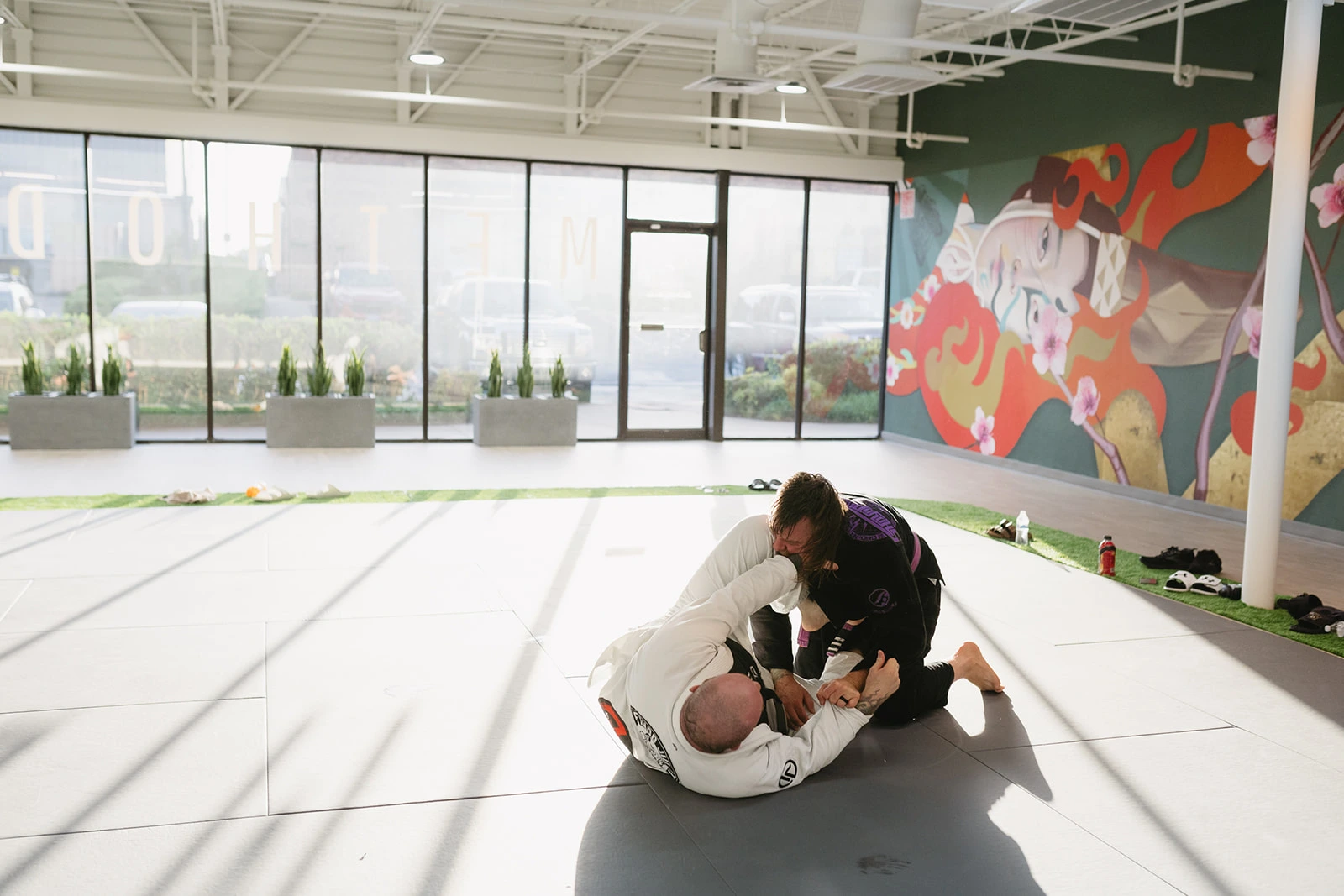
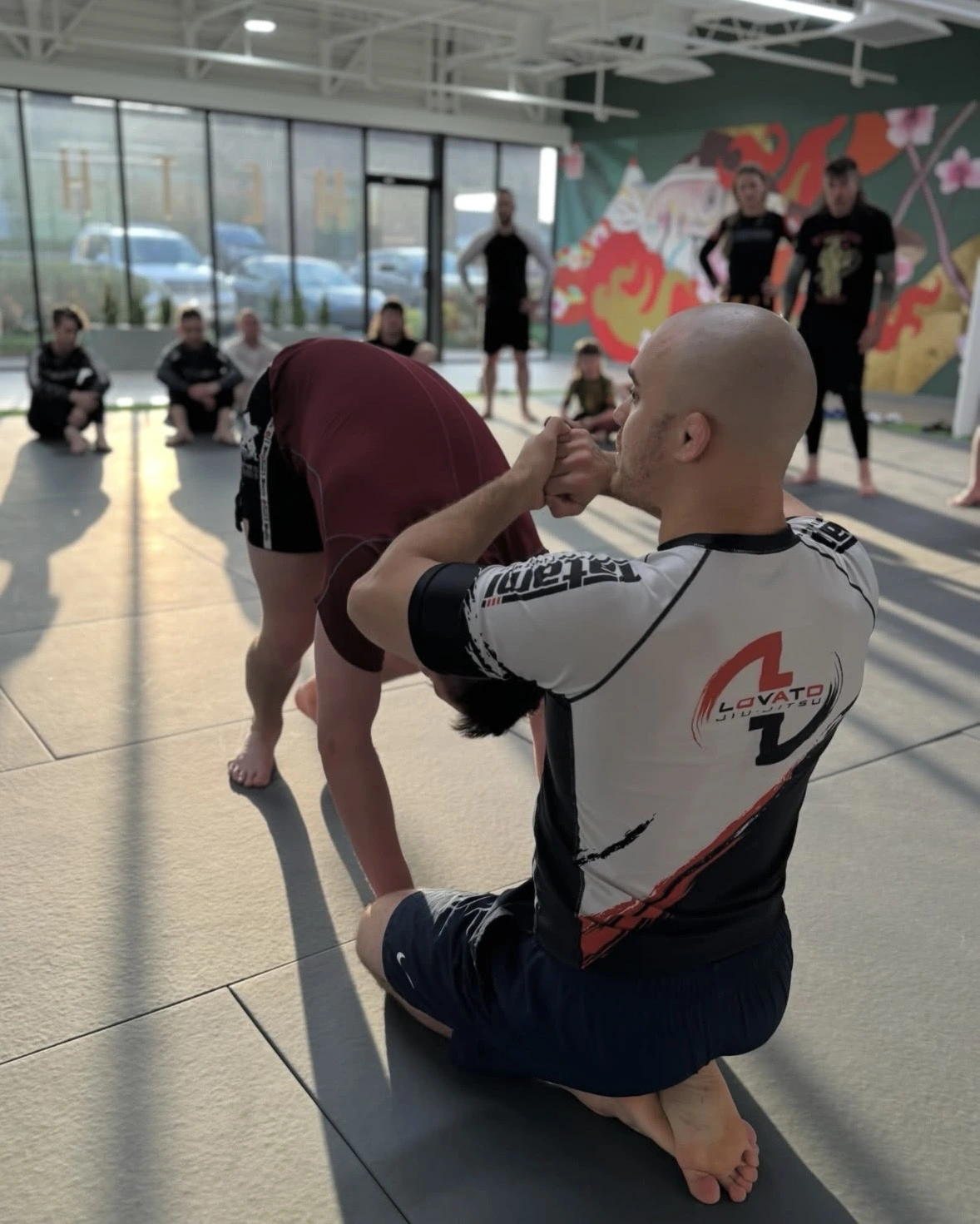
A typical BJJ class includes a warm-up, technique instruction (usually one to three techniques per class), focused drilling with a partner, and live sparring — called "rolling." Rolling is where the real learning happens. Unlike many traditional martial arts, BJJ training is fully live and resistant. Your partner actively tries to submit you while you try to submit them, which creates an honest test of whether a technique actually works.
Why BJJ Is Different from Other Martial Arts
Technique Over Strength
BJJ was specifically designed to work for smaller, weaker practitioners. The entire system is built on the concept of leverage and mechanical advantage. A 140-pound practitioner with good technique can control and submit a 220-pound untrained athlete — not through brute force, but through body mechanics, timing, and positioning. This is not a marketing claim; it is a demonstrable reality that plays out on mats every day around the world.
Practical Self-Defense
Statistics consistently show that the majority of real-world physical altercations end up on the ground. Striking arts like boxing and karate prepare you extensively for standing exchanges, but leave a significant gap. BJJ closes that gap. A practitioner who understands ground control, guard retention, and escapes from bad positions carries skills that are directly applicable to self-defense in ways that many other arts are not.
Safe, Full-Resistance Training
One of BJJ's most unique advantages is that practitioners can spar at full intensity without serious injury risk. Because there are no strikes, the danger of concussive trauma — a serious concern in boxing and other striking arts — is eliminated. When caught in a submission, you simply tap your partner (or the mat, or say "tap") to signal that you're caught. Your partner releases immediately. This allows you to train hard and honest every single session, which accelerates learning dramatically.
A Lifelong Pursuit: The Belt System
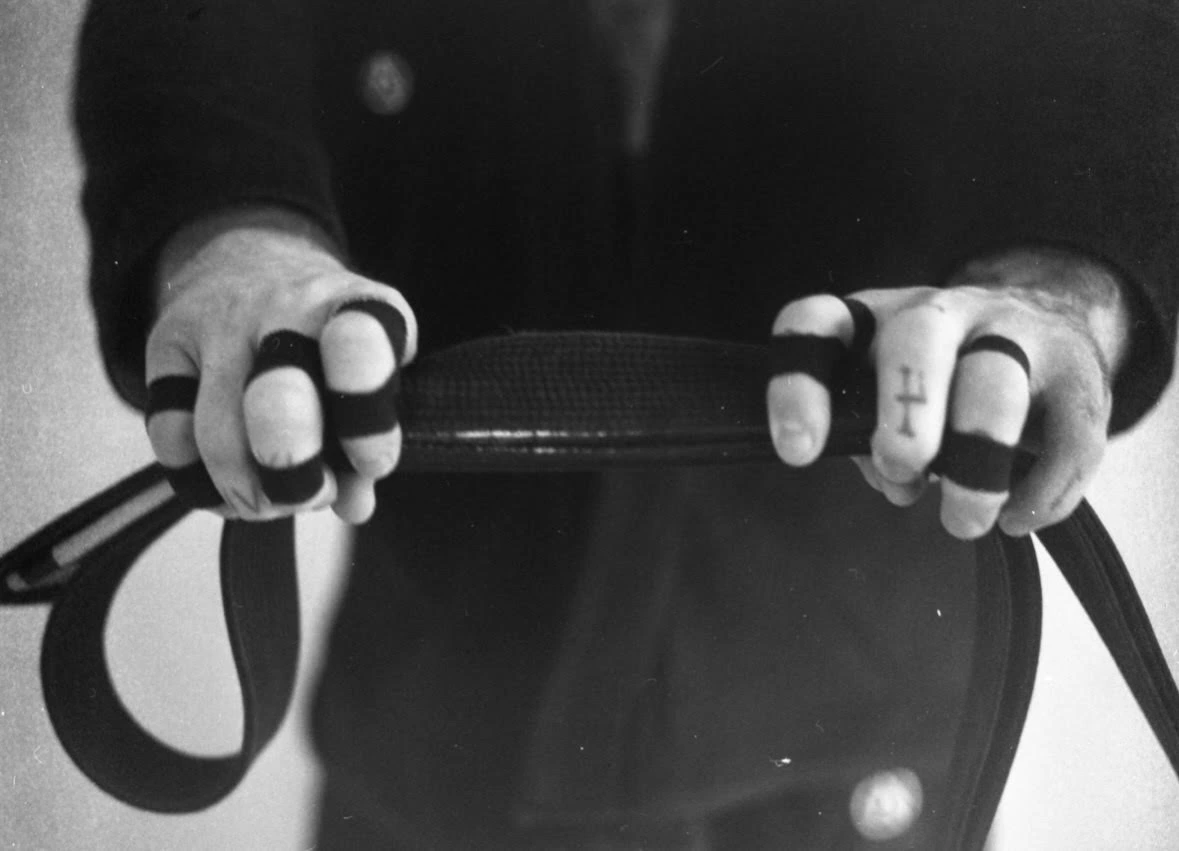
BJJ uses a belt ranking system that reflects genuine skill development over years of training. There are no shortcuts and no inflated ranks — a BJJ black belt is one of the most legitimately earned titles in martial arts.
Who Can Train BJJ?
One of the great misconceptions about BJJ is that it's only for young, athletic, or already-fit people. The truth is the opposite.
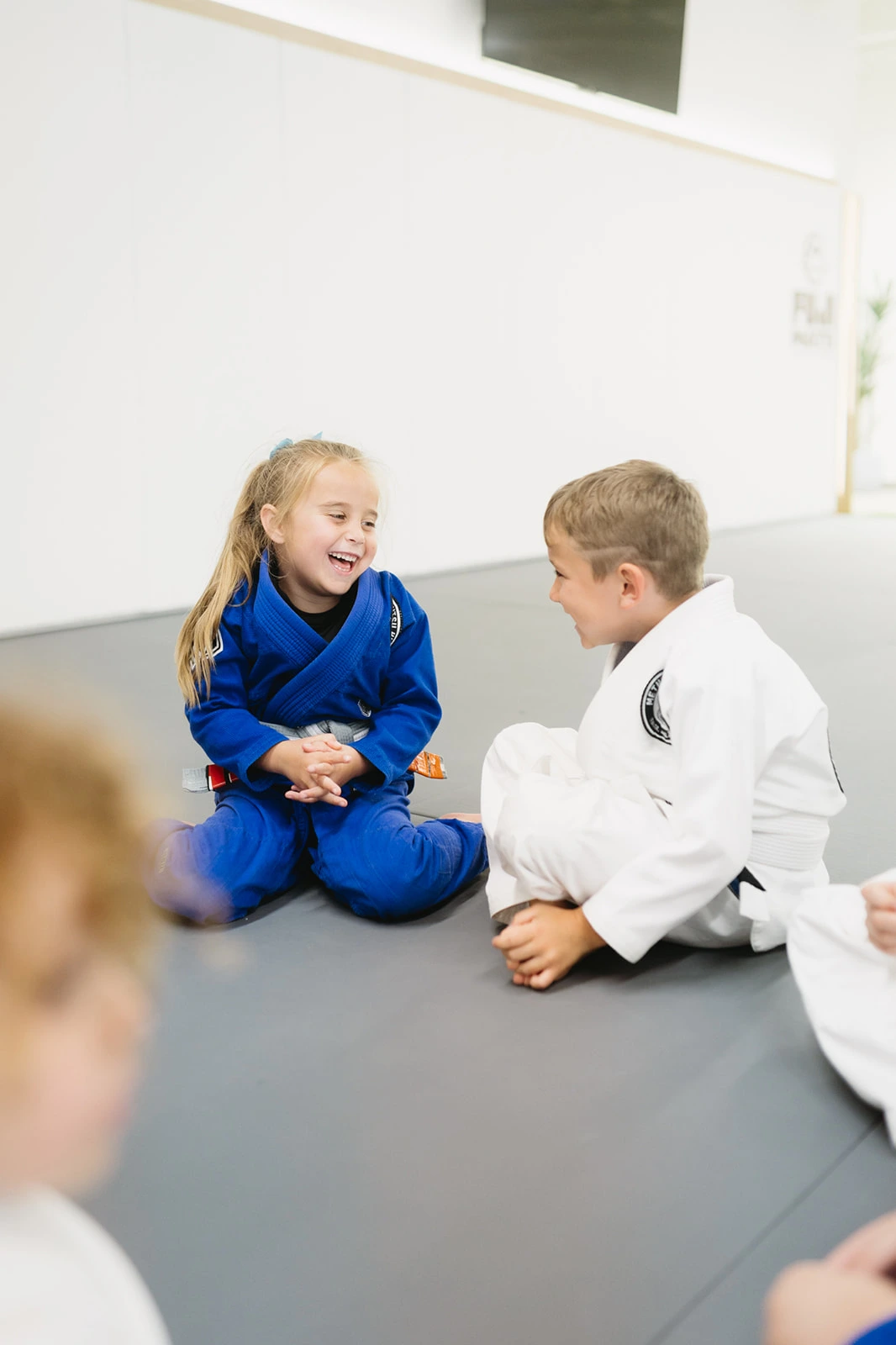
- Kids starting at age 4 benefit from BJJ's emphasis on body awareness, coordination, discipline, and anti-bullying confidence.
- Adults in their 40s, 50s, and beyond train regularly — many discover the art later in life and progress steadily for decades.
- All fitness levels are welcome. You do not need to "get in shape" before starting. You get in shape by training.
- All body types succeed in BJJ. The art's reliance on technique means that larger and smaller practitioners alike find styles that suit them.
- No prior martial arts experience is needed. The vast majority of people who walk through a BJJ gym door for the first time have no background.
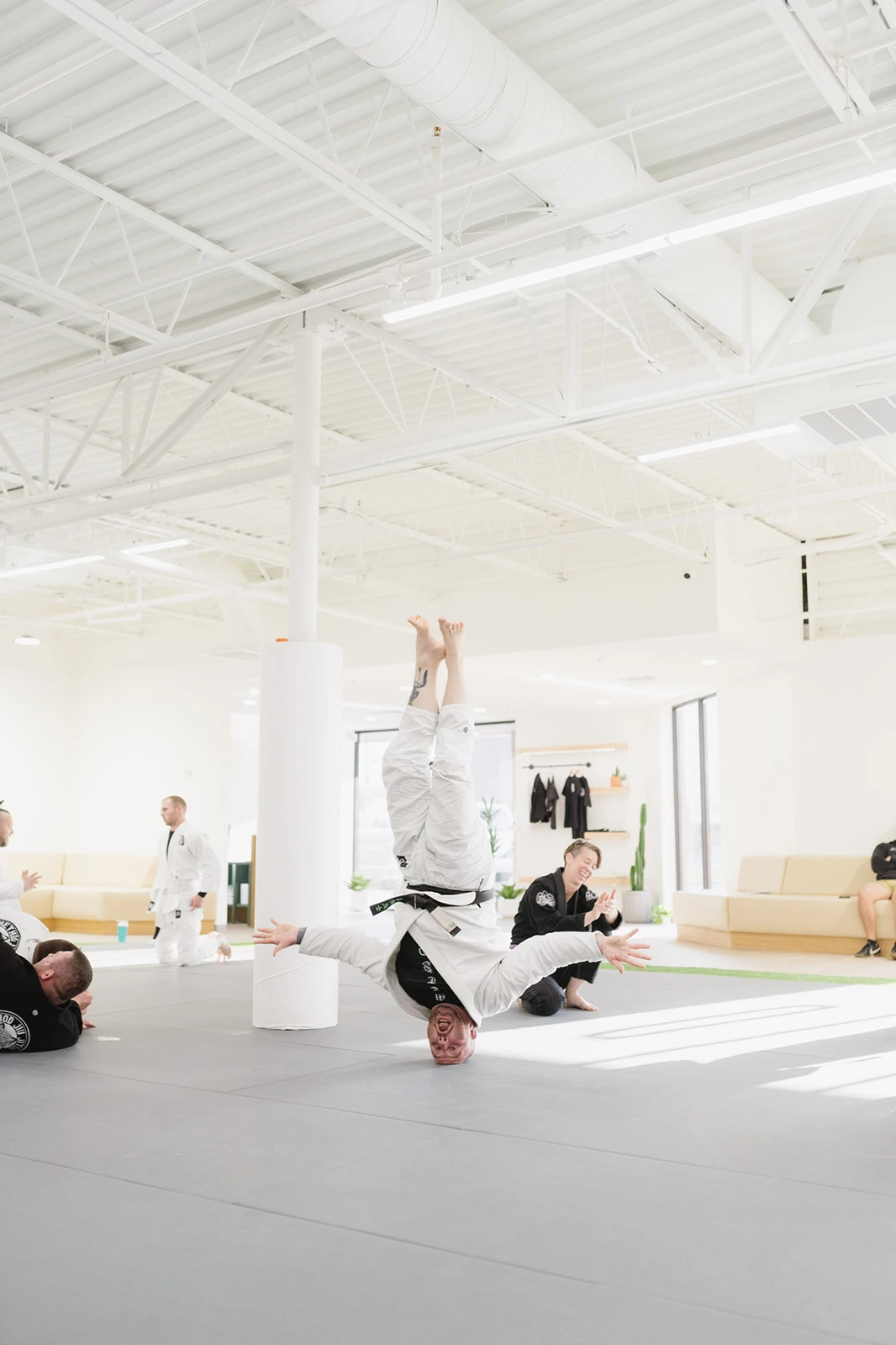
The BJJ community is broadly welcoming. Most gyms — particularly well-run ones — cultivate an environment where newer students are protected and developed, not hazed or overwhelmed.
How We Teach BJJ at Method
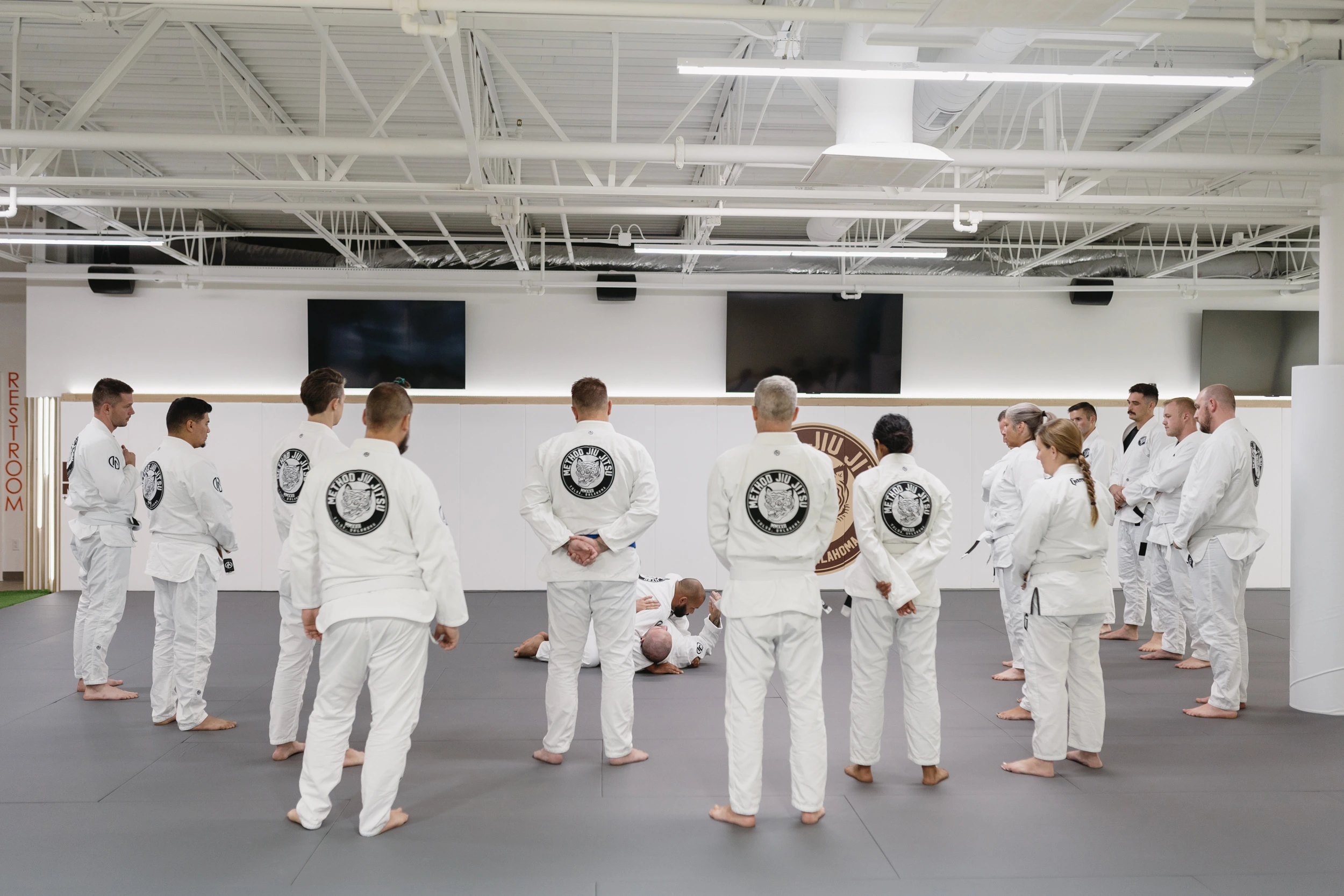
At Method Jiu-Jitsu in Tulsa, we believe the way a gym teaches matters as much as what it teaches. Our head instructor, Dallas Niles, is a black belt under world-renowned competitor and instructor Rafael Lovato Jr. — one of the most accomplished Americans in BJJ history. That lineage shapes everything about how we approach instruction.
We offer a structured curriculum for beginners — our Fundamentals program — that gives new students a clear path through the foundational positions, escapes, and submissions before introducing them to more advanced concepts. Advanced students continue to develop through our All Ranks and upper-level classes, with competition preparation available for those who want to test themselves on the tournament circuit.
We train both Gi (traditional uniform) and NoGi (shorts and rash guard) throughout the week, giving students a complete skill set applicable to both sport competition and real-world scenarios. Classes run six days a week — view the full schedule here.
If you've been curious about BJJ, the best thing you can do is come in. We offer a free trial class with no commitment required. Our coaches will get you oriented, keep you safe, and make sure you leave understanding why so many people fall in love with this art.