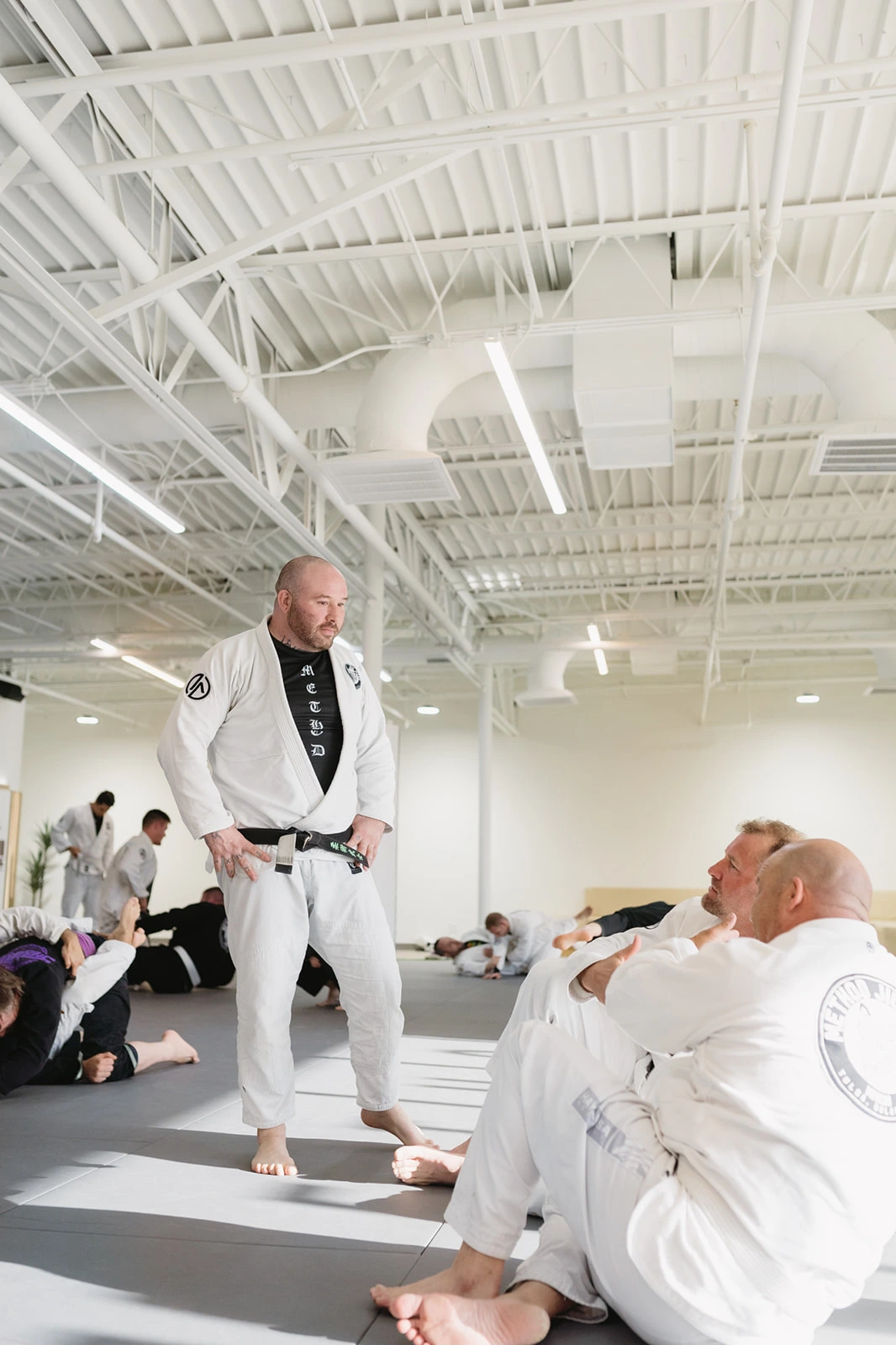

WHAT A TYPICAL COMPETITION CLASS LOOKS LIKE
Competition training at Method isn't just a harder version of regular class. It's structured specifically for the demands of tournament grappling. Every session has a purpose, a theme, and a standard of effort that moves you closer to your best performance when it counts.
WARM-UP AND MOVEMENT DRILLING (15 MINUTES)
We open with specific movement patterns — shrimping, granby rolls, re-guard entries, and wrestling-based takedown setups. The warm-up directly prepares your body for the positions and transitions you'll be drilling and rolling in that session. This isn't jogging around the mat — it's athletic preparation for grappling specific to the day's theme.
TECHNIQUE AND CHAIN DRILLING (25 MINUTES)
The technique block focuses on a single positional area or chain — for example, a guard passing sequence that flows from torreando to leg drag to mount, or a top half-guard game that connects to back takes. You'll drill each link in the chain until the transitions feel automatic, then put the chain together at moderate intensity with a cooperative partner. This is where your game plan is built one piece at a time.
SITUATIONAL ROUNDS (20 MINUTES)
This is the heart of competition training. Situational rounds start from specific positions — you might begin in your opponent's guard with two minutes left on the clock and only thirty seconds to go. The goal is to finish or improve position under pressure. These rounds simulate the moments in a match that separate competitors who train from competitors who compete: the scramble after a failed submission attempt, the urgency of a late comeback, the composure needed to maintain a lead and not give it back.
HARD ROLLS AND DEBRIEF (20 MINUTES)
Full-intensity, time-capped rounds close out the session. These aren't casual rolls — they're match-simulation rounds where both partners are genuinely competing. The debrief that follows is equally important: your coach will identify patterns, address recurring problems, and give you specific targets for your next session. Progress at Method isn't accidental — it's coached.