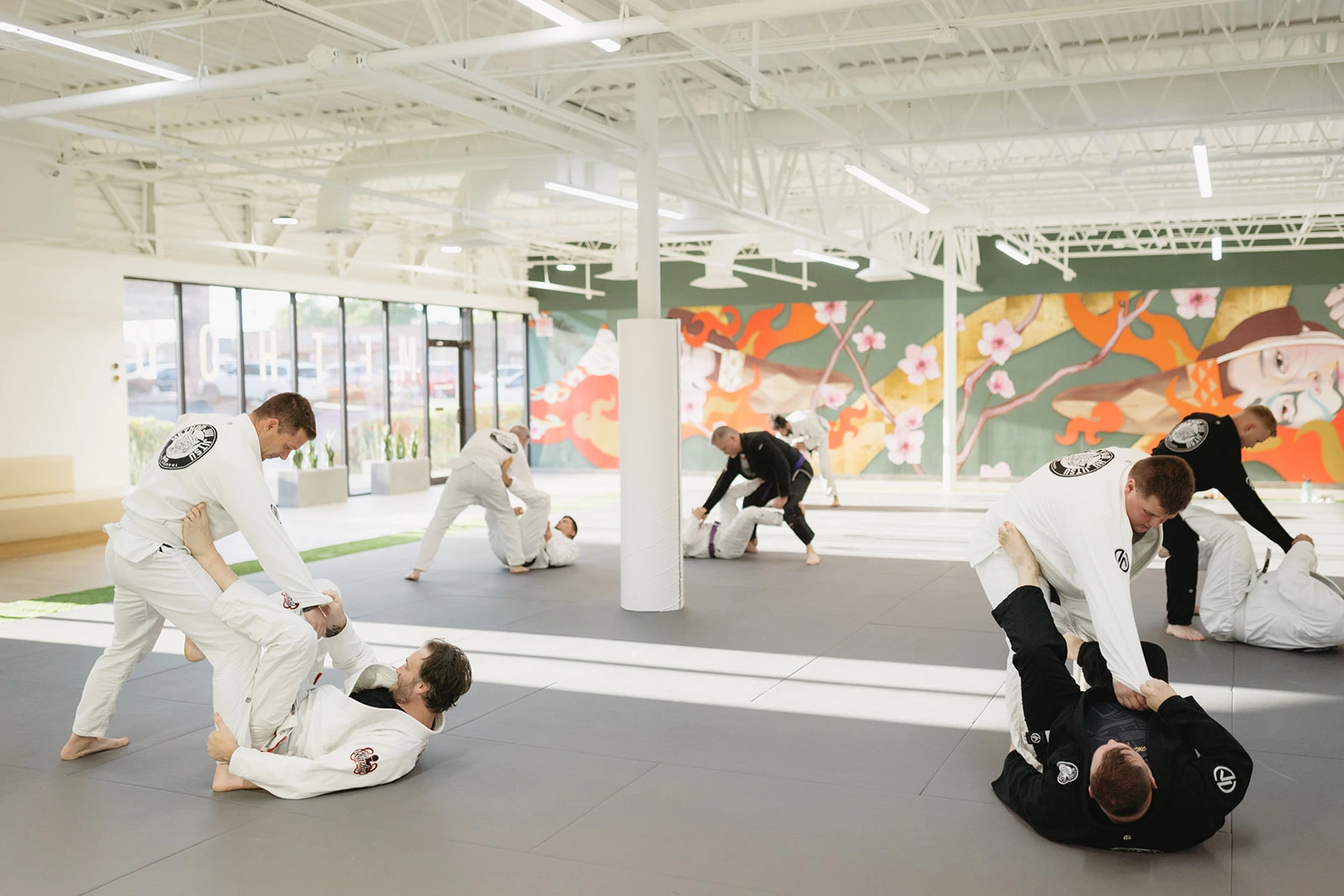

WHAT STARTING BJJ OVER 40 ACTUALLY FEELS LIKE
Here is an honest account of what beginning BJJ in your 40s or later looks like at Method — the challenges, the adaptations, and the rewards you can realistically expect.
THE FIRST CLASS — HUMILITY AND CURIOSITY
Your first class will humble you. Not because you will be overpowered, but because the movements are unfamiliar. BJJ asks your body to move in ways it probably never has. Hip escapes, bridging, guard work — these are motor patterns you will be building from scratch. Expect to feel clumsy. Expect your brain to work harder than your body. That is entirely normal, and it is the signal that you are learning something genuinely new.
MANAGING YOUR BODY — TRAINING SMART
Over 40, you will need to pay more attention to recovery than your younger training partners. This means communicating clearly with training partners about your limitations, tapping before joint pressure becomes pain rather than after, taking rest days seriously, and being honest with yourself and your coach about what your body can handle. These are not weaknesses — they are the habits that let people train BJJ into their 60s and 70s.
Most over-40 members find that a cadence of two to three sessions per week produces steady, consistent improvement without overloading recovery. Some progress to more. Some stay at two. The pace is entirely yours to set.
WHEN THE TECHNIQUE CLICKS
The first few months are about building the motor vocabulary of the art. Around the two to three month mark, something shifts. Movements start to feel more natural. You start to anticipate what is coming. You start to solve problems instead of just surviving them. This moment — different for every practitioner — is when BJJ transforms from something you are doing into something you are thinking about on your drive home.
THE COMMUNITY YOU DIDN'T EXPECT
One thing nearly every over-40 member tells us they did not expect is the quality of the social experience. The people you train with regularly become some of the more interesting friendships of adult life. There is a shared understanding among people who show up for hard things — a respect that does not require much conversation to establish. Many of our older members describe the training community as one of the main reasons they keep coming back.