
WHAT YOU'LL LEARN IN NO-GI CLASS
No-gi training opens up a version of jiu-jitsu built around body control, wrestling, and finishing skill rather than fabric grips. The techniques below are the backbone of what you'll drill, refine, and eventually own as you spend more time on the mat.
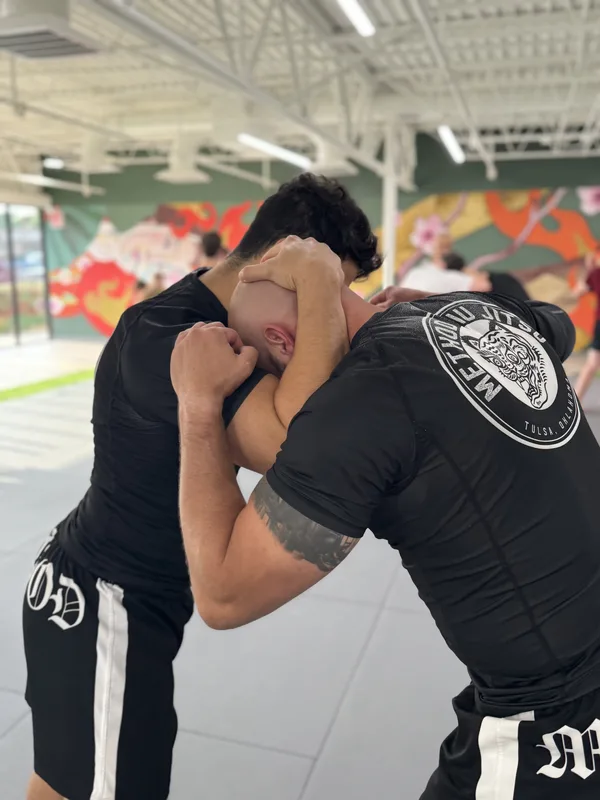
GUILLOTINES, D'ARCES, AND FRONT HEADLOCK ATTACKS
The front headlock is one of the most common positions in no-gi grappling, and it opens the door to a whole family of finishes. You'll learn how to lock up guillotines from standing and top position, transition into D'Arce and anaconda chokes when the guillotine isn't there, and recognize when a scramble is putting your opponent's neck exactly where you want it.
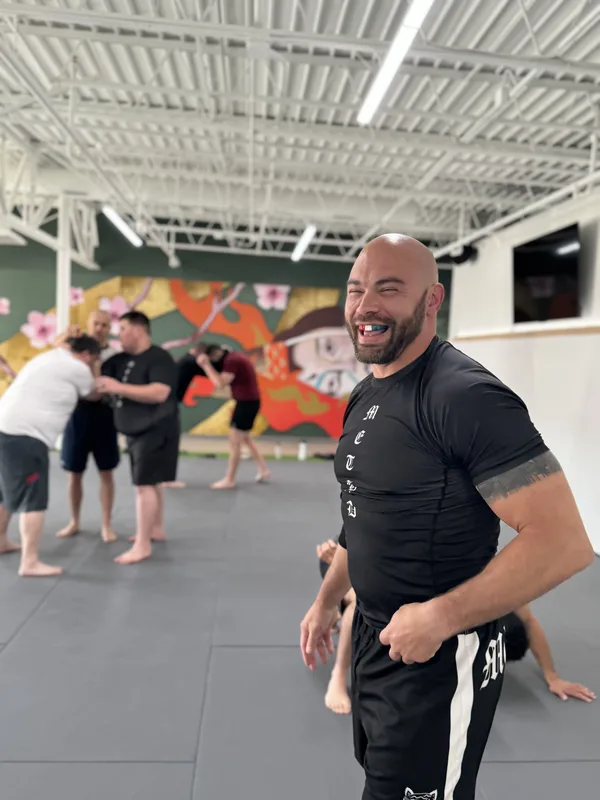
LEG LOCK SYSTEMS
Leg locks are central to modern no-gi, not an afterthought. You'll learn entries into heel hooks, kneebars, and calf slicers from ashi garami and saddle positions, along with the defensive awareness to protect your own legs while you're learning the entries. This is one of the fastest-growing and most requested parts of our no-gi curriculum. For a broader look at how submissions fit together across positions, see our BJJ submissions guide.
WRESTLING-BASED TAKEDOWNS AND BODY LOCK PASSING
Without a gi to grab, takedowns come from wrestling fundamentals — underhooks, single legs, and body locks. You'll learn how to close distance, secure a body lock, and convert it into a takedown or a pass, which is one of the most reliable ways to get to top position in a no-gi match.
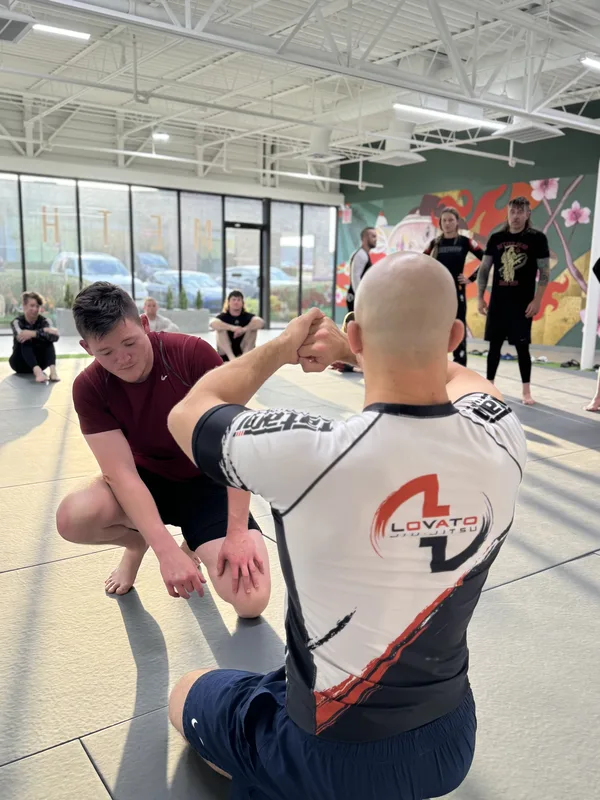
BACK TAKES AND REAR NAKED CHOKES
The back is the most dominant position in no-gi grappling because there's no fabric available to defend the choke with. You'll learn how to take the back off scrambles and turtle positions, secure your hooks or a body triangle, and finish with a clean rear naked choke.
NO-GI GUARD SYSTEMS
Butterfly guard, half guard, and single leg X all rely on hooks, underhooks, and frames instead of grips. You'll learn how to build and maintain these guards against a no-gi pass, sweep from them, and use them as launching points into leg attacks or back takes. As you get more comfortable, we'll show you how these guards connect to the leg lock and back take systems above, so your game builds into a cohesive whole rather than a collection of unrelated techniques.