Walk into any serious jiu-jitsu academy and you will notice something immediately: the gi is still the backbone of training. Despite the surge in popularity of no-gi grappling and submission-only rulesets, gi training remains the single most effective way to develop precise, technical jiu-jitsu.
At Method Jiu-Jitsu in south Tulsa, gi classes form the core of our curriculum for a reason. The gi does not just change what you wear on the mats — it changes how you think, move, and solve problems under pressure.
What Makes Gi Training Different
In no-gi jiu-jitsu, you work in a rashguard and shorts. Grips are limited to wrists, necks, and underhooks. The pace is faster and positions shift quickly because there is less friction and fewer handles to control your opponent.
The gi introduces an entirely different layer. That heavy cotton jacket and pants give both you and your training partner dozens of grip options — collars, sleeves, lapels, pants. Each grip opens a chain of attacks and counters that simply do not exist without the uniform.
This is not about one style being better than the other. It is about what each style forces you to develop. And when it comes to building a technical foundation, the gi is unmatched.
The Gi Forces You to Be Technical
Speed and athleticism can carry you in no-gi. In the gi, they cannot. A strong opponent can stall your movement with a single collar grip. An experienced training partner can shut down your explosiveness with proper sleeve control.
That restriction is exactly the point. The gi punishes shortcuts. If your escape from mount relies on bench-pressing your opponent off you, a collar choke will remind you why technique matters. If your guard passing depends on speed rather than pressure, a spider guard player will slow you down and sweep you.
Over time, gi training teaches you to replace athleticism with precision. You learn to move efficiently, conserve energy, and find leverage where brute strength fails.
Defensive Skills That Transfer Everywhere
One of the most underrated benefits of gi training is what it does for your defense. Because the gi gives your opponent more tools to attack you, you are forced to develop sharper awareness and tighter defensive habits.
A collar choke can come from almost any position. Cross-collar attacks from guard, loop chokes from the front headlock, baseball bat chokes from side control — each one teaches you to protect your neck in ways that no-gi training alone cannot replicate.
Those defensive instincts carry over directly to no-gi, MMA, and real-world self-defense. Students who train primarily in the gi tend to develop a calm, composed defensive game because they have already dealt with the widest range of threats.
Grip Fighting Is a Skill of Its Own
In gi jiu-jitsu, the fight often starts before any technique is attempted. Grip fighting — the battle for dominant hand positioning on the collar, sleeve, or pants — determines who controls the pace and direction of the exchange.
This is a skill that takes months to develop and years to master. Learning when to establish grips, when to strip them, and how to use them to set up sweeps, passes, and submissions adds a strategic dimension to your training that sharpens your overall grappling IQ.
At Method, we dedicate specific instruction time to grip fighting concepts because they are that important. Understanding grips makes every other technique in your game more effective.
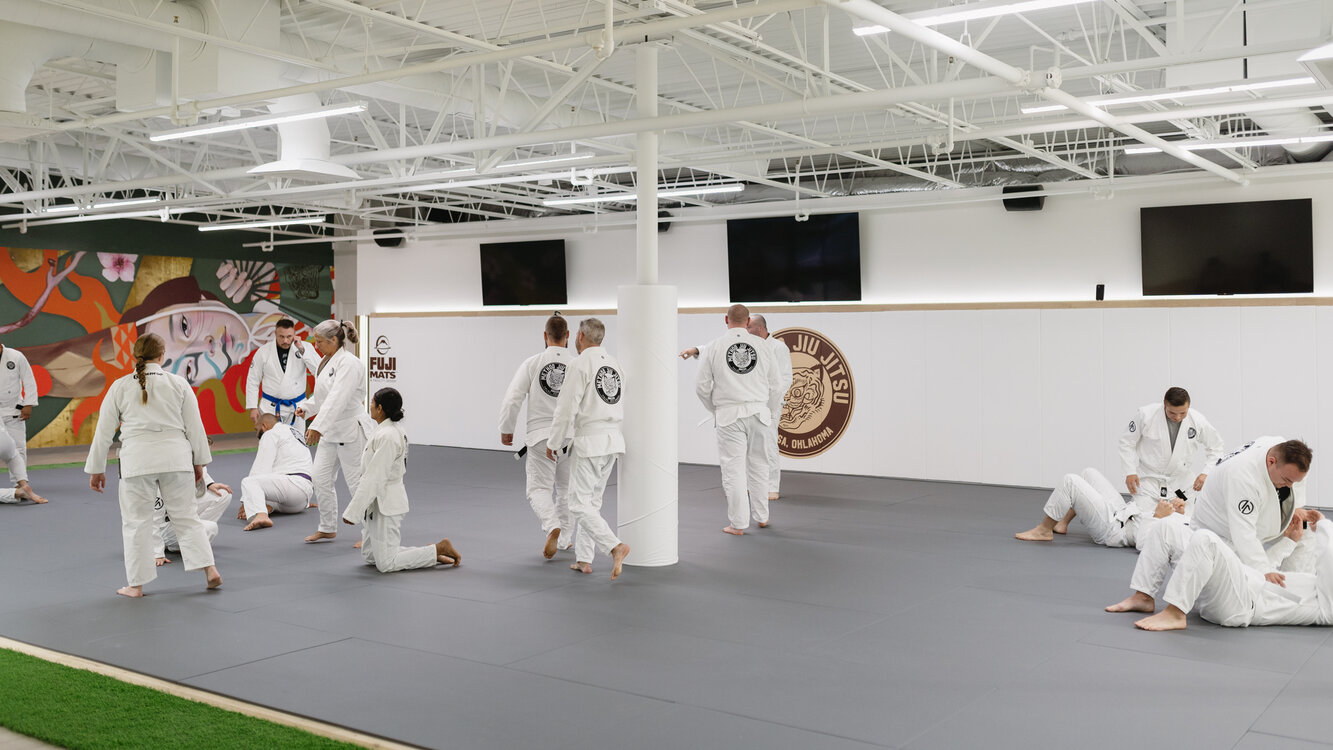
What a Gi Class Looks Like at Method Jiu-Jitsu
A typical gi class at our south Tulsa academy follows a structured progression:
- Warm-up and movement drills — hip escapes, technical stand-ups, guard retention movements
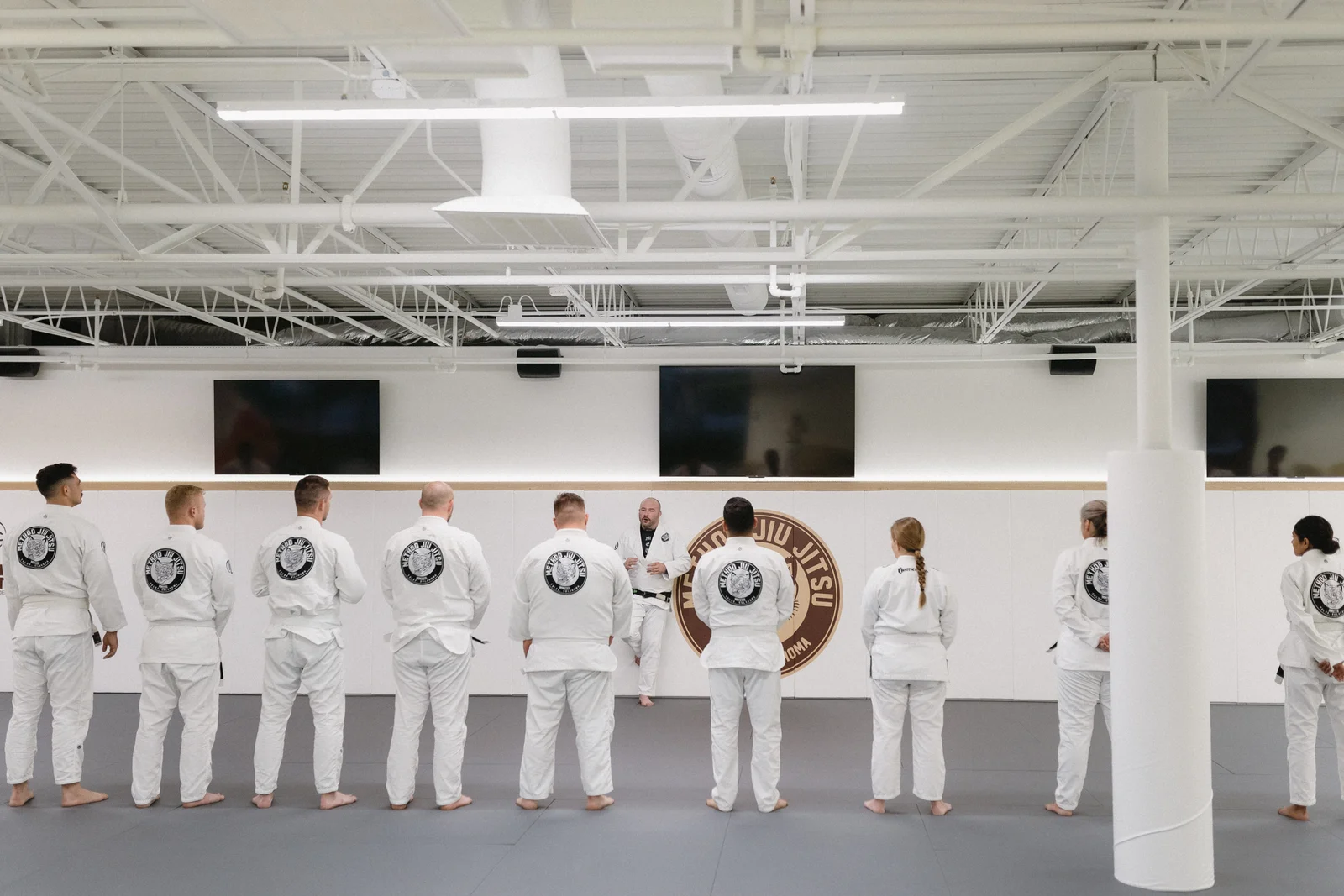
- Technique instruction — Professor Dallas demonstrates a sequence (usually 2–3 connected techniques from a single position), then students drill with a partner
- Positional sparring — live rounds from a specific position, applying what was just taught under resistance
- Open rolling — full sparring rounds where students put everything together
Whether you are a complete beginner or a seasoned competitor, the structure keeps everyone learning. Newer students build their foundation. Advanced students refine details and test techniques against resistance.
Gi and No-Gi Are Not Competing — They Are Complementary
The best grapplers in the world train both. The gi sharpens your technique and tightens your defense. No-gi develops your speed, scrambling ability, and wrestling integration.
At Method Jiu-Jitsu, we offer both gi and no-gi classes throughout the week specifically because we believe in developing well-rounded grapplers. Students who train in both styles progress faster and develop a more complete understanding of jiu-jitsu.
If you have only trained no-gi, adding gi sessions to your week will expose gaps in your game you did not know existed. If you have only trained in the gi, no-gi rounds will challenge your ability to adapt when the grips disappear.
Either way, you become a better grappler.
Why Tulsa Students Choose Method for Gi Training
The quality of gi instruction comes down to the instructor and the training environment. At Method, every gi class is led by Professor Dallas Niles, a black belt whose teaching approach emphasizes understanding over memorization. You will not just learn what to do — you will learn why it works and when to use it.
The facility itself is purpose-built for jiu-jitsu. Spring-loaded mats reduce joint stress, the training space is clean and well-maintained, and the culture on the mats is focused but welcoming. Students range from teenagers to adults well into their 50s, white belts to brown belts, all training together with mutual respect.
That kind of environment is what makes consistent training possible. And consistency is what turns a beginner into a skilled grappler.
Ready to Try a Gi Class?
If you are in Tulsa, Broken Arrow, Jenks, Bixby, or anywhere in the surrounding area, Method Jiu-Jitsu offers a free trial class so you can experience gi training firsthand. No experience necessary — just show up and we will take care of the rest.
Book your free trial class and see why gi jiu-jitsu remains the foundation of great grappling.