Wash your BJJ gi after every class. Turn it inside out, wash it on a gentle cycle in cold water with a mild detergent, skip the bleach and fabric softener, and get it completely dry the same day. That routine keeps the smell out, keeps the fit you want, and keeps your training partners happy.
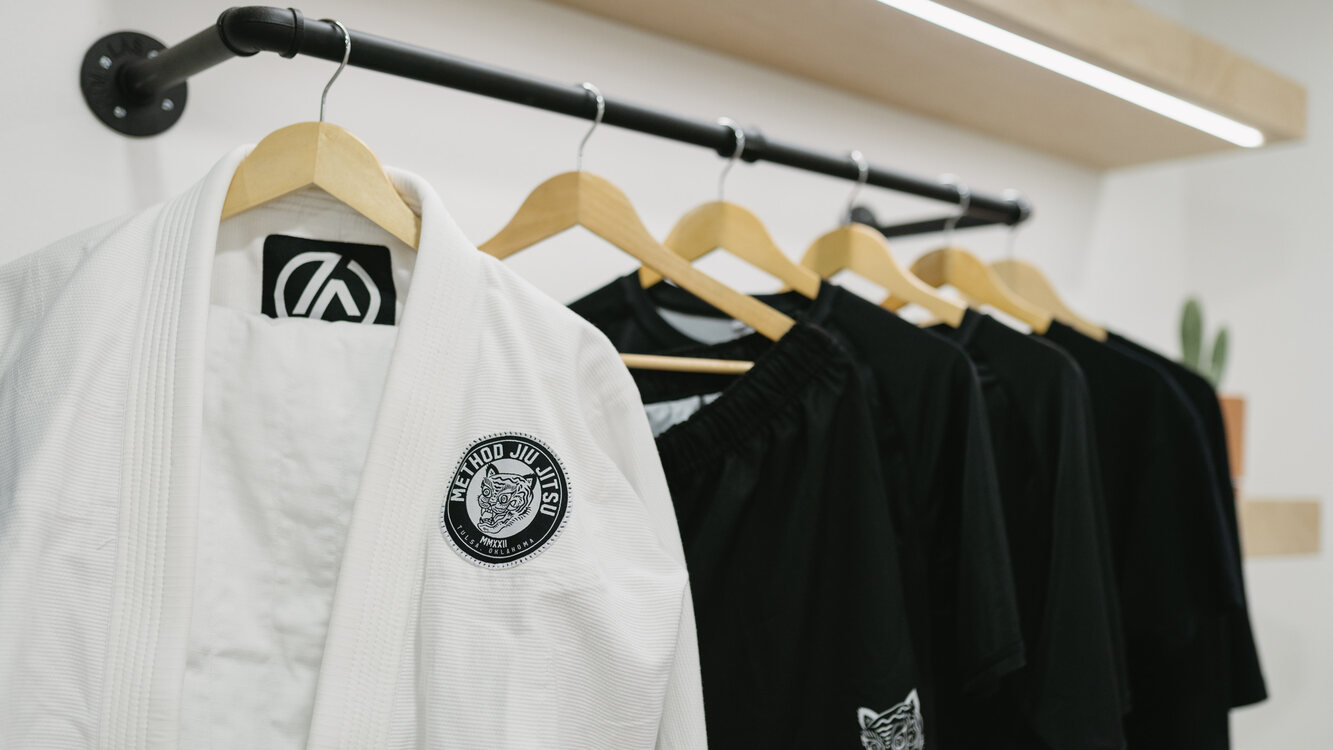
The photo above shows a Method Jiu-Jitsu gi on a wide wooden hanger, which is exactly how a clean gi should dry and wait for your next class. Every membership includes a premium Method Jiu-Jitsu gi, so think of this guide as the owner's manual. If you are still figuring out what to bring to your first class, start with our what to wear to BJJ guide. If words like gi and kimono are new to you, the BJJ terminology glossary defines them.
Why Your Gi Needs a Wash After Every Class
A gi soaks up sweat like a towel, and a few rounds of sparring can leave it heavy and damp. Leave it balled up in a gym bag and bacteria go to work on that sweat, which is where the sour gym smell comes from. Give it a few days and the smell settles into the cotton for good.
There is a health side too. The CDC notes that skin infections, including MRSA, are most often reported in sports with a lot of physical contact, and it lists martial arts among the sports with reported cases. Its MRSA prevention advice for athletes includes washing and completely drying your uniform after each use and never sharing uniforms or towels. The CDC also lists heavy sweating, skin to skin contact, and reused equipment among the reasons athletes face a higher risk of ringworm.
That is why our BJJ etiquette guide treats a clean gi as non-negotiable, and why every new student at Method gets a walkthrough of our hygiene standards on day one. Our mats are cleaned daily, as our BJJ safety page explains, but a clean mat only helps if everyone steps onto it in a clean gi. Showing up fresh is one of the simplest ways to be the kind of training partner people want to roll with.
What You Need to Wash a Gi
You do not need a shelf of special products. This short list covers almost everything:
- A mild laundry detergent with no bleach or fabric softener mixed in
- White vinegar for odor and stains
- Baking soda, if you want to keep a white gi bright
- A wide hanger, wood or plastic, so the shoulders keep their shape
- A spot with good airflow, or a fan
A sports detergent is worth trying if odor has already built up, but plenty of people never need one.
How to Wash a BJJ Gi, Step by Step
- Get it out of your bag as soon as you get home. If it cannot go straight into the washer, hang it open so it can breathe.
- Treat stains first. Rinse blood or mat marks under cold running water. Hot water can set stains.
- Turn the jacket and pants inside out. This protects the patches, the color, and the seams.
- Tie the pants drawstring in a loose bow so it does not slip back into the waistband during the wash.
- Wash in cold water on a gentle cycle. Cold water gets a gi clean and keeps shrinking under control.
- Use a mild detergent and nothing else. Chlorine bleach weakens cotton fibers and fades color, and gi makers warn against fabric softener for the same reason.
- Keep the load simple. Wash the gi alone or with other training gear in similar colors. Towels shed lint onto the weave, and dark clothes can bleed onto a white gi.
- Pull it out the moment the cycle ends. A gi left sitting wet in the drum starts to smell and can mildew.
How to Dry a BJJ Gi Without Shrinking It
This is the one spot where gi makers and health guidance do not quite agree, so it helps to know both sides.
Most gi brands recommend hang drying, because dryer heat is what shrinks cotton. The CDC's guidance for athletes recommends drying uniforms completely in a dryer rather than by hanging, and following the clothing label's instructions.
Here is how we would handle it. Start with the care label on your gi. If it allows tumble drying, use the lowest heat setting and take the gi out as soon as it is dry. If the label says hang dry, put the jacket on a wide hanger, hang the pants by the waistband, and dry both in a room with good airflow or a fan. Keep them out of direct sunlight, which fades and weakens the fabric over time. Either way, the gi should be completely dry before you fold it or pack it. Damp is the real enemy.
Skip the iron, too. Iron heat can shrink the gi and damage the patches.
Washing a New Gi for the First Time
Most cotton gis shrink a little the first time they are washed, even ones sold as pre-shrunk. So wash a brand new gi in cold water, let it dry, and try it on before you decide anything about the fit.
If you plan to sew on patches, wait until after that first wash. Adding them once the first round of shrinking is done keeps them from bunching or sitting crooked later.
How to Shrink a Gi on Purpose
Sometimes a gi runs a little long in the sleeves or pants. You can shrink a cotton gi, but go slowly, because shrinking cannot be undone.
- Wash it in warm water and dry it on normal heat, then try it on.
- Still too long? Repeat one round at a time and check the fit after each.
- For small fixes, shrink only the part that needs it. Soak just the sleeves or pant legs in hot water, then dry them.
Synthetic blends do not shrink the way cotton does, so read your label first. If your Method gi does not fit right, talk to our team before you start experimenting.
If you compete, keep the rules in mind. Tournament organizers set their own uniform standards, and a sleeve or pant leg shrunk too short can fail a uniform check. Our first BJJ tournament checklist covers what to confirm before event day, and our competition training program is built for students preparing to step on that mat.
How to Get the Smell Out of a BJJ Gi
If a gi smells sour even right out of the wash, bacteria have settled deep into the fibers. Here is how to reset it:
- Soak it for a few hours or overnight in cold water with a splash of white vinegar, then wash as normal.
- Repeat the vinegar soak about once a month to keep odor from building back up.
- Switch to a sports detergent if the smell keeps coming back.
- Skip scented sprays and boosters. They cover the smell instead of removing it.
- Never mix vinegar with chlorine bleach. The combination releases toxic chlorine gas.
Then fix the habit that caused it. A gi that goes into the wash the same day as class rarely develops that smell in the first place.
Removing Blood and Mat Stains
Small blood spots happen in a grappling sport. Rinse them in cold water as soon as you can, since hot water sets stains. If a stain survives the wash, soak the gi overnight in cold water with a little white vinegar, gently scrub the spot, and wash it again.
Resist the urge to bleach a white gi. Gi makers warn that bleach weakens the cotton and makes it more likely to tear at the seams. For a white gi that looks dingy, a little baking soda in the wash helps keep it bright.
Should You Wash Your BJJ Belt?
Yes. There is an old piece of gym lore that says you should never wash your belt because you would wash away everything you have learned. Your training partners would rather you washed it. A belt touches the same sweat, mats, and hands as your jacket, and gi makers recommend washing it every time you wash your gi.
Toss it in with the gi on cold and hang it to dry. If you are curious what each color means and how long each rank takes, our BJJ belt system guide walks through every one.
Rash Guards, Spats, and Shorts
Plenty of students wear a rash guard under the gi, and in no-gi classes rash guards, spats, and grappling shorts are the whole uniform. Wash them after every session too. Use cold water, turn them inside out to protect the prints, and hang them to dry unless the label says otherwise, since high dryer heat breaks down spandex over time.
Curious how the two styles compare? Our gi vs no-gi guide explains the differences, and our intro to no-gi jiu-jitsu covers what a no-gi class feels like.
How Many Gis Do You Need?
One gi works fine if you train once or twice a week and wash it right after each class. Once you are on the mat three or more days a week, a second gi takes the pressure off. One can dry completely while you wear the other, which is better for the fabric and for your training partners.
Every Method membership includes a premium Method Jiu-Jitsu gi, so you start with one and can decide later whether your schedule calls for a second.
A Simple Gi Routine for Busy Weeks
The best routine is the one you will actually follow. Ours fits on an index card:
- The gi comes out of your bag the minute you get home.
- It goes into the washer that night, inside out, on cold.
- It goes onto a wide hanger, or into the dryer on low if the label allows, before bed.
- It is dry and ready for your next class.
If you are juggling work and family, our post on fitting adult BJJ into a busy schedule has more ideas for making training stick. Parents can make the gi part of the routine for kids too. Hanging up their own gi after class is an easy first responsibility for students in our kids program and our teen classes, and it works just as well for families who train together.
Common Gi Care Mistakes
- Leaving a sweaty gi zipped in your bag overnight
- Washing in hot water every time
- Bleaching a white gi to brighten it
- Adding fabric softener or scented boosters
- Drying in direct sun or on high heat
- Ironing the gi or the patches
- Folding it and putting it away while it is still damp
- Sharing a gi or towel with a teammate
Choosing a gym? Mat hygiene is one of the first things our guide to finding a BJJ gym in Tulsa tells you to check.
Frequently Asked Questions
Can you put a BJJ gi in the dryer?
Check the label first. Many gi makers recommend hang drying because dryer heat shrinks cotton, while the CDC advises athletes to dry uniforms completely in a dryer and to follow the clothing label. If your label allows tumble drying, use the lowest heat setting and take the gi out as soon as it is dry. If it says hang dry, dry it on a wide hanger with good airflow until it is completely dry.
How often should you wash your BJJ gi?
Wash your gi after every class, even if it looks clean. Sweat soaks into the cotton during training, and bacteria feeding on that sweat cause odor and can spread skin infections. If you cannot wash it right away, take it out of your bag, hang it open to air out, and wash it the same day.
Can you wash a gi with other clothes?
It is best to wash a gi alone or with other training gear in similar colors. Towels can shed lint onto the weave, and dark clothing can bleed color onto a white gi. Use cold water, a gentle cycle, and a mild detergent with no bleach or fabric softener.
How do you get the smell out of a BJJ gi?
Soak the gi for a few hours or overnight in cold water with a splash of white vinegar, then wash it as usual in cold water with a mild or sports detergent and dry it completely the same day. Repeating the vinegar soak about once a month helps keep odor from coming back. Skip scented sprays, which cover the smell instead of removing it.
Should you wash your jiu-jitsu belt?
Yes. Your belt picks up the same sweat and bacteria as your gi, so wash it every time you wash your gi. Put it in with the gi on a cold, gentle cycle and hang it to dry. The old saying that washing your belt washes away your knowledge is gym lore, not good hygiene.
Train at Method Jiu-Jitsu in South Tulsa
Clean gear is part of being a good training partner, and it is one of the first things we talk about with new students. If you are new, our Fundamentals classes meet Monday and Wednesday at 5:30 PM, your first class is free, and every membership includes a premium Method Jiu-Jitsu gi. Read what to expect in your first class, check the class schedule, meet our instructors, or book your free class. Want to understand the gi side of training first? Start with our gi jiu-jitsu program and our post on why the gi builds better grapplers, or browse all of our programs.
We train at 8011 S Sheridan Rd, Suite B, Tulsa, OK 74133, a short drive for students from South Tulsa, Broken Arrow, Jenks, and Bixby. Call (918) 995-4692 with any questions.