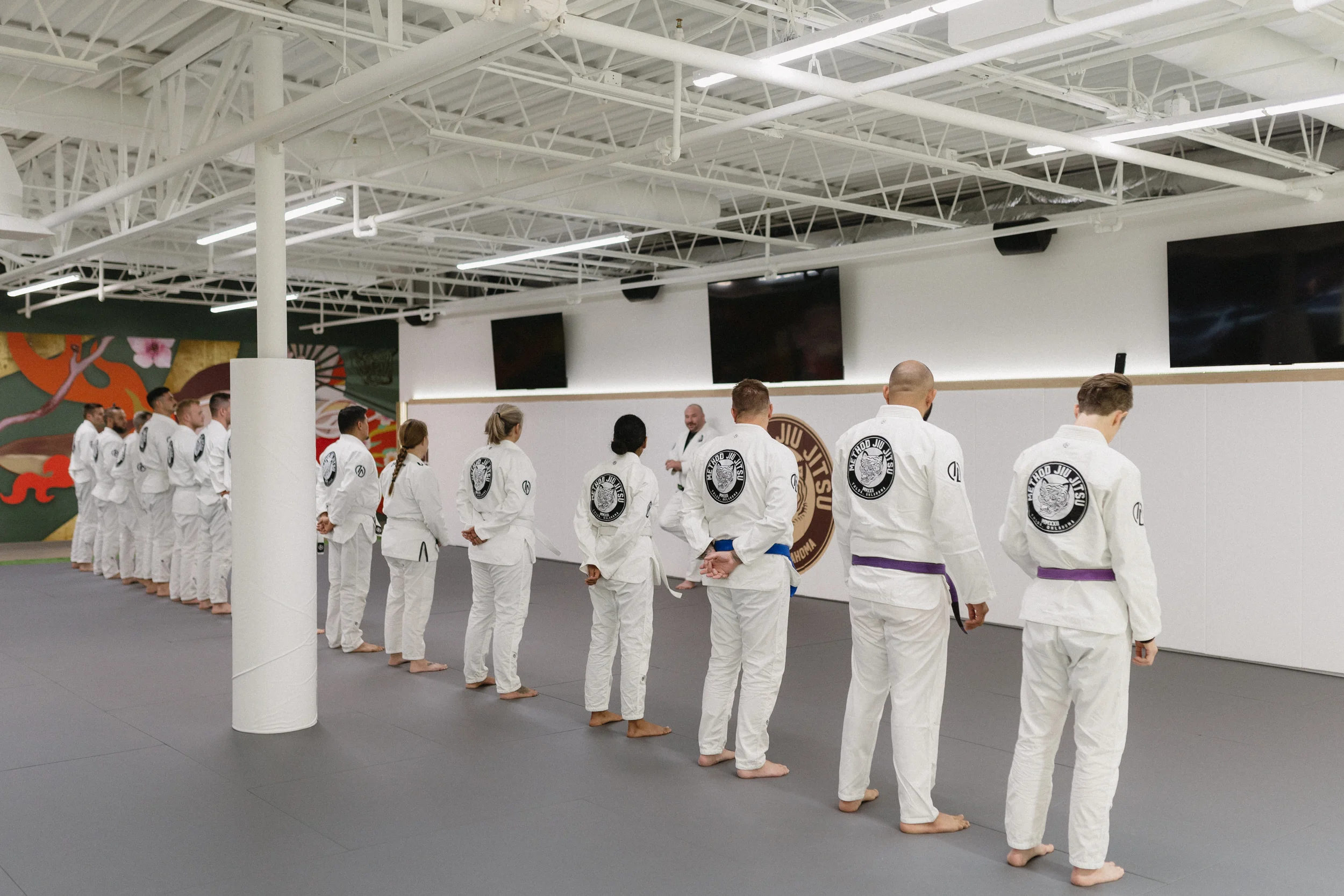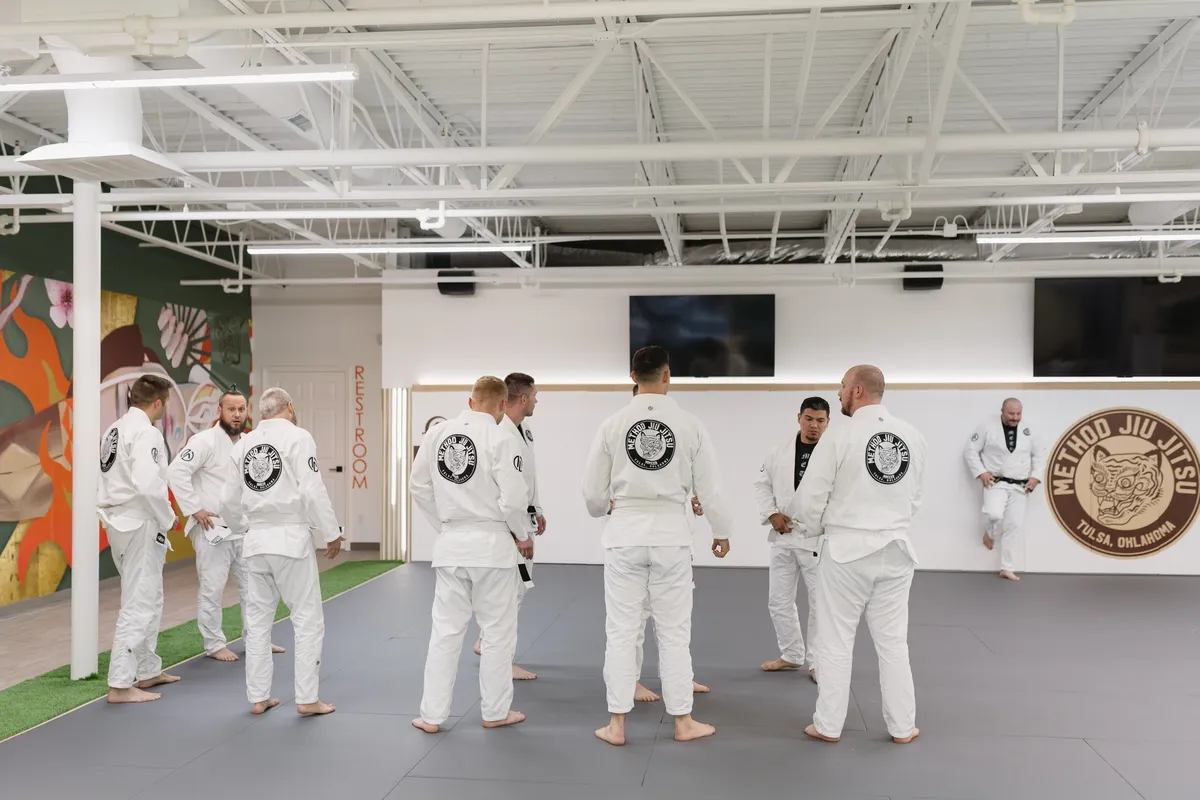
Choosing a BJJ gym is one of those decisions that looks simple from the outside. You search "BJJ gym Tulsa," find a few options, maybe look at some reviews, and pick the one closest to your house. That approach works for choosing a coffee shop. For a gym where you are trusting people with your body and your development as a martial artist, it is worth more thought than that.
The gym you train at determines who teaches you, how you learn, who you roll with, and whether you are still training a year from now. Most people who quit jiu-jitsu do not quit because they disliked jiu-jitsu. They quit because something about their training environment did not work for them — and they did not know what to look for before signing up.
This is what actually matters when you are evaluating a BJJ gym in Tulsa.
Coaching Credentials and Teaching Quality
Belts and competition records tell you something, but they do not tell you the most important thing: can the coach teach? A world-champion black belt who cannot break down techniques into learnable steps is less useful to you than a purple belt who communicates clearly and adapts to different learning styles.
When you visit a gym, watch a class before you participate. Pay attention to how the instructor explains techniques. Are they demonstrating from multiple angles? Do they walk around during drilling and offer corrections? Do they adjust their teaching based on who is in the room — slowing down for newer students, adding details for advanced ones?
At Method Jiu-Jitsu, instruction follows a curriculum-based approach. Each week builds on the previous one, so students are not learning random techniques in isolation. That structure is what turns sporadic training sessions into actual skill development. You can learn more about how classes are structured to see what this looks like in practice.
Mat Culture and Training Partners
The culture of a gym shows up most clearly during live rolling. Visit during a regular class — not a special event or open mat — and watch how people roll with each other. Are experienced students helping newer ones, or just hunting submissions? Do training partners communicate about pace and intensity? Is there mutual respect, or does the room feel competitive in an unhealthy way?
A gym that gets mat culture right has a few observable traits. Higher belts adjust their intensity when rolling with beginners instead of treating every round like a competition match. New students are welcomed with actual guidance, not just a handshake and a "figure it out" approach. People from different ages, backgrounds, and experience levels train together without tension.
This matters because your training partners shape your development as much as your coach does. You spend more time rolling with partners than listening to instruction. If that environment is not right, your learning suffers regardless of how good the coach is.
Class Variety and Schedule
A gym that offers only one class type — or one class time — is asking you to build your life around their schedule. Look for a gym that provides options. Gi training and no-gi training develop different skill sets, and having access to both gives you a more complete understanding of jiu-jitsu.
Beyond gi and no-gi, consider whether the gym offers programming for specific groups. If you are a parent looking to train with your child, a gym with a family program is fundamentally different from one that runs kids and adults at separate times with no overlap. If you are over 40 and want to train at a pace that respects your body's recovery needs, make sure the gym accommodates that rather than expecting everyone to train at the same intensity.
Schedule flexibility matters more than people realize at the outset. Your enthusiasm for jiu-jitsu will not change, but your availability will. A gym with morning, evening, and weekend options gives you the ability to stay consistent when work or family obligations shift. You can view the full Method Jiu-Jitsu schedule to see how a well-structured weekly calendar looks.
Facility and Equipment
Walk into the gym and look at the mats. Are they clean? Do they smell clean? Mat hygiene is not a bonus feature. It is the baseline. Staph infections, ringworm, and other skin conditions spread on dirty mats, and a gym that does not take cleaning seriously is one you should walk away from.
Beyond cleanliness, look at the space itself. Is the training area large enough for the number of people in class, or are partners bumping into each other during drilling? Is there adequate ventilation and climate control? Are the walls padded near the edge of the mat? These details reflect how much the gym invests in the safety and comfort of its members.
Method Jiu-Jitsu operates out of a purpose-built facility on South Sheridan Road in Tulsa. The space was designed for jiu-jitsu from the start — not converted from a retail storefront or shared with other businesses. That distinction affects everything from mat space to acoustics to air quality.
Community Beyond the Mat
The best BJJ gyms in Tulsa are not just training facilities. They are communities. The relationships you build on the mat extend beyond class time, and that sense of belonging is a significant factor in long-term retention.
Look for a gym that fosters connection outside of training. Does the gym host events, seminars, or social gatherings? Do members train together because they genuinely enjoy each other's company, or just because they paid for the same membership?
This is harder to evaluate during a single visit, but you can get a sense of it by watching how people interact before and after class. Are they talking about their weekend plans, checking in on each other's injuries, helping newer students feel welcome? That social fabric is part of what makes jiu-jitsu sustainable as a long-term practice.
Women training at Method Jiu-Jitsu describe the community as one of the primary reasons they stay. That kind of environment does not happen by accident: it is built through deliberate coaching decisions and cultural standards that prioritize respect and inclusion.
Safety and Injury Prevention
Jiu-jitsu involves close contact, joint manipulation, and chokes. The risk of injury exists in every session, and how a gym manages that risk separates responsible programs from reckless ones.
Ask about the gym's approach to safety. Are new students taught breakfalls and tapping etiquette before they are allowed to roll live? Are there rules about which techniques are permitted at different belt levels? Does the coach intervene when rolls become too aggressive?
At Method Jiu-Jitsu, brand-new students spend their first sessions learning fundamental positions, basic etiquette, and safety protocols before they ever participate in live sparring. That onboarding process protects both the new student and their training partners.
Injury prevention also connects to class structure. A gym that warms up properly, teaches technique with attention to safe mechanics, and manages sparring intensity through pairing and rule sets will have fewer injuries than one that throws everyone onto the mat and lets things sort themselves out.
Pricing and Commitment Structures
Every gym has a different pricing model, and the cheapest option is rarely the best one. That said, transparency matters. A gym that will not tell you the price until you sit through a high-pressure sales pitch is telling you something about their priorities.
Look for gyms that offer a free trial class or introductory period. You should be able to experience the coaching, the culture, and the facility before making a financial commitment. Be cautious of long-term contracts that lock you in before you have trained long enough to know whether the gym is right for you.
Method Jiu-Jitsu offers a free introductory class with no obligation. You train in a real class, with real students, taught by the same instructor who would coach you as a member. There is no bait-and-switch between the trial experience and the actual membership experience.
The Tulsa BJJ Landscape
Tulsa has a growing jiu-jitsu community, which means you have legitimate options. That is a good thing. Competition between gyms raises the standard of coaching, facility quality, and programming across the board.
When evaluating gyms, visit more than one. Take trial classes at different locations. Compare how you feel on the mat — not just during class, but after. Did you feel safe? Did you learn something? Did the coach know your name by the end of the session? Did the other students make you feel like you belonged?
The right gym feels right almost immediately. You will notice it in the way people greet you, the way the coach corrects your technique without making you feel incompetent, and the way you start thinking about your next class before you have even left the building.
What to Do Next
If you are searching for a BJJ gym in Tulsa, here is a practical approach:
Visit during a regular class. Not an open mat, not a special event. A normal weeknight class gives you the most accurate picture of what training there actually looks like.
Watch before you roll. If the gym allows it, observe a class first. Pay attention to coaching quality, mat culture, and how students interact with each other.
Ask questions. What is the belt progression timeline? What does the curriculum look like? How does the gym handle new students? Legitimate gyms welcome these questions.
Try a class. Most good gyms offer a free trial. Use it. You will learn more in one session on the mat than you will from any website, including this one.
Trust your experience. Your first class will tell you whether this is a gym where you can see yourself training for years. Pay attention to that feeling.
You can book a free class at Method Jiu-Jitsu and experience the coaching, the community, and the facility firsthand. No commitment required. Just show up, learn something, and see if it fits.
If you are still deciding whether jiu-jitsu is right for you at all, these resources may help: