A first Brazilian jiu-jitsu tournament can make normal practice feel unfamiliar. There is a bracket, a clock, a referee, a weigh-in, and an opponent who has not agreed to the pace you use with a teammate. The best preparation is not an exhausting collection of secret moves. It is a simple plan you can rehearse, plus a clear understanding of the event's rules and logistics.
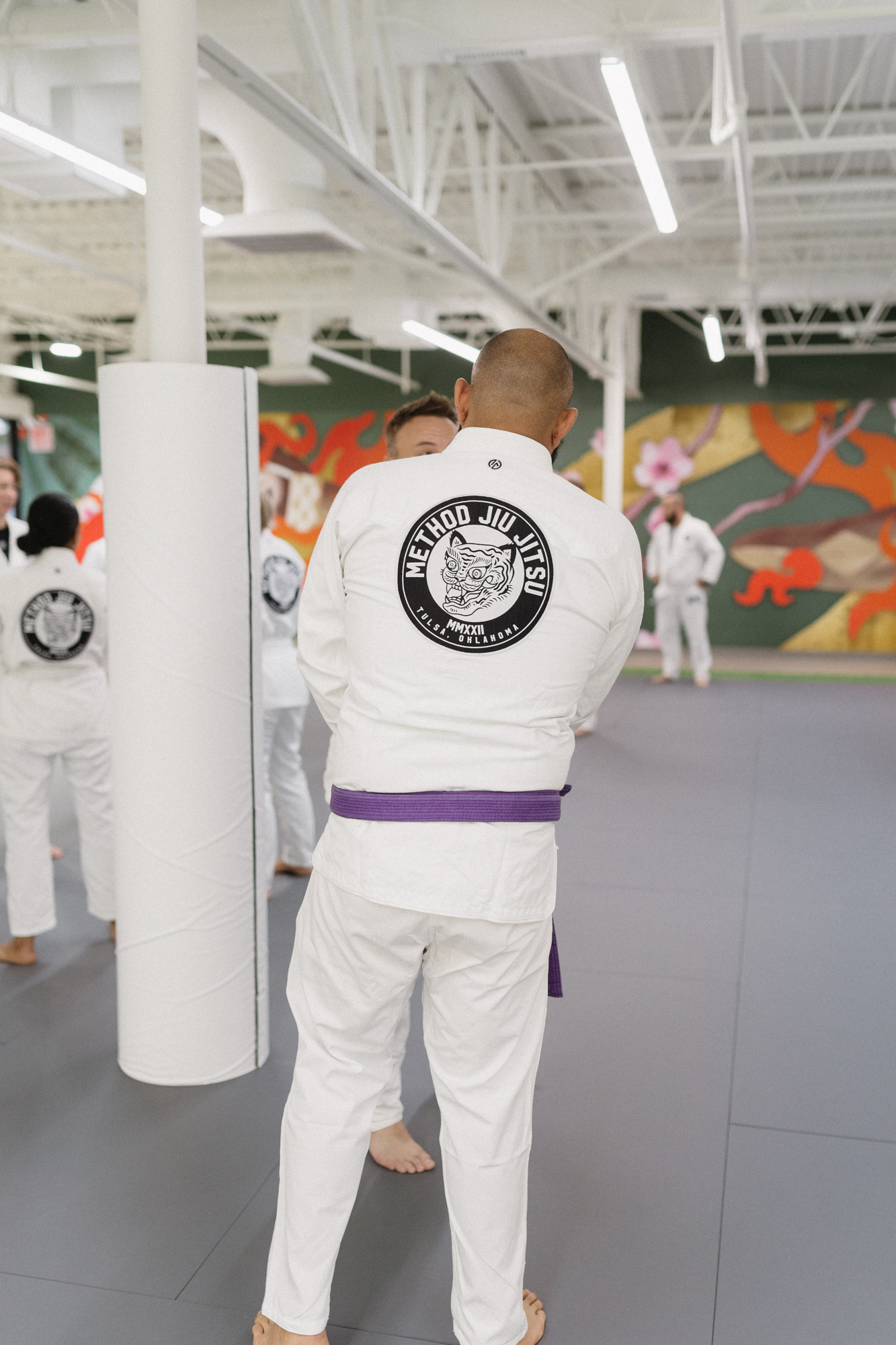
This guide is for someone searching how to prepare for a first BJJ tournament in Tulsa. The featured photo shows a purple-belt Method practitioner with teammates on the training mats, not a tournament match; that everyday practice is where competition habits are built. If you are still deciding whether to start, read what BJJ is and what to expect at your first class first.
1. Decide Whether This Event Is Right for You
A tournament is optional, not a membership requirement or a test of belonging. A beginner can benefit from competition if they can practice safely, know how to tap, recognize basic positions, and accept that a result says little about their long-term progress. Ask your coach whether your current training and the event's ruleset make a sensible match. That is more useful than a universal rule such as “compete after exactly six months.”
Look at the organizer, venue, registration deadline, divisions, fees, refund policy, and travel. A first event with clear rules and a manageable day is easier to prepare for than one selected only because it is close. The competition training program describes how Method approaches purposeful preparation; the beginner program is a better starting point if you have not built a safe foundation.
2. Read the Actual Rules Before You Register
“BJJ rules” are not one universal document. Organizations differ on scoring, match length, overtime, legal submissions, uniform standards, weight classes, and whether certain movements are prohibited by belt or age. Download the current rules for your specific event and division, not a summary from a different tournament. Ask a coach to explain the rules that directly affect your game.
Find answers to five questions: When does the match end? What earns points or penalties? Which submissions can you use? What are the boundary and reset procedures? How are ties decided? Knowing these does not replace technique, but it prevents avoidable confusion. If the terms are unfamiliar, use the BJJ terminology glossary and positions guide.
3. Choose the Correct Division and Weight Class
Registration usually asks for age, belt or experience, weight, and gi or no-gi. Enter truthful information. Some organizers combine small brackets or use different experience categories; verify the exact form and contact the organizer if you are unsure. A coach can help you choose a realistic division, but only the organizer can confirm an event-specific eligibility question.
Do not assume the posted weight is your body weight in ordinary clothing. Some events weigh competitors wearing a gi, and some have no allowance. Read the instructions and weigh yourself under comparable conditions well before the deadline. Avoid a last-minute dehydration cut, especially as a first-time competitor. Maintaining normal training and health matters more than a theoretical advantage in a lighter bracket. Compare gi training and no-gi training before selecting a format.
4. Build a Small, Repeatable Game Plan
Write a one-page plan, not a catalog of fifty techniques. Identify a safe starting grip or contact, one takedown or guard entry appropriate to the rules, a preferred top route, a bottom recovery, and one familiar submission you can execute without rushing. Your plan should also say what to do when the opponent gets ahead: protect yourself, establish frames, regain position, and listen for your coach.
For example, a student might work toward top position, settle before attacking, and use a familiar pass. Another might have a reliable guard entry. Neither approach is mandatory, and event-specific rules may change it. The guard-passing roadmap, mount-escape guide, and takedown breakdown offer distinct skills to discuss with an instructor, not a demand to learn all three by Saturday.
5. Train at the Right Intensity, Not Maximum Intensity
Competition preparation includes technical repetitions, positional rounds, and some realistic rounds with a clock. It does not require treating every teammate like a final opponent. Tell partners your goal and agree on intensity. When drilling, repeat the entry and first decision until you can recognize a partner's response; then introduce resistance gradually. Hard rounds are useful when coached, spaced out, and followed by recovery.
Start from difficult positions as well as preferred ones. If your guard gets passed, can you frame and recover without panic? If you reach top position, can you stabilize before chasing a submission? Review half guard, side control, and mount as position maps. The current class schedule is the place to check training opportunities; ask which sessions fit your preparation rather than assuming every class is a competition session.
6. Practice the Start, the Clock, and the Reset
A normal class roll often starts from knees or a designated position. A match may start standing and restart according to the organizer's rules. Rehearse the opening with a coach: stance, safe contact, how to avoid reaching blindly, and the first grip or tie you want. If stand-up work is new, request supervised practice instead of improvising a risky throw on tournament day.
Have a partner or coach run short rounds with the relevant match time. Practice understanding a referee's stop signal and returning to a position without arguing or continuing after the whistle. Learn whether a score matters to your next decision, but do not stare at the scoreboard instead of protecting your neck. For a separate technical example, see the over-under takedown article; only use techniques your coach has taught and that your division allows.
7. Prepare Your Gi or No-Gi Kit
Inspect the organizer's uniform rules for color, fit, patches, rash guards, and shorts. Wash your uniform before travel and check seams, drawstrings, belt, and nails. A torn or noncompliant uniform can become a preventable problem at check-in. Pack sandals for walking off the mat and a bag that separates clean gear from used gear. Some events permit a spare uniform; confirm before relying on one.
Each Method membership includes a premium Method gi. That does not guarantee a particular tournament will permit every patch, color, or uniform configuration, so compare your actual kit with the event rules. The gi-versus-no-gi explainer describes the formats; what to wear to BJJ covers everyday class preparation. A competition checklist should be checked again the night before departure.
8. Plan Food, Water, and Recovery Without Experiments
Eat and drink in ways you already know suit your body. Sleep as consistently as possible during the preceding week. A long day may include registration, waiting for a bracket, warming up, and then a sudden call to the mat. Bring water and familiar, easy-to-digest food, while following any venue restrictions. Do not introduce a new supplement or try to “make weight” with dehydration.
The final days are not the time to squeeze in a new submission system or several punishing rounds. A coach can help adjust the workload so you arrive able to move rather than merely feeling tough. If you are injured, ill, or worried about weight management, seek appropriate medical advice and consider sitting out. The BJJ safety guide and training-partner article reinforce why sustainable practice beats one-day heroics.
9. Confirm Logistics the Night Before
Check the event's latest email or dashboard, not only the schedule screenshot you saved at registration. Brackets, start times, venue instructions, and check-in requirements can change. Know your travel time, parking plan, arrival buffer, weigh-in window, and how the organizer calls competitors to the mat. Save the confirmation and identification you need, and make sure your coach or teammate knows where to find you.
Lay out the clean uniform, belt if required, ID, phone charger, water, food, and a small towel. If you need special paperwork for a youth division, confirm it directly with the organizer. A parent should verify guardianship and coaching access rules before a child competes. For family training context, see family jiu-jitsu in Tulsa and the kids program; this article does not replace a youth event's specific instructions.
10. Warm Up Without Burning Out
Arrive early enough to check in and move before your first match, but do not turn the warm-up into another match. Light movement, controlled positional rehearsal, and a few familiar entries can help you feel alert. Keep track of announcements so you do not miss a bracket call while warming up. Ask a coach how to tailor movement to your body and event schedule.
Nerves are normal. Try a simple cue you can execute: breathe, get your stance, establish your first contact, then respond to the opponent. Do not demand that your nerves disappear. A first competition is an unfamiliar environment even for someone comfortable in regular jiu-jitsu classes. The goal is to act safely and deliberately in that environment.
11. During the Match: Safety Before the Scoreboard
Follow the referee's instructions and protect yourself on transitions. If you are caught in a submission, tap clearly and early; no medal justifies an avoidable injury. If you do not understand a call, your coach can help you address it through the event's process afterward. Avoid escalating with an opponent, corner, or official. Sportsmanship extends to the person across from you.
A simple decision order helps: defend an immediate threat, recover a stable position, then advance toward your plan. If you secure an advantage, do not abandon balance just to chase a highlight. If behind, take intelligent risks rather than flailing. The armbar-from-mount explanation illustrates why position and control precede a finish; the submission guide gives broader vocabulary, not permission to use a technique your division prohibits.
12. Between Matches, Reset Your Attention
A bracket can involve a quick turnaround or a long wait. Ask staff about timing if uncertain. Sip water, have a familiar snack when appropriate, stay reasonably warm, and listen for announcements. If you have a coach, ask for one or two concrete corrections rather than a complete technical lecture. Make room for disappointment or excitement without letting either erase the next task.
If you lose, confirm whether the format includes another match; not all brackets are single elimination. If you win, do not assume you know the next start time. Treat every call as an event-specific instruction. Method's competitor program can help turn observations from a first bracket into a training plan, regardless of result.
13. Review the Tournament Without Letting a Medal Define You
After the event, jot down three things: which positions occurred, which decisions felt prepared, and one skill to train next. Video can help if the organizer permits filming and everyone involved is treated respectfully. Review footage with an instructor; an outside view often shows a simpler problem than the one you felt in the moment. One opponent on one day is a small sample of your grappling.
Maybe your main lesson is that you rushed an entry, failed to settle top position, or forgot to protect a frame. That is useful data. The training-partner guide explains why partners are central to improving those details; the fitness article addresses a different benefit of sustained training. Competition can be part of your journey without becoming its only measure.
14. Prepare for a First BJJ Tournament in Tulsa
Method Jiu-Jitsu is at 8011 S Sheridan Rd, Suite B, Tulsa, OK 74133, accessible from South Tulsa, Broken Arrow, Jenks, and Bixby. If you want to prepare for a first BJJ tournament in Tulsa, speak with the coaching team about your experience, intended ruleset, and realistic timeline. Professor Dallas Niles and the team can help you identify what to work on; they cannot guarantee a bracket outcome or that a particular class covers your chosen event's rules.
Explore programs, competition training, and the schedule, then book a visit or call (918) 995-4692. If you are still choosing a place to train, the gym-selection guide covers what to ask before joining.
15. Frequently Asked Questions About a First BJJ Tournament
Am I ready to compete as a white belt?
You do not need a perfect game, but you should understand basic positions, safe tapping, and the rules that apply to your division. Discuss readiness with your coach. Training safely matters more than meeting somebody else's month-count deadline.
Should my first competition be gi or no-gi?
Choose the format you have practiced enough to understand. Check the organizer's legal techniques, uniform rules, and division definitions. Gi training and no-gi training create different grips and pacing.
What should I pack?
Bring ID and registration details, a compliant clean uniform, water, familiar food, sandals, and your schedule. Check whether a spare uniform or other item is required or permitted by the event.
Is the weigh-in always on tournament day?
No. Timing, allowances, and whether you weigh in wearing a uniform depend on the organizer. Read the current event rules well in advance and avoid a rushed dehydration cut.
Where can I train for a first BJJ tournament near Tulsa?
Method Jiu-Jitsu is at 8011 S Sheridan Rd, Suite B, Tulsa, OK 74133. Check the schedule and book a visit to discuss your event with a coach.