A good Brazilian Jiu-Jitsu takedown does more than put someone on the mat. It lets you decide where the round begins. When you understand posture, grips, pressure, and timing, the standing exchange becomes less chaotic and far more useful—whether your goal is sport BJJ, practical self-defense, or simply feeling more confident in a new room.
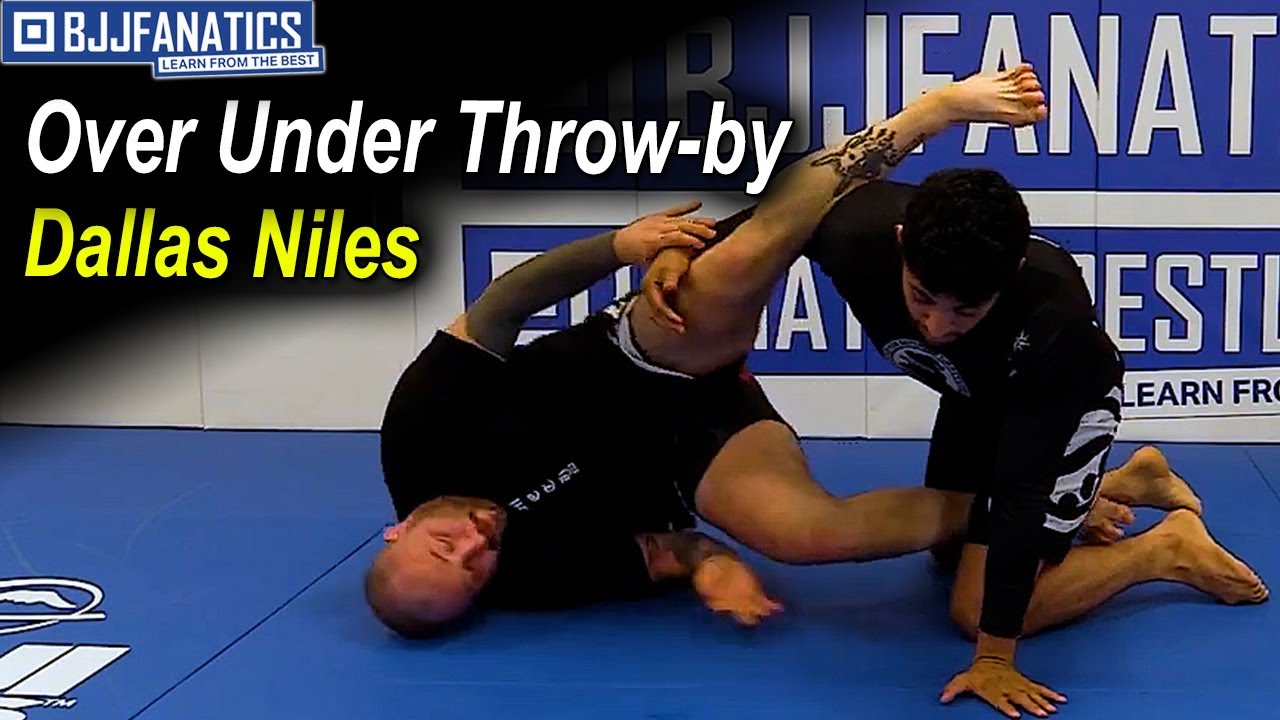
In this technique video, Method Jiu-Jitsu head instructor Dallas Niles demonstrates an over-under throw: a high-percentage clinch takedown built around body positioning rather than brute strength. It is a great example of the approach we teach at Method Jiu-Jitsu in Tulsa: learn the mechanics, drill them safely, then connect them to the positions that come next.
Why BJJ Takedowns Matter for Tulsa Grapplers
Jiu-jitsu is famous for what happens on the ground, but every match, sparring round, and real-world encounter starts standing. Takedown training teaches you how to manage distance, recognize a committed opponent, stay balanced when contact happens, and arrive on top without giving up a scramble.
For a newer student, that means less anxiety during the first hand-fighting exchange. For an experienced grappler, it means a more complete game. The best takedown is not always the spectacular one. It is the one you can enter safely, repeat under resistance, and follow into a stable position. That same principle guides our BJJ for beginners program, gi jiu-jitsu classes, and no-gi jiu-jitsu training.
The Over-Under Throw: A Practical BJJ Takedown
The over-under is a clinch position: one of your arms is over your partner’s arm or shoulder while the other works underneath. From there, the throw uses close body contact, an angle, and a turn to take away their base. It is useful because the clinch reduces the space an opponent has to strike, retreat, or reach for your legs.
Dallas’s demonstration is a reminder that the throw is not a bench press. The goal is to connect your hips, keep your chest close, and turn your opponent over the line of your body. The finish should put you in a position to stabilize—not launch someone and hope for the best. That makes it a natural bridge between standing grappling and the positional control taught in what is Brazilian Jiu-Jitsu.
Building a Strong Over-Under Clinch
Before the throw, earn the clinch. Keep your head position active, close the distance with your feet rather than reaching with your hands, and avoid standing square and tall. Your underhook should be deep enough to affect your partner’s posture; your overhook side should prevent them from freely turning or pummeling back inside.
Think of the clinch as a contest for alignment. If your hips are far away, your arms must do too much work. If your posture is broken, your partner can snap you down or change levels. If your head is out of position, you lose the inside lane. At Method’s adult BJJ classes, students build these details progressively, with cooperative reps before live rounds.
Balance and Kuzushi: Making the Throw Work
“Kuzushi” is the Japanese term for off-balancing. It is one of the most important ideas in takedowns. You do not need to overpower a person whose weight is already moving in the wrong direction; you need to recognize the moment their feet cannot recover.
With an over-under, use your connection to make your partner carry weight in an awkward place. Step and turn so their base narrows or their posture folds. Then complete the throw with your hips and legs, not a twisting pull on the upper body. Students who learn to feel balance develop better timing everywhere, including guard work, half guard, and top pressure.
How to Finish on Top After a BJJ Throw
A takedown is only half the exchange. In BJJ, the next priority is controlling the landing. Keep your posture organized, stay connected long enough to prevent an immediate scramble, and establish a passing or pinning position before chasing a submission.
Depending on the reaction, an over-under throw can lead toward side control, mount, or a clean opportunity to work around the legs. The habit of stabilizing first is especially valuable in competition, where a rushed attack can turn a successful takedown into a reversal. It also gives beginners a calm checklist: land safely, settle your base, control the hips, and breathe.
Common Over-Under Throw Mistakes
Most takedown problems are not about toughness. They are small positioning errors that compound quickly.
- Reaching instead of closing distance: Long arms create space and expose your balance. Move your feet until the clinch is real.
- Trying to muscle the finish: If your hips stay away, the throw becomes an arm-strength contest. Bring your center of gravity close before turning.
- Ignoring head position: A strong head position helps protect your posture and keeps your partner from easily pummeling inside.
- Throwing without a landing plan: Do not admire the takedown. Follow it, stabilize, and work to a dominant position.
- Training too fast too soon: A safe throw begins with controlled drilling and a partner who understands how to fall.
Learning these corrections in person is faster than trying to memorize them from a screen. Review the basics in the video, then book a free introductory class to feel the mechanics with coaching.
Safe Takedown Training for Beginners
Safe training is a non-negotiable part of a quality jiu-jitsu room. Before higher-amplitude throws, students learn breakfalls, controlled entries, posture, and how to communicate with partners. Drilling starts at an appropriate pace and intensity, then develops toward more realistic movement as confidence improves.
You do not need a wrestling background to begin. Our first-class guide explains what a welcoming introduction to BJJ feels like, and our BJJ safety guide covers why good coaching, tapping, and training awareness matter. Wear clothing that lets you move, arrive ready to learn, and ask questions. For more preparation, see what to wear to BJJ and our BJJ etiquette guide.
Takedowns for BJJ Competition and Self-Defense
For competitors, a reliable clinch attack can establish the pace of a match, score early, and place you in top position where your passing game can work. Our BJJ for competitors program emphasizes linking standing entries to the rest of a complete game—not collecting moves in isolation.
For self-defense, clinch awareness is equally valuable. A tight, balanced connection can help manage an aggressive person at close range while reducing wild movement. Brazilian Jiu-Jitsu is not a substitute for awareness, de-escalation, or good judgment, but it gives you practical tools for controlling space and escaping danger. Explore the broader context in our self-defense BJJ program and BJJ for self-defense overview.
How Takedowns Fit into Your Complete BJJ Game
Standing skills and ground skills are one conversation. A failed throw may become a single-leg recovery, a guard pull, or a scramble. A successful throw may become a guard pass. A defended pass may lead back to a clinch. The more connections you understand, the less likely you are to freeze when the first plan changes.
Method’s curriculum helps students create those connections across gi, no-gi, positional sparring, and live training. Pair your takedown practice with an understanding of closed guard, back control, and the core BJJ submissions. If fitness is your initial reason to start, the rounds also provide a demanding, skill-based path to BJJ fitness without the monotony of another treadmill workout.
A Simple Takedown Practice Plan
Consistency beats a long list of moves. Start each week by reviewing your stance, movement, and grip or hand-fighting sequence for a few focused minutes. Next, drill one entry into the over-under clinch on both sides. Once the position feels natural, add the off-balance and finish at a pace that lets both partners land safely. Finally, use constrained rounds: begin in the clinch, work for the takedown, and give the person who lands on top time to stabilize.
Keep a small notebook or a note on your phone with the details that break down most often. Maybe your head is too far away, your feet stop moving, or you rush before your partner’s weight shifts. Choose one correction for the next session. This is how technique becomes dependable: clear reps, specific feedback, and enough patience to let the movement improve.
Takedown practice is also a chance to become a better training partner. Offer appropriate resistance, protect your partner’s landing, and reset when an exchange gets tangled. Those habits build trust, which creates better rounds for everyone. Students training near Owasso, Midtown Tulsa, and Sapulpa are welcome to bring that learning mindset to the Method mats.
Train BJJ Takedowns at Method Jiu-Jitsu in Tulsa
Whether you live near South Tulsa, Jenks, Broken Arrow, or Bixby, Method offers a supportive place to develop real grappling skills. Dallas Niles and the coaching team meet students where they are and help them build capability one repeat at a time.
Check the class schedule, explore BJJ benefits, and come train with a community that values technical progress, good training partners, and hard-earned confidence. Ready to start? Book your free class today.
Frequently Asked Questions About BJJ Takedowns
Are BJJ takedowns safe for beginners?
Yes, when taught progressively. Beginners start with posture, movement, breakfalls, and controlled partner drills before adding speed or resistance. Good communication and coaching make a major difference.
What is an over-under throw in BJJ?
An over-under throw begins from a clinch with one arm over and one arm under an opponent’s arms. It uses close connection, off-balancing, hip position, and a turn to bring the opponent down under control.
Do I need wrestling experience to learn BJJ takedowns?
No. Wrestling experience can help, but BJJ classes teach the foundational stance, hand fighting, clinch, and balance skills needed to begin safely.
Are takedowns useful in no-gi jiu-jitsu?
Absolutely. No-gi removes cloth grips, making posture, underhooks, head position, and body locks especially important. The over-under clinch transfers very well.
Should I learn a takedown or guard first?
Learn both as part of a connected game. A basic takedown builds confidence on your feet, while guard skills give you options if you end up on the bottom.
Where can I train BJJ takedowns in Tulsa?
Method Jiu-Jitsu in Tulsa teaches standing grappling alongside positional ground work in beginner, gi, no-gi, and competition-focused training. Check the schedule or book a free class to get started.