BJJ Technique Guide
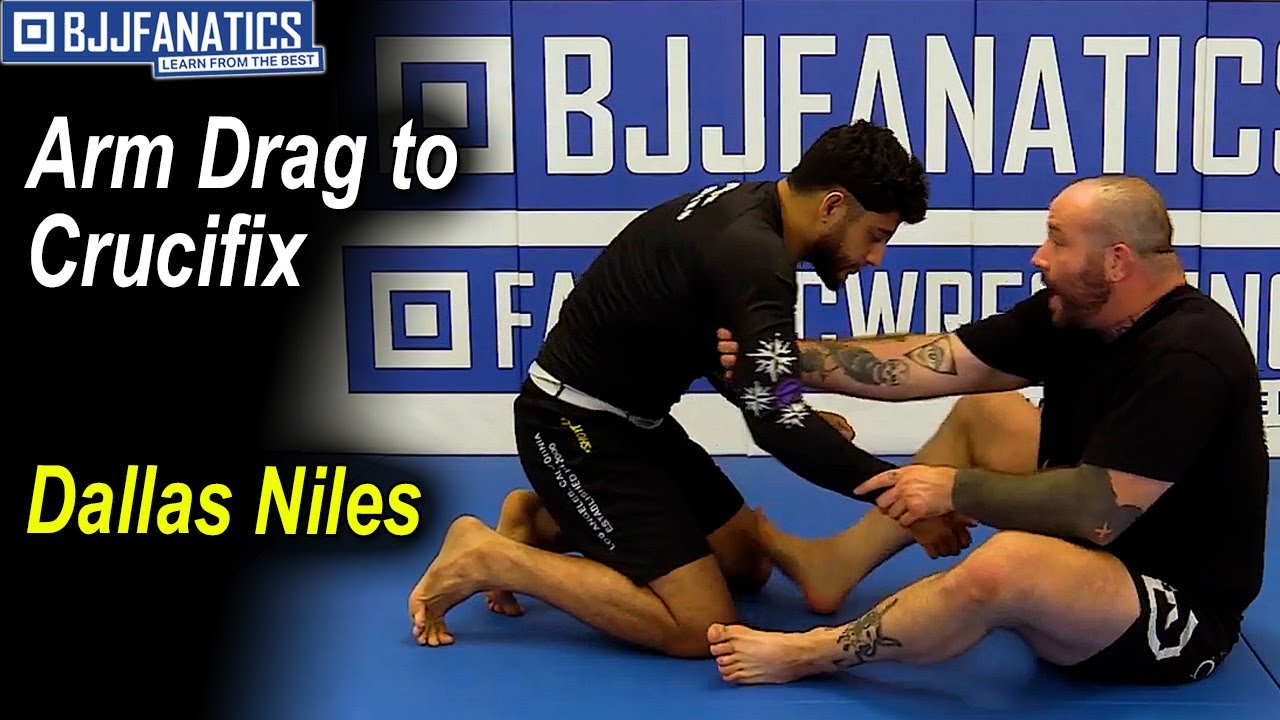
# Arm Drag to Crucifix in BJJ: A Step-by-Step Breakdown by Dallas NilesAn arm drag in BJJ moves an opponent's upper body out of alignment and creates a path to the back, a wrestle-up, or a control position. Dallas Niles of Method Jiu-Jitsu Tulsa demonstrates a variation using an arm drag from guard to enter a crucifix. The lesson is not simply reaching the finish. It is keeping the arm inside the legs, maintaining connection, and standing up without relying on the hands.
This arm drag to crucifix sequence is especially valuable in no-gi grappling, where a strong connection and well-timed angle change can replace the grips available on a traditional gi. The sequence also gives students a practical answer to an opponent who is trying to posture up from guard. The arm drag disrupts that posture before the opponent can recover, while the S-sit makes the wrestle-up efficient and controlled.
What an Arm Drag Does in BJJ
An arm drag is an angle-creating technique. Rather than pulling an opponent straight toward the passer's centerline, the practitioner redirects one arm across the opponent's body and uses that connection to move around the shoulder. This takes the elbow and shoulder away from the opponent's ability to face the attacker. A successful drag creates an outside angle for accessing the back or connecting to a control sequence.
From guard, the arm drag is commonly used to make an opponent post, turn, or expose their back. In Dallas's variation, the arm is not passed over the leg and released. Instead, the leg opens as the arm is moved so the arm remains inside the legs. That small adjustment turns a momentary drag into a durable connection. It also prevents the opponent from simply pulling the arm back and rebuilding a square defensive posture.
Students training at the no-gi jiu-jitsu program can use this concept as a foundation for many upper-body entries. Gi practitioners can study the same movement in the gi jiu-jitsu program, adapting the hand position to the available sleeve or collar grips.
Arm Drag from Guard: Step-by-Step
1. Start with a purposeful guard connection
Begin from guard with enough upper-body contact to control the opponent's arm. The precise grip can vary with the ruleset and the partner's posture, but the goal is to connect to the arm and shoulder rather than grab only at the wrist. A connection higher on the arm gives the practitioner more influence over the opponent's ability to turn back in.
The opponent should be treated as an active partner, not a stationary target. In the video, Dallas emphasizes the timing of the transition: once the arm is moved, the opponent may become heavy or may immediately try to pull up and recover. The drag must therefore be connected to the next action from the beginning.
2. Drag the arm across the body
Pull the opponent's arm across the centerline while moving the practitioner's body toward the open angle. The arm drag should move the shoulder, not just the hand. The practitioner is trying to place the opponent's arm where it cannot easily frame against the chest or post on the mat.
At this point, many students make the standard arm-drag motion and then let the arm travel over the top of their leg. That can work for a back take, but it gives the opponent an opportunity to retract the arm. Dallas teaches a different detail: as the arm is dragged, open the leg so the arm stays inside the legs. This is the defining adjustment in the sequence.
3. Open the leg and keep the arm trapped inside
Instead of allowing the arm to pass over the leg, open the leg with the drag and preserve the inside position. The legs now help contain the arm while the upper body remains connected to the opponent's shoulder. This is not a loose hook or a momentary touch. The arm should remain close enough that the opponent cannot simply swim it free.
4. React immediately to the opponent's weight
Once the arm is inside, the timing becomes critical. Dallas explains that the opponent will often be heavy in that moment or will try to pull up. Waiting too long allows the opponent to return to a strong posture and can erase the opening. The arm drag is most effective when the practitioner uses the opponent's reaction as momentum for the next phase.
As the opponent attempts to rise, maintain the arm connection and move with that action. The practitioner is not attempting to muscle the opponent backward. Instead, the goal is to stay attached while climbing into a position where the hips can support the transition. A quick, connected follow-up is safer and more reliable than a delayed attempt to yank the arm again.
5. Build the S-sit
The S-sit is a key technical detail in Dallas's arm drag from guard BJJ tutorial. After the arm is dragged and kept inside, the practitioner turns the hips into a compact S-shaped seated position. This creates a base from which to drive upward. The posture is more efficient than trying to stand from a flat back or using both hands to push off the floor.
The S-sit should feel like a loaded position. One hip is underneath the body, the legs help organize the opponent's arm, and the torso is ready to rise. Keep the upper-body connection while settling into the sit. If the connection is abandoned to post both hands, the opponent may recover the arm or square the hips.
Dallas points out that the S-sit lets the practitioner drive up without using the hands. One hand may still help pull the opponent, but the primary lift comes from the hips and legs. This hands-free ability is a valuable wrestle-up skill. It preserves the grip or connection needed to control the opponent instead of spending that hand on a floor post.
6. Drive up into the crucifix
From the S-sit, drive upward while keeping the opponent's arm captured. The practitioner rises into the crucifix position, using the legs and the connection to isolate the arm. As the body comes up, avoid creating a gap between the chest and the opponent's shoulder. The closer the connection, the harder it is for the opponent to retract the arm.
Once the position is established, lock the control in stages. Secure the opponent's arm, organize the legs around the arm and shoulder, and bring the body into a stable angle before chasing a submission. The crucifix position is the destination of this lesson, but the arm drag and transition are what make the entry possible.
For another route into the same family of controls, see the double-over crucifix setup. That entry uses a different upper-body configuration, so it complements rather than replaces the arm-drag method shown here.
Why This Arm Drag Variation Works
The sequence combines three forms of control. First, the drag moves the opponent's shoulder across the centerline. Second, the open leg keeps the arm inside and limits its escape path. Third, the S-sit changes the practitioner's base so the body can rise while preserving the connection. Each detail solves a specific defensive response.
Common Arm Drag Mistakes
Dragging only the wrist
A wrist-only pull may move the hand without moving the shoulder. The opponent can often retract the arm or turn the elbow back inside. Connect to the arm in a way that influences the shoulder line, and move the body with the drag.
Letting the arm go over the leg
This is the central mistake addressed in the video. Passing the arm over the leg can remove the very connection needed for the transition. Open the leg with the drag so the arm stays inside. The leg should assist the isolation rather than allow the arm to escape over its top.
Pausing after the drag
An arm drag is a transition, not a final resting position. If the practitioner pauses, the opponent can sit up, recover the elbow, or square the hips. Move directly from the drag to the S-sit and then drive upward.
Trying to stand from a flat back
Standing directly from the floor often requires a hand post and gives the opponent time to follow. Use the S-sit to create a compact base first. Then drive through the hips and legs while maintaining the arm connection.
Chasing the submission too early
The crucifix is powerful only when the arm and shoulder are controlled. First stabilize the position, close gaps, and prevent the opponent from turning. Submission options become more reliable after the control is secure. Students can compare this positional priority with the finishing principles in the guide to an armbar from mount.
When to Practice the Arm Drag to Crucifix
This entry is a strong choice when an opponent is sitting in guard, reaching to control the upper body, or beginning to posture up. It is particularly useful when the opponent's arm is available and their weight is moving forward or upward. The sequence can be drilled slowly at first: establish the connection, drag, open the leg, find the S-sit, and pause in the rising position before completing the crucifix.
After the pathway is familiar, add realistic resistance. The partner can attempt to retract the elbow, pull the arm free, or regain posture. The practitioner should respond by staying connected and improving the angle, not by repeatedly pulling harder. The site's guide to no-gi drilling offers useful principles for building clean repetitions, while the overview of no-gi grappling techniques provides broader context for connection-based control.
For students new to this style of training, the submission grappling starter guide explains how no-gi rounds, positional work, and submissions fit together. Dallas also discusses training and the local jiu-jitsu community in the BJJ Fanatics podcast feature.
Key Takeaways
- Use the arm drag to move the opponent's shoulder across the centerline and create an angle.
- Open the leg as the arm is dragged so the arm remains inside the legs.
- React immediately to the opponent's weight or attempt to posture up.
- Use the S-sit to create a base for a hands-free wrestle-up.
- Drive into the crucifix only after preserving the connection and isolating the arm.
- Stabilize the position before looking for a submission.
The arm drag is the skill that makes this sequence work. Once the drag, inside leg position, and S-sit are coordinated, the crucifix becomes a natural result of controlling the opponent's alignment. To learn this and other practical grappling skills with Method Jiu-Jitsu Tulsa, visit the Method Jiu-Jitsu homepage and explore the available classes.
Arm Drag BJJ FAQs
What is an arm drag in BJJ?
An arm drag is a technique that pulls an opponent's arm across their body while the practitioner moves toward an outside angle. It can create access to the back, a wrestle-up, or a control such as the crucifix.
Can an arm drag be used from guard?
Yes. An arm drag from guard is commonly used when the opponent's arm is available and the practitioner wants to disrupt posture or move around the shoulder. The legs and hips help maintain the angle and connection.
Why keep the arm inside the legs?
Keeping the arm inside limits the opponent's ability to retract it and rebuild posture. In this variation, opening the leg during the drag preserves the connection needed to enter the S-sit and rise into the crucifix.
What is the S-sit used for in this arm drag sequence?
The S-sit creates a compact base and loads the hips for the wrestle-up. It allows the practitioner to drive upward without placing both hands on the floor, so the connection to the opponent remains available.
What should a beginner focus on when drilling an arm drag?
A beginner should prioritize shoulder movement, immediate follow-up, and connection over speed or force. Drill the sequence in order: drag the arm, open the leg, form the S-sit, drive up, and stabilize the crucifix before adding submission attempts.