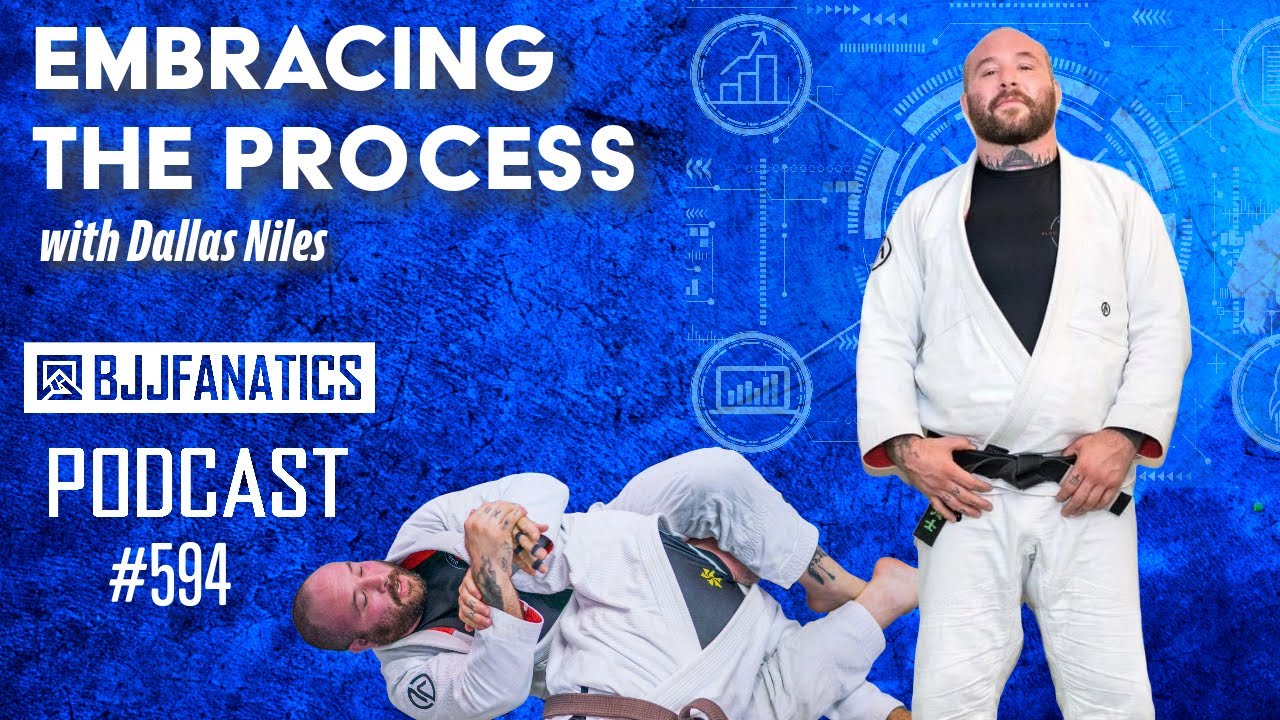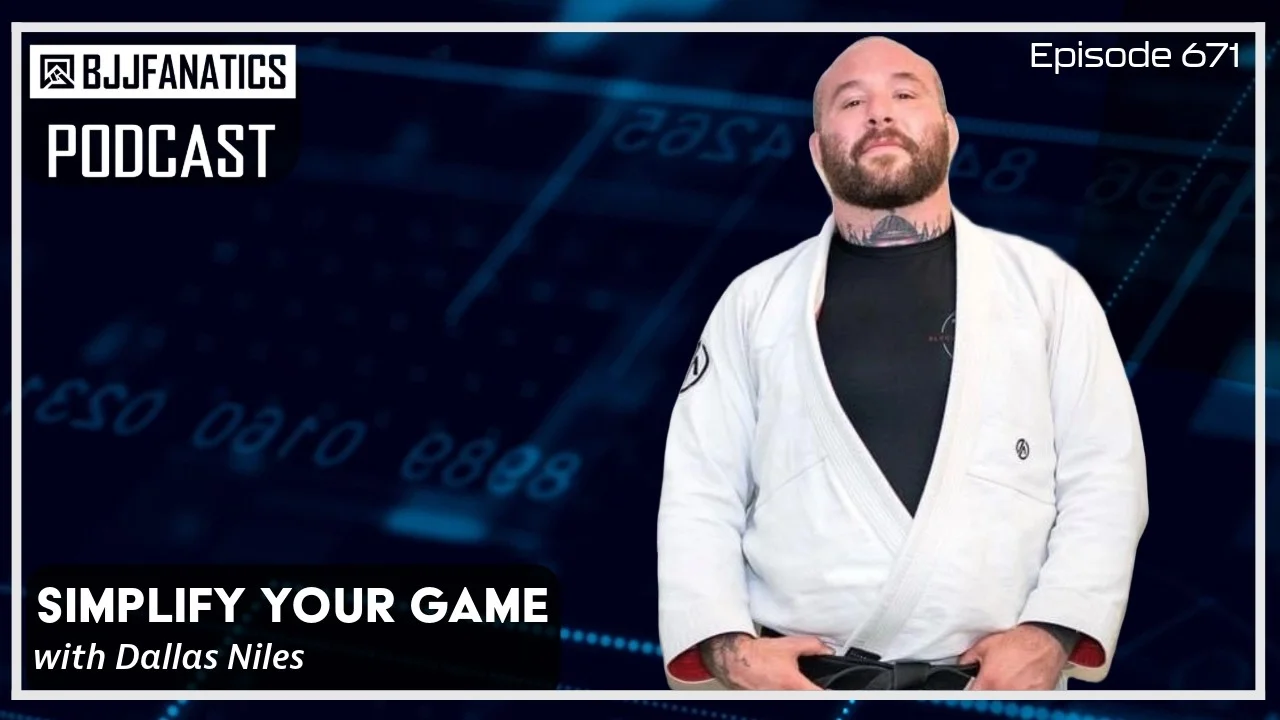
Dallas Niles sat down with the BJJ Fanatics Podcast for the second time on Episode 671, and the conversation went somewhere most martial arts podcasts avoid entirely: what actually makes someone a great jiu-jitsu instructor, and why a wall full of competition medals has almost nothing to do with it.
The episode runs over 90 minutes and covers everything from the mechanics of effective coaching to the value of stripping your game down to the fundamentals that work under pressure. If you train at Method Jiu-Jitsu in Tulsa, you already know this philosophy shapes every class on the mat. For everyone else, this conversation lays it out clearly.
You Don't Have to Be a Champion to Be a Great BJJ Instructor
This is the central argument Dallas makes in the episode, and it challenges one of the most deeply held assumptions in martial arts: that the best competitors make the best teachers.
The reality is more nuanced. Competition success proves you can perform under pressure against high-level opponents. It does not prove you can break a technique down into steps a white belt can follow, diagnose why a blue belt keeps getting passed, or build a curriculum that develops students over years rather than weeks.
Dallas draws the comparison to other disciplines. The best basketball coaches in history were rarely the best players. The same principle applies to Brazilian jiu-jitsu. Teaching is a separate skill set that includes communication, patience, the ability to read individual learning styles, and the willingness to build your program around your students rather than your own game.
At Method Jiu-Jitsu, this philosophy shapes the way every class is structured. Whether you are walking into your first adult BJJ class or refining your no-gi game, the instruction is built around making techniques accessible, repeatable, and functional for your body type and experience level.
Why Simplifying Your Game Changes Everything
The second major theme Dallas explores is the power of simplification. In an era where YouTube and Instagram expose students to hundreds of techniques every week, the temptation is to collect moves. Dallas argues that the fastest path to improvement is the opposite: identify the techniques that work for your body and your style, then drill them until they become reflexive.
This is not about limiting what you learn. It is about building a hierarchy. Every student at Method has a different body, different athletic background, and different set of natural reactions under pressure. A great instructor recognizes those differences and helps each person build a core game around what works for them, rather than forcing everyone through the same flashy highlight-reel sequences.
Dallas talks in the episode about how his own competitive game was built on a small number of positions he studied obsessively. The crucifix is one of the clearest examples. Rather than chasing every new technique, he went deep on a position most practitioners overlook and turned it into one of the most dangerous weapons in his arsenal. That same depth-over-breadth approach is what he teaches at Method.
The Teaching Approach Behind Method Jiu-Jitsu in Tulsa
If you have trained at other gyms, you have probably experienced the common approach: the instructor demonstrates a technique, everyone drills it for a few minutes, then you roll. Dallas explains why Method operates differently.
Every class follows a curriculum designed to build concepts on top of each other. Monday's technique connects to Wednesday's. The drilling is structured with specific goals rather than just repetition for the sake of repetition. And the rolling at the end of class is guided, meaning students are encouraged to apply what they just learned rather than defaulting to whatever they already know.
This approach matters especially for beginners. Walking into a gym and being thrown into free sparring with no context is one of the most common reasons adults quit jiu-jitsu within the first three months. At Method, the first months are designed to build confidence and fundamental movement patterns before any live rolling happens.
For experienced students, this structured approach fills gaps. It is easy to train for years and develop a lopsided game where your guard is strong but your top pressure is nonexistent, or vice versa. The curriculum rotates through positions systematically so nothing gets neglected.
What Dallas Gets Right About BJJ Coaching That Most Gyms Miss
The podcast touches on several coaching principles that separate a good gym from a great one:
Ego removal from instruction. Dallas talks about the importance of admitting when a student finds something that works better for their body than what you showed them. A great instructor adapts. A mediocre one insists on their way.
Consistency over intensity. The culture at Method Jiu-Jitsu emphasizes training six days a week at a sustainable pace rather than going all-out twice a week and spending the rest of the week recovering. This produces better long-term results for fitness, skill development, and injury prevention.
Building community, not just competitors. Not every student wants to compete, and Dallas makes the point that a gym that only values its competitors is leaving behind the vast majority of its student base. Families training together, women discovering confidence on the mat, and adults managing stress through daily practice are all equally important parts of a healthy academy.
Technical honesty. If a technique does not work against resisting opponents, it does not get taught. Dallas talks about the difference between "demonstration jiu-jitsu" that looks impressive in a controlled setting and the practical self-defense applications that hold up when someone is genuinely trying to stop you.
Heavy Metal, Getting Sick Overseas, and the Human Side of Coaching
One of the things that makes this podcast episode stand out is the willingness to go off-topic in ways that reveal character. Dallas talks about his love of heavy metal, a travel experience overseas that went sideways, and the daily routines that keep him consistent on the mat.
These are not filler stories. They are part of what makes the coaching at Method personal. When your instructor is a real person with real interests and real struggles rather than a curated social media persona, the student-coach relationship is fundamentally different. You are learning from someone who has built their life around this practice, not someone performing a version of it for content.
How This Philosophy Shows Up in Tulsa Classes
If this conversation resonates with you, here is what training at Method Jiu-Jitsu in Tulsa actually looks like:
- Adult BJJ classes run six days a week with structured curriculum that builds week over week
- No-gi training follows the same depth-over-breadth philosophy with focused drilling on high-percentage submissions and grappling techniques
- Kids programs are built around the same teaching principles adapted for younger students, giving parents a real alternative to traditional team sports
- Gi training develops precision, grip strategy, and the technical foundations that transfer to every grappling context
- Every new member receives a premium Method Jiu-Jitsu gi included with their membership
The gym is located in Tulsa and serves students from Broken Arrow, Bixby, Jenks, Owasso, Sand Springs, and surrounding communities. You can book a free trial class here and see for yourself how this teaching philosophy translates to the mat.
Frequently Asked Questions
What makes Dallas Niles different as a BJJ instructor?
Dallas earned his black belt under Rafael Lovato Jr. and has built his teaching approach around the principle that great instruction requires communication skill and curriculum design, not just competition accolades. His system at Method Jiu-Jitsu in Tulsa emphasizes structured learning, individual adaptation, and depth over breadth.
Do I need competition experience to train at Method Jiu-Jitsu?
No. Method welcomes complete beginners through advanced competitors. The structured curriculum is designed so students at every level can learn and progress at their own pace. Many students train for fitness, self-defense, or personal development rather than competition.
What does "simplifying your game" mean in BJJ?
It means identifying the techniques that work best for your body type and athletic background, then drilling those techniques until they become automatic. Rather than learning a new move every class, you build a core game around a focused set of high-percentage positions and submissions.
How is Method Jiu-Jitsu in Tulsa different from other BJJ gyms?
Method uses a sequential curriculum where each class builds on the previous one, structured drilling with specific goals, and guided rolling that encourages students to apply what they have just learned. This approach produces faster improvement and fewer injuries than the typical "watch, drill, spar" format.
Where can I watch the full BJJ Fanatics Podcast with Dallas Niles?
Episode 671 is available on the BJJ Fanatics YouTube channel and on all major podcast platforms. The episode runs approximately 90 minutes.
How do I get started at Method Jiu-Jitsu?
Visit the booking page to schedule a free trial class. The gym is located in Tulsa and offers classes six days a week for adults, kids, and families.