The double over position is one of those no-gi controls that can feel simple until the scramble starts. You have isolated an arm, you have your leg hooked over it, and you and your partner are falling together. Then you hit the mat and realize you are not always on the same side. That moment is where many otherwise good double over to crucifix BJJ entries stall.
The good news: landing on the “wrong” side does not mean the entry failed. It means you need to navigate before you attack. In this lesson, Professor Dallas Niles explains how to identify the side you landed on, preserve the arm trap, and make one controlled adjustment that puts you into a true crucifix attacking position.
This is a narrow technical lesson rather than a general overview of the position. For a broader deeper look at the crucifix, including why the position is so effective and another entry from deep half guard, start there. Here, we are focused on the double over grip jiu-jitsu players use to arrive at the position—and what to do when the landing angle changes.
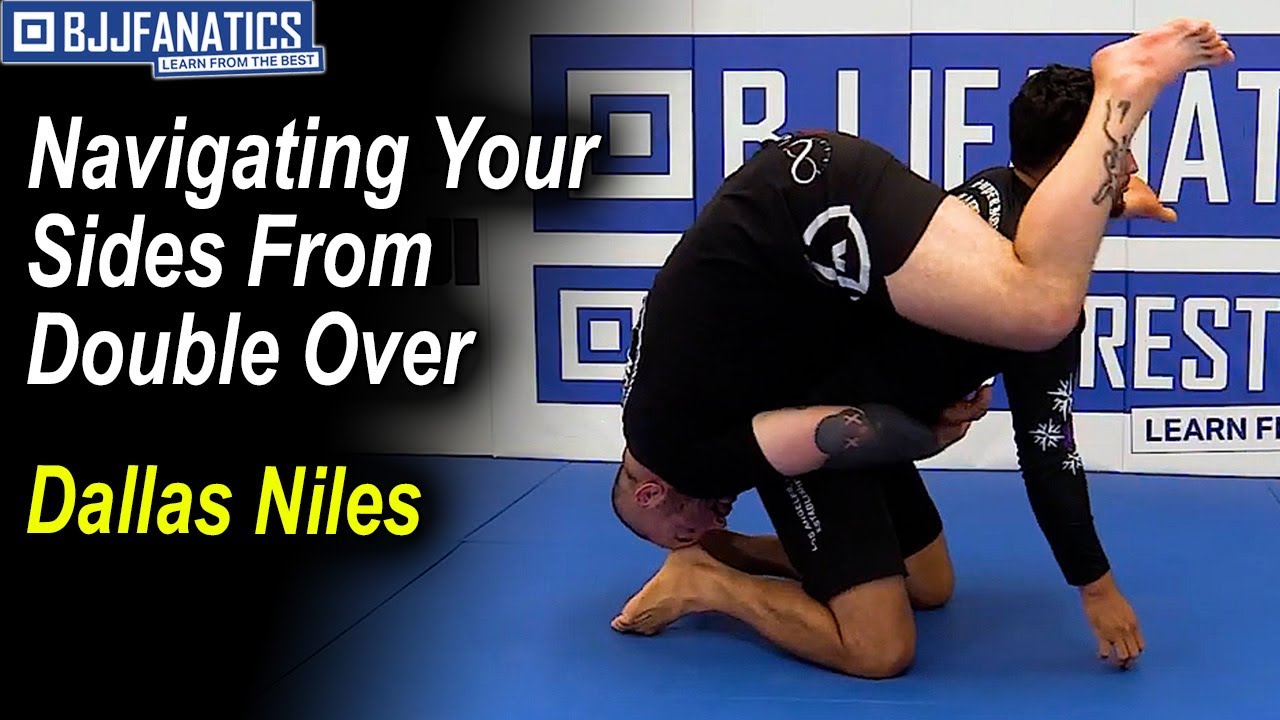
Watch: Navigating Your Sides From Double Over
Dallas has spent years developing crucifix systems in live training and competition. In this short excerpt from his Advanced Crucifix No-Gi Set Ups instructional, he shows the decision that matters immediately after the double-over entry: which side did you land on?
The entire adjustment is built around orientation. Once you know whether your head is on the same side as the arm you trapped or the opposite side, you know whether to peel into the crucifix now or first turn your opponent.
What Is the Double Over Position in BJJ?
In the context of this entry, “double over” describes a control where you have your partner’s arm caught and secured with your leg as the two of you go to the mat. The hook over the arm prevents them from freely pulling it out and creates the arm isolation the crucifix needs. It is not just a grip to hold while you fall; it is the connection you must protect as you decide how to finish the transition.
The double over position gives you a chance to control the opponent’s arm before you are fully behind them. But gravity and movement do not always cooperate. Read an unexpected landing as positional information.
The key question: Where is your head relative to the leg-and-arm trap? That answer determines the next move.
The Double Over to Crucifix Breakdown
1. Hook and secure the arm before the fall
Dallas begins with the arm hooked by his leg from double over. Your first responsibility is connection. Keep the lock active as you go down rather than letting the arm slide free while you worry about the finish. If the trapped arm comes out, the crucifix pathway disappears and the scramble becomes a different problem.
Think of the hook as an anchor, not a passive clamp. Keep enough tension to know where the arm is while still allowing yourself to move your hips. Good no-gi crucifix setups depend on this balance: a locked arm is valuable, but a rigid body is easy to turn.
2. Accept that you can land on either side
When both athletes fall from double over, there are two possible outcomes. This is normal. On one side, the orientation already supports the crucifix. On the other, you are still controlling the arm but have not yet arrived in the attacking structure. The distinction is whether your head is positioned on the correct side of the trapped arm and leg.
3. Identify the ready-to-attack side
You are ready to peel up into the crucifix when your head is on the opposite side from the leg trapping your opponent’s arm. With the arm isolated and your head on that far side, your body is aligned to come up into the position rather than fighting your own angle.
From there, peel up with control instead of rushing. Keep the trapped arm from returning to the opponent’s body, bring your posture toward the attacking position, and establish the upper-body control that makes the crucifix stable. The position is powerful precisely because the opponent’s arm cannot come back to defend the neck or create a strong post.
If you are building this into a larger attack system, it helps to understand how it relates to back control. Both positions reward control behind the shoulders, but the crucifix adds the major advantage of taking an arm out of the defensive equation.
4. Recognize the wrong-side landing without panicking
The other landing puts your head on the same side as the trapped leg and arm. Dallas makes an important distinction here: you still have a valuable arm trap, but you are not in the crucifix yet. If you try to peel straight up from this angle, you are likely to lose alignment, give the trapped arm room to escape, or end up in a loose scramble.
This is where BJJ positional navigation matters. Do not abandon the hold just because the first landing was not ideal. Your job is to preserve the connection long enough to change sides deliberately.
5. Keep the lock, scoot in, and pull them over
The fix for the wrong side is one additional transition. Keep the double-over lock. Scoot your body in close so you are not trying to move your partner from a stretched-out position. Then pull them over to the other side while maintaining the arm control.
The purpose is not to muscle them through a big roll. It is to use proximity and the existing trap to turn their body until your head is now on the opposite side from the trapped arm. Once you create that orientation, you can peel up into the same attacking structure as the ready-side landing.
This detail makes the entry more reliable in live rounds. Different setups and reactions will naturally put you on the wrong side sometimes. Knowing that the solution is “hold, scoot, turn, peel” gives you a repeatable response rather than a reason to bail out.
6. Build the ability to dictate the landing
As your timing improves, you will get better at steering which side your partner lands on in the first place. That comes from understanding the direction of their pressure, where their weight is going, and how your own hips guide the fall. Still, even advanced practitioners should not depend on a perfect landing every time.
The skill is not just choosing a side before the movement begins. The skill is recognizing the side after contact and navigating to the next correct position. That principle applies well beyond this crucifix entry and is part of what makes effective no-gi grappling techniques work under resistance.
Why This Detail Matters in No-Gi Grappling
No-gi exchanges are fast, slippery, and rarely static. A position that looks clean in drilling can change in a second when your partner turns their hips or tries to post. The double over grip gives you a high-value connection, but the side-navigation detail is what turns that connection into an actual attack.
There are three practical benefits to drilling this sequence:
- You stop treating scrambles as mistakes. A different landing becomes information, not failure.
- You keep the opponent’s arm isolated longer. That removes one of their best tools for posting, framing, and defending submissions.
- You create a dependable bridge to attacks. Once the crucifix is established, you can begin connecting to chokes and armlocks from a position where their defense is already compromised. Review the broader mechanics of BJJ submissions to see why removing an arm changes the entire submission equation.
The lesson is also an example of how technical training should feel: not memorizing a single picture, but understanding the decision that follows each reaction. You do not need every opponent to move the same way. You need an answer for the position they give you.
Learn the Crucifix System at Method Jiu-Jitsu
Dallas teaches no-gi technique with the context that makes it usable: how to enter, how to recognize the reaction, and how to connect one control to the next. You can learn more about Professor Dallas and his background on Dallas’s instructor page, then bring questions like this one to the mat.
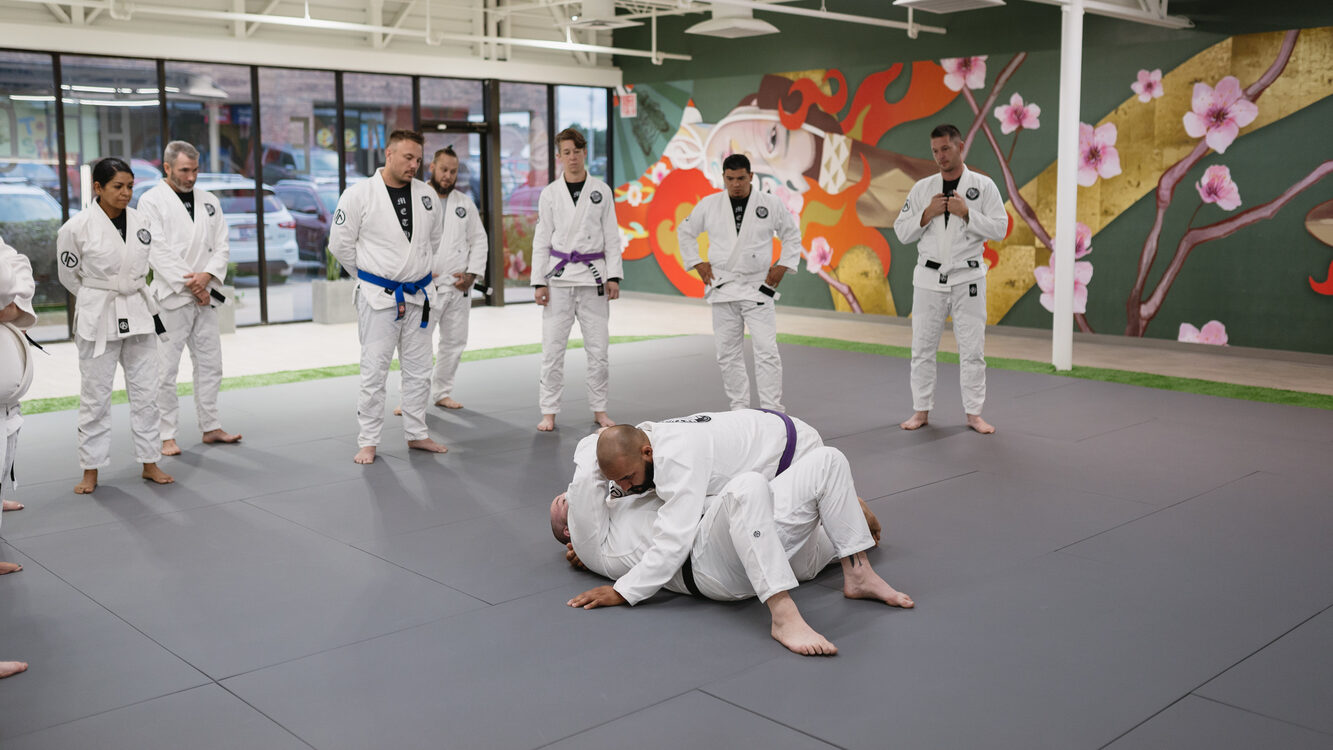
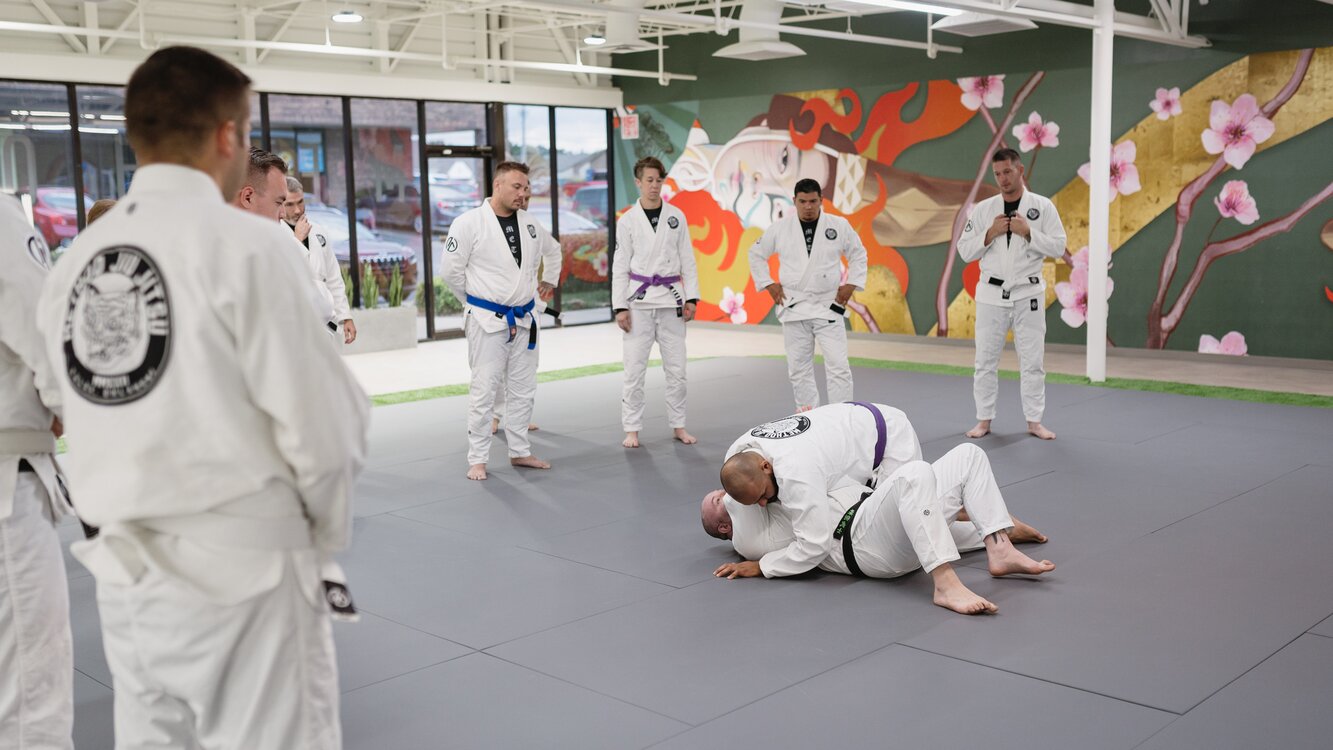
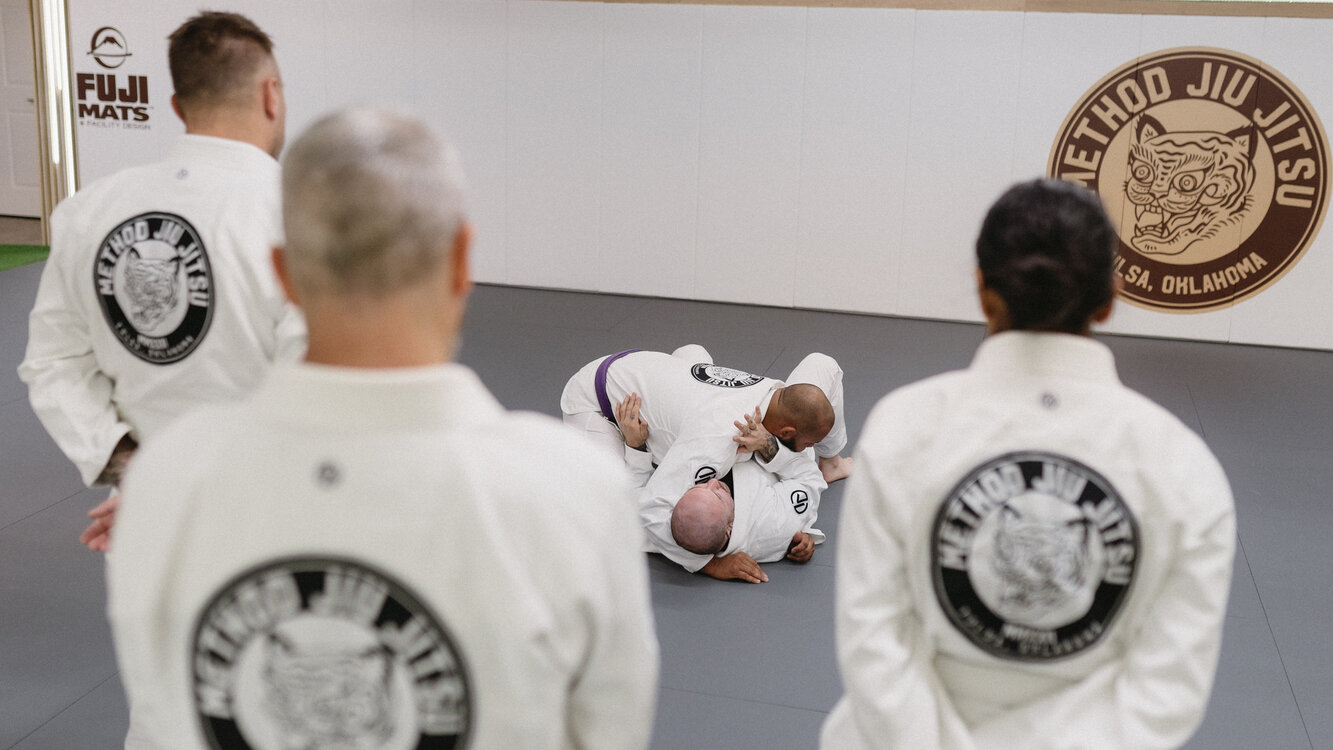
At Method Jiu-Jitsu in Tulsa, our no-gi program gives students a place to drill positional transitions with partners, receive coaching on the small alignment details, and pressure-test them responsibly. Whether you are refining a competition game or learning to connect your first no-gi sequences, the goal is the same: understand what the position is asking for before you chase the finish.
Want to work through the double over position and crucifix entries in person? Book a free trial class and train with our Tulsa team.
FAQ: Double Over to Crucifix BJJ
What is the double over position in BJJ?
For this crucifix entry, the double over position is an arm-control configuration where you hook and secure your opponent’s arm with your leg as you go to the mat. It creates the isolation needed to transition into a crucifix, provided you manage your body position after the fall.
How do I know if I landed on the correct side for the crucifix?
Check your head position relative to the leg trapping the arm. If your head is on the opposite side from that trapped arm and leg, you can peel into the crucifix. If your head is on the same side, maintain the lock and first turn your opponent to the other side.
What should I do if I land on the wrong side from double over?
Do not release the arm trap. Scoot close to your opponent, keep the double-over connection, and pull or turn them over until your head is on the opposite side of the trapped arm. Then peel up into the attacking position.
Does this crucifix entry work in no-gi?
Yes. The sequence is designed for no-gi grappling, where strong arm isolation and positional awareness are especially valuable because there are no lapel or sleeve grips to slow the exchange. As with any technique, drill the control and the transition progressively before adding full resistance.
Is the double over to crucifix entry suitable for beginners?
Beginners can learn the core ideas—arm isolation, head position, and controlled turning—while more experienced students can add the entry to a broader attack chain. A coach can help you apply the right level of resistance and make sure the trapped arm is handled safely.