Most black belts have a handful of positions they are known for. Dallas Niles has one position he has spent his entire jiu-jitsu life on: the crucifix. He saw it more than 15 years ago — before he ever stepped on a mat — when Rickson Gracie demonstrated it on a television show called Fight Science. That single clip sent him down a rabbit hole he never climbed out of. By the time he started training BJJ and eventually earned his black belt under Rafael Lovato Jr., the crucifix was not a technique he was learning. It was a technique he was still building, refining, and testing against everyone who would roll with him.
That obsession is now part of the curriculum at Method Jiu-Jitsu in Tulsa. Dallas has recorded instructionals on the crucifix for BJJ Fanatics — in both gi and no-gi formats — and he teaches the position regularly to students at every level. If you want to actually learn the crucifix rather than just watch someone else hit it, this is one of the few places in the country where the person teaching it built his entire game around it.
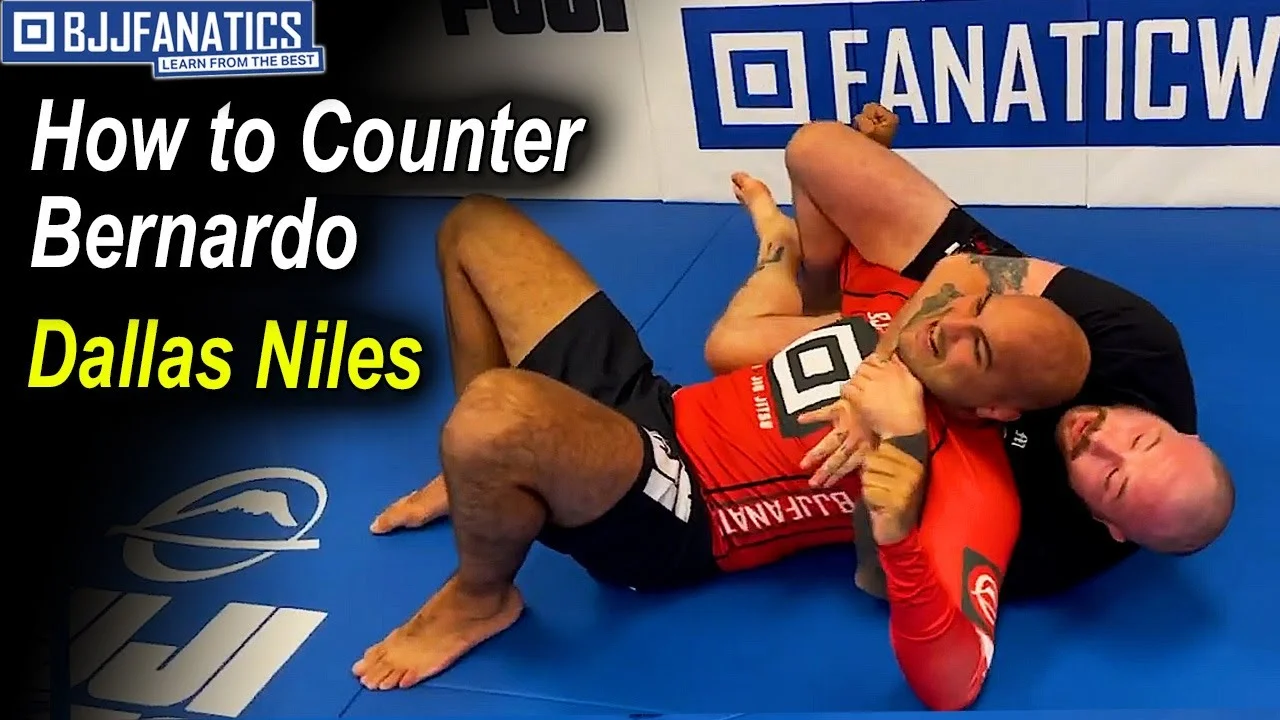
Watch Dallas Demonstrate the Crucifix Counter to Deep Half Guard
Before we break down the mechanics, watch Dallas walk through one of his signature entries — using the crucifix as a direct counter to Bernardo Faria's deep half guard, one of the most respected guard systems in the sport.
What Is the Crucifix Position?
If you have not run into it, the crucifix looks unusual the first time you see it. You are positioned behind and slightly to the side of your opponent, and instead of controlling their body with a traditional back-control grip, you trap one (or both) of their arms between your legs while wrapping around the remaining arm with your own. The result is that your opponent has one or both arms completely immobilized — they cannot post, cannot frame, and cannot defend their neck the way they normally would.
With an arm pinned by your legs and no way to bring it back into the fight, the crucifix opens up a dangerous menu of finishes: rear-naked-choke variations that do not require both of your opponent's arms to be dealt with the usual way, neck cranks, and armlocks on the trapped limb. Because the position removes an opponent's primary defensive tool — their arms — before you even start attacking, submissions that would normally be defended easily become live threats.
It is also a position most practitioners never train to defend, simply because so few people attack from it. That is a large part of why it works so well for Dallas: opponents recognize back control, they recognize turtle, but the crucifix catches people in a spot they have not built defensive instincts for.
Breaking Down the Technique
The video above shows one of Dallas's core entries into the crucifix — starting from a position most grapplers think of as defensive: being stuck underneath deep half guard.
Bernardo Faria's deep half guard is built to control your hips and eventually put you on your back or sweep you. Dallas's counter starts with a base switch — repositioning his hips and weight so the deep half player loses the angle they need to finish the sweep. From there, he drops his knee down into the space next to his opponent's body, using it to trap the arm that the deep half player is using to control his leg. Once that arm is pinned by the knee, the opponent has two options, and neither one is good for them: either they commit to forcing the roll, giving Dallas a scramble he already knows how to win, or they try to free the trapped leg to escape — but doing so requires exposing the arm even further, which is exactly what Dallas is waiting for.
As the opponent tries to free their leg, Dallas rolls through them, using the momentum of their own escape attempt to finish entering the crucifix. What looked like a defensive scramble becomes the setup for a completely different fight — one where his opponent's arm is now trapped and the choke and armlock options open up immediately.
This is the pattern across most of Dallas's crucifix entries: he is not forcing the position from a neutral start. He is recognizing a moment where an opponent's own attack — a sweep attempt, a leg entanglement, a scramble — creates the exact arm exposure the crucifix needs, then taking advantage of it.
Why the Crucifix Works
A few things make the crucifix effective beyond the surprise factor.
It attacks a position most people never train to defend. Grapplers spend years learning to defend guard passes, back attacks, and standard submissions. Almost nobody spends meaningful time drilling crucifix defense, which means even high-level competitors are often working out the escape in real time instead of relying on trained instinct.
It is available from more entries than people expect. Dallas does not hit the crucifix from one setup — he sees it from back takes, from turtle, and, as shown in the video, from counters to deep half guard. Once you understand the underlying principle (trap an arm between your legs before your opponent can retract it), you start recognizing opportunities to enter the position from scrambles you previously would have just tried to survive.
It removes defenses before you attack, not during. Most submission chains rely on breaking through active defense — fighting for a grip while your opponent fights back. The crucifix takes a different approach: it disables the defensive tool (the arm) first, so the choke or armlock that follows is finishing a fight that is already mostly won.
Learning the Crucifix at Method Jiu-Jitsu
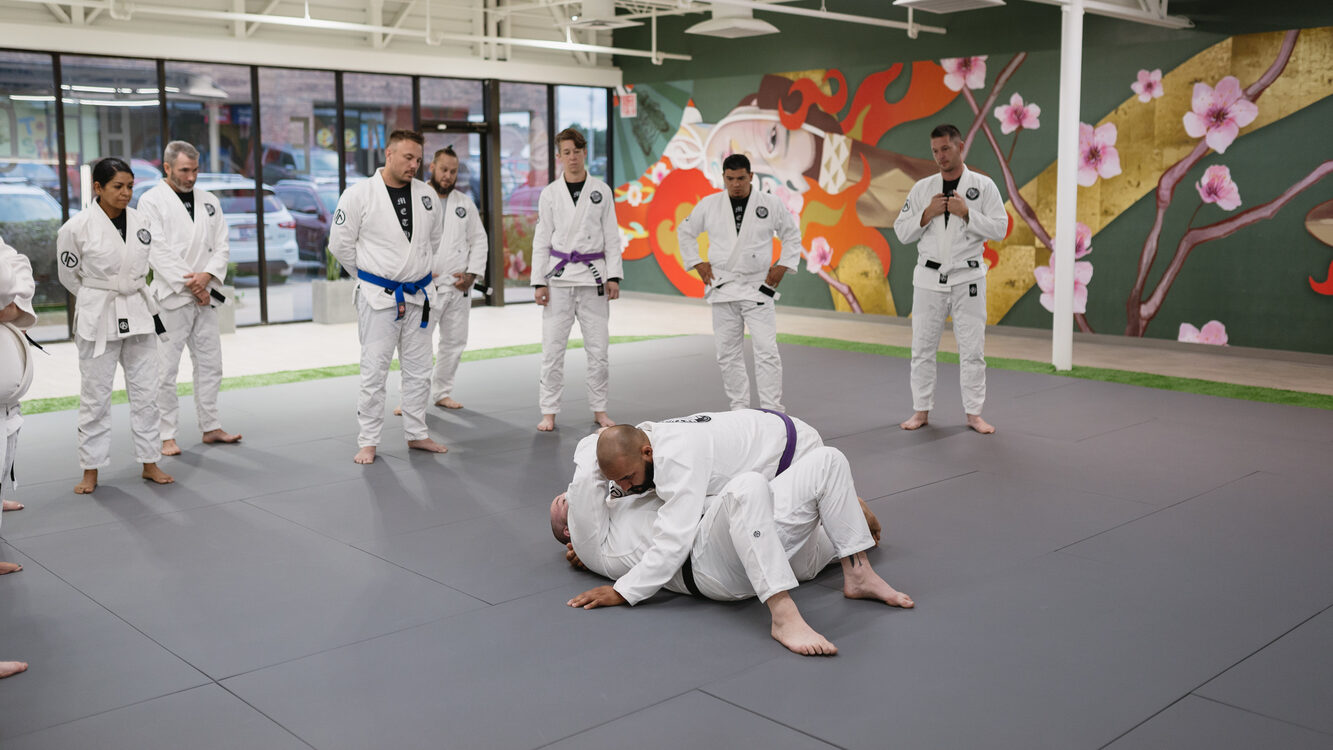
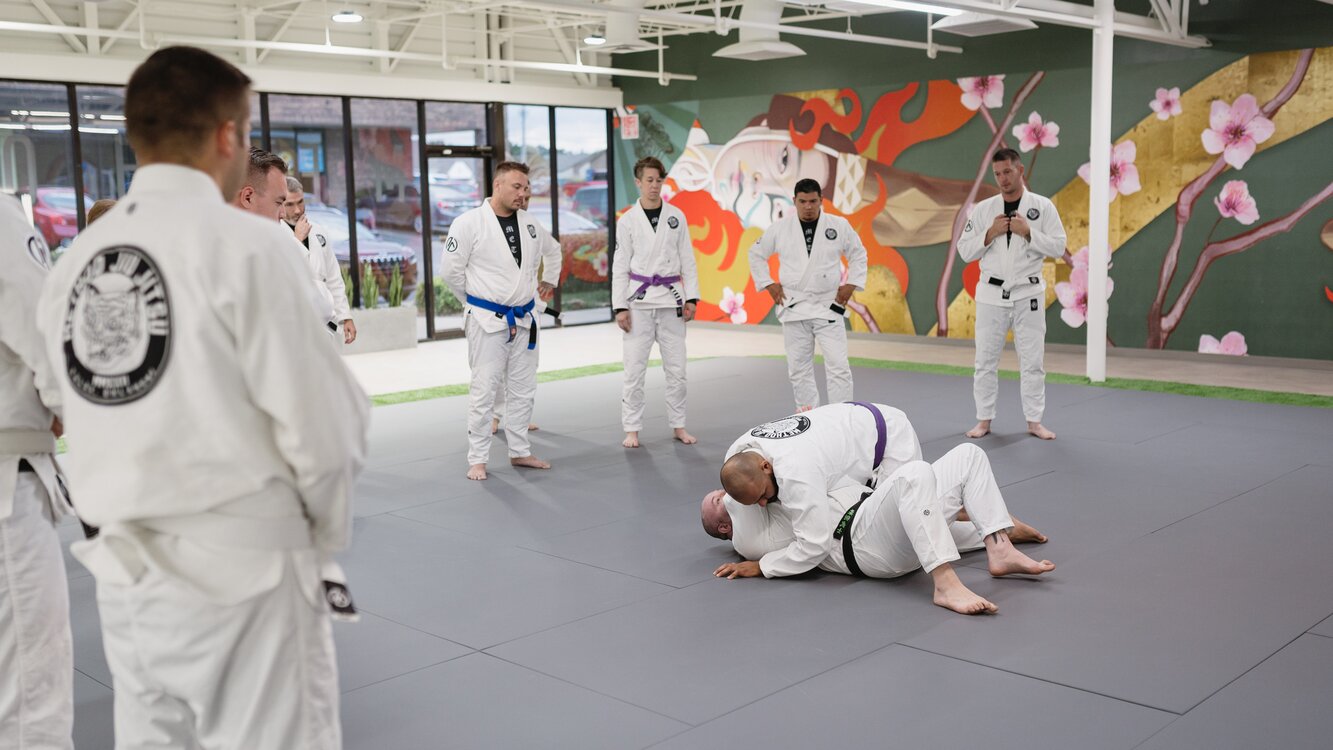
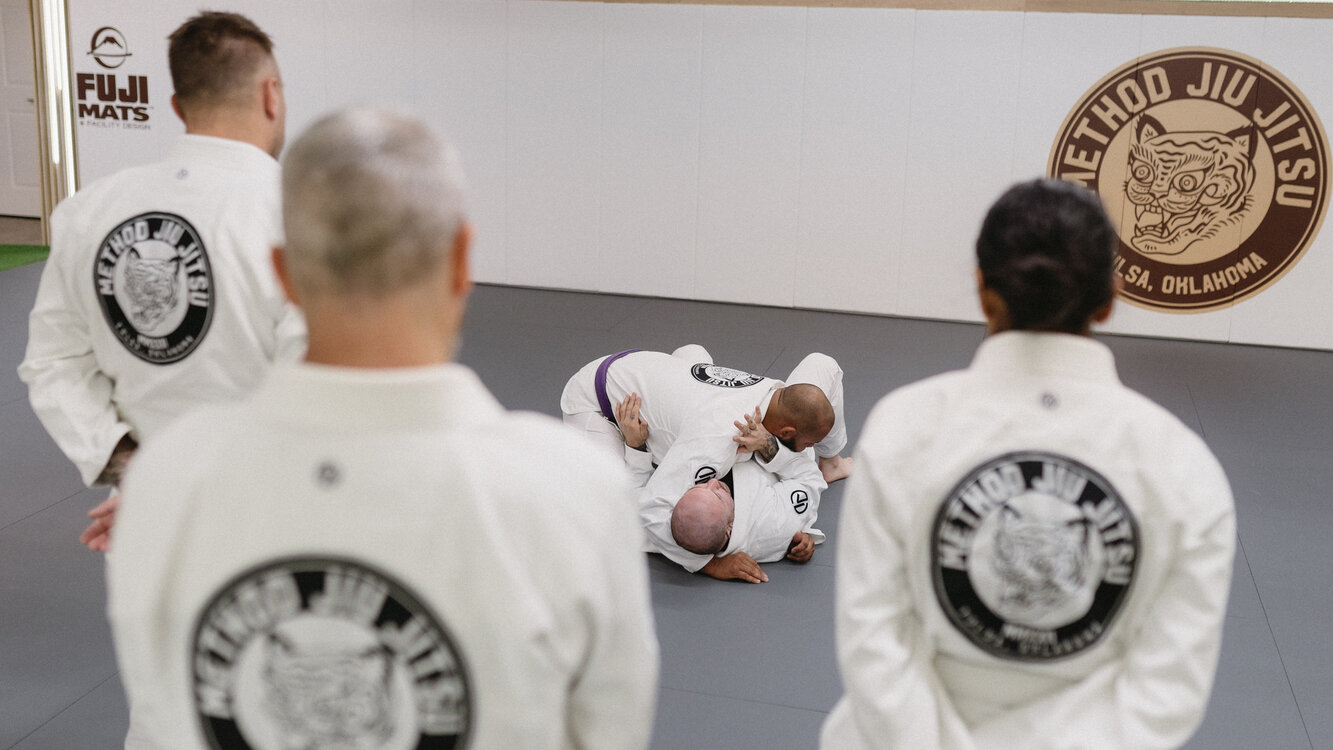
Dallas teaches the crucifix in regular classes at Method, not as an occasional seminar topic. Students working through our adult BJJ program and our no-gi program get direct instruction on the entries, the finishes, and — just as important — the defense, from someone who has spent over a decade and a half stress-testing every detail of the position.
Watching an instructional is a fine starting point. Drilling the position live, with a coach who can correct your knee placement, your grip sequencing, and your timing in real time, is how it actually becomes usable. If you already have some grappling background, our no-gi grappling techniques breakdown is a good companion piece — it covers the broader skill set the crucifix fits into, from scramble awareness to submission chaining.
If you are new to jiu-jitsu entirely, that is fine too. The crucifix is an advanced-feeling position, but the fundamentals it is built on — base, weight distribution, arm control — are things every beginner starts learning in their first few classes.
FAQ: The Crucifix Position in BJJ
Is the crucifix legal in competition? Yes. The crucifix position itself is legal in gi and no-gi competition at essentially every rule set, including IBJJF. Some specific finishes from the position — particularly certain neck cranks — carry belt-level restrictions, so always check the specific rule set you are competing under before relying on those variations in a tournament.
Can beginners learn the crucifix? Beginners can absolutely start learning the position, especially the concepts behind it — arm control, base, and off-balancing. The full range of entries and finishes tends to click faster once you have some mat time under your belt, but there is no reason to wait to be introduced to it. Dallas often teaches pieces of the crucifix within broader classes rather than saving it exclusively for advanced students.
Does the crucifix work in no-gi? Yes — in fact, many grapplers find the position transfers more cleanly to no-gi because there is no gi fabric changing the friction and grip dynamics around the trapped arm. Dallas has recorded separate BJJ Fanatics instructionals for the gi and no-gi versions specifically because some of the entry details differ between the two.
What should I train before learning the crucifix? A solid base in back control fundamentals and general arm-control concepts (like those used in armbars and kimuras) will make the crucifix click faster. That said, most students pick up the entries and finishes concurrently with their regular curriculum rather than needing a long prerequisite list first.
More From Dallas
Dallas recently appeared on the BJJ Fanatics Podcast for a nearly two-hour conversation covering his journey to black belt, the crucifix system, training philosophy, and why he built Method Jiu-Jitsu in Tulsa. Watch the full episode and read the breakdown.
Come Train It in Person
Reading about the crucifix only gets you so far — this is a position that rewards repetition on the mat far more than it rewards study on a screen. If you want to learn it directly from Dallas, book a free trial class at Method Jiu-Jitsu and see the position taught the way it was built: through more than 15 years of obsession with getting it right.