The armbar from mount is one of the first submissions most grapplers learn. It is also one of the first submissions most grapplers stop finishing once their training partners get any good at defending it. The traditional approach asks you to swing your leg over your opponent's head, lay back, and extend the arm. The problem is that every experienced grappler on earth knows exactly what is coming the moment you shift your weight. They bridge, they roll, and suddenly the person who had the dominant position is on bottom trying to hold onto a limb while their back hits the mat.
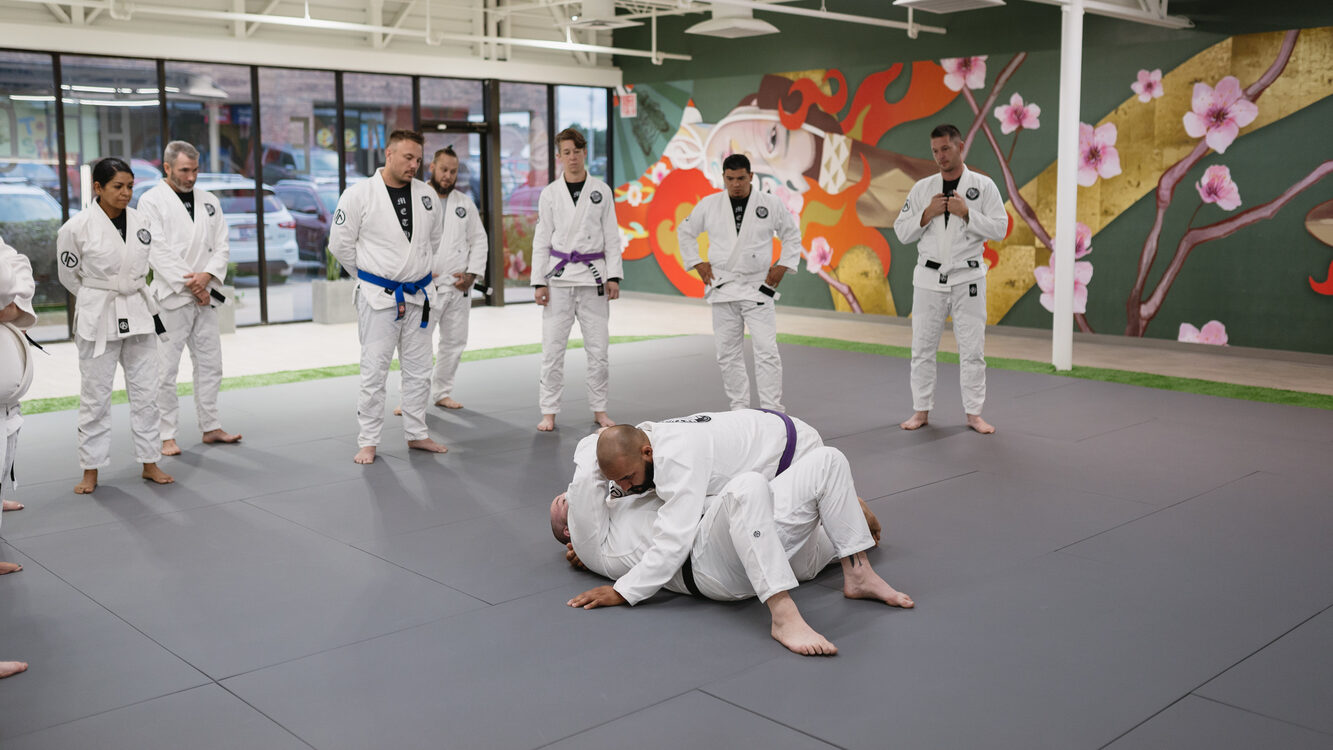
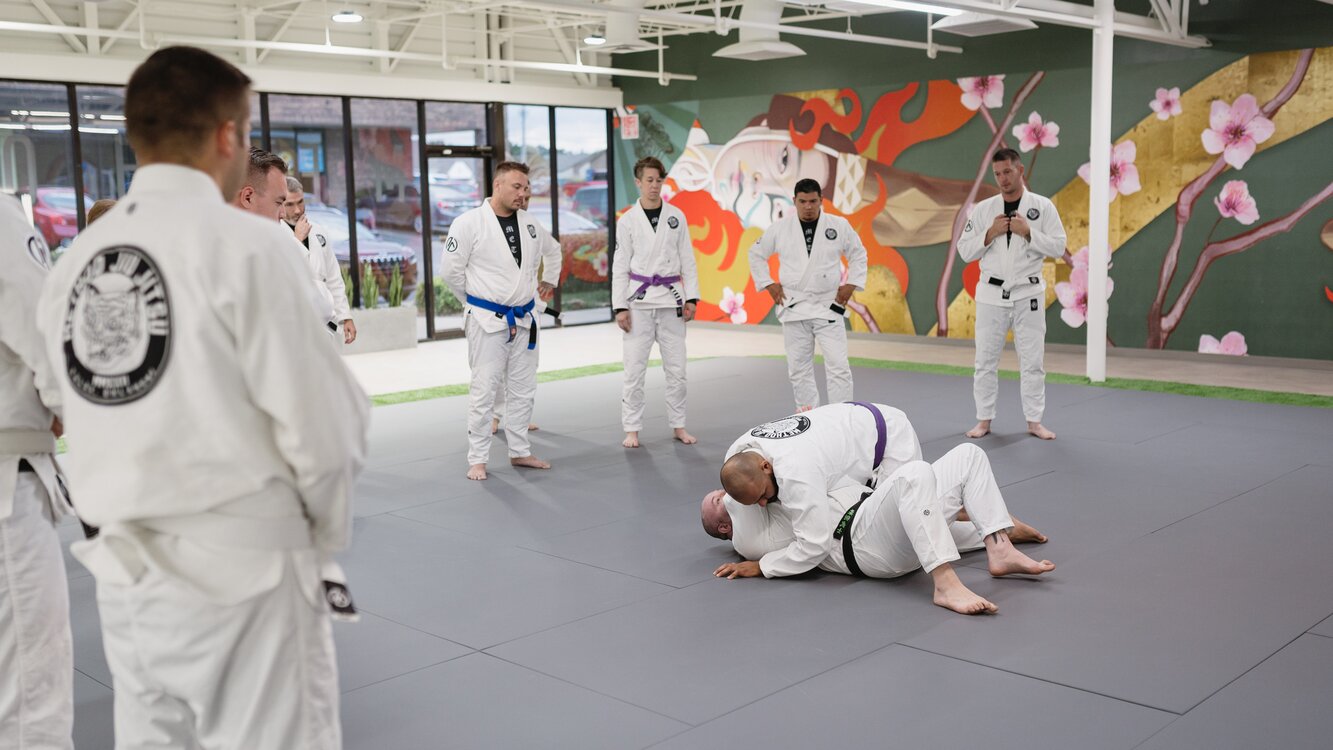
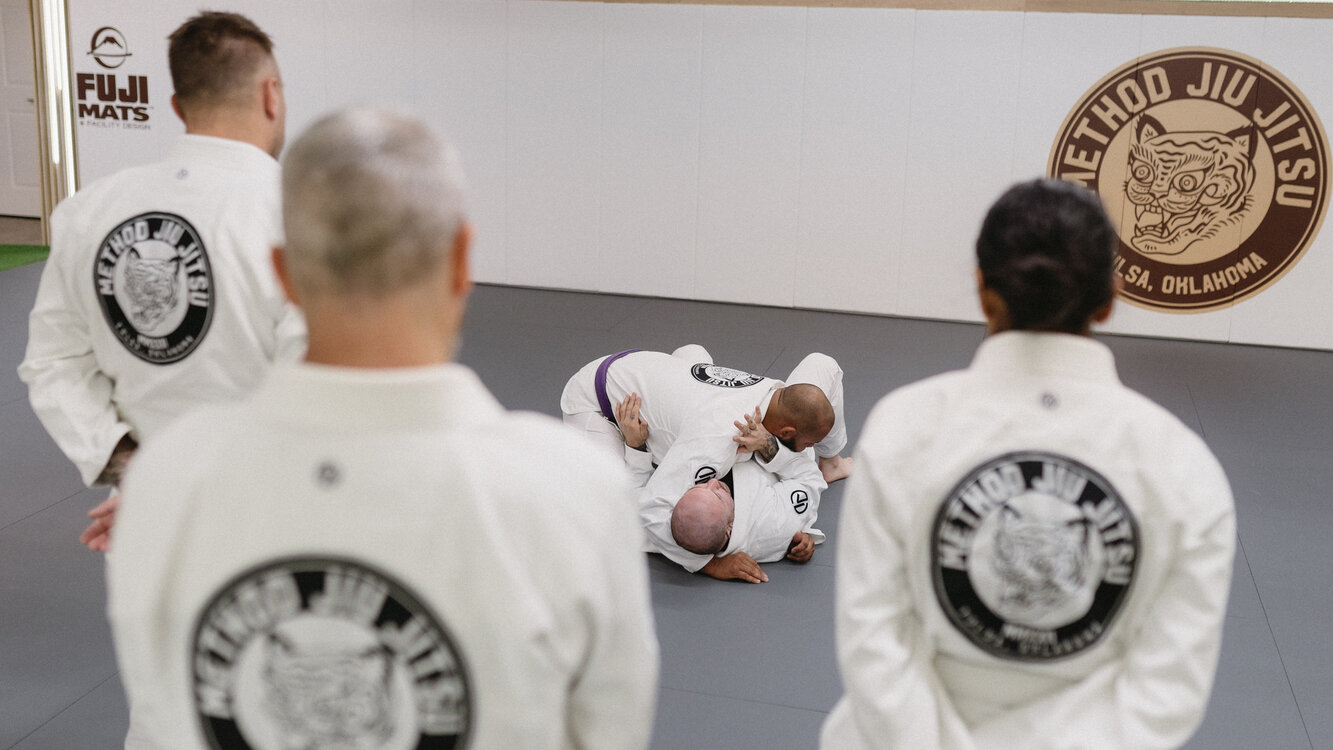
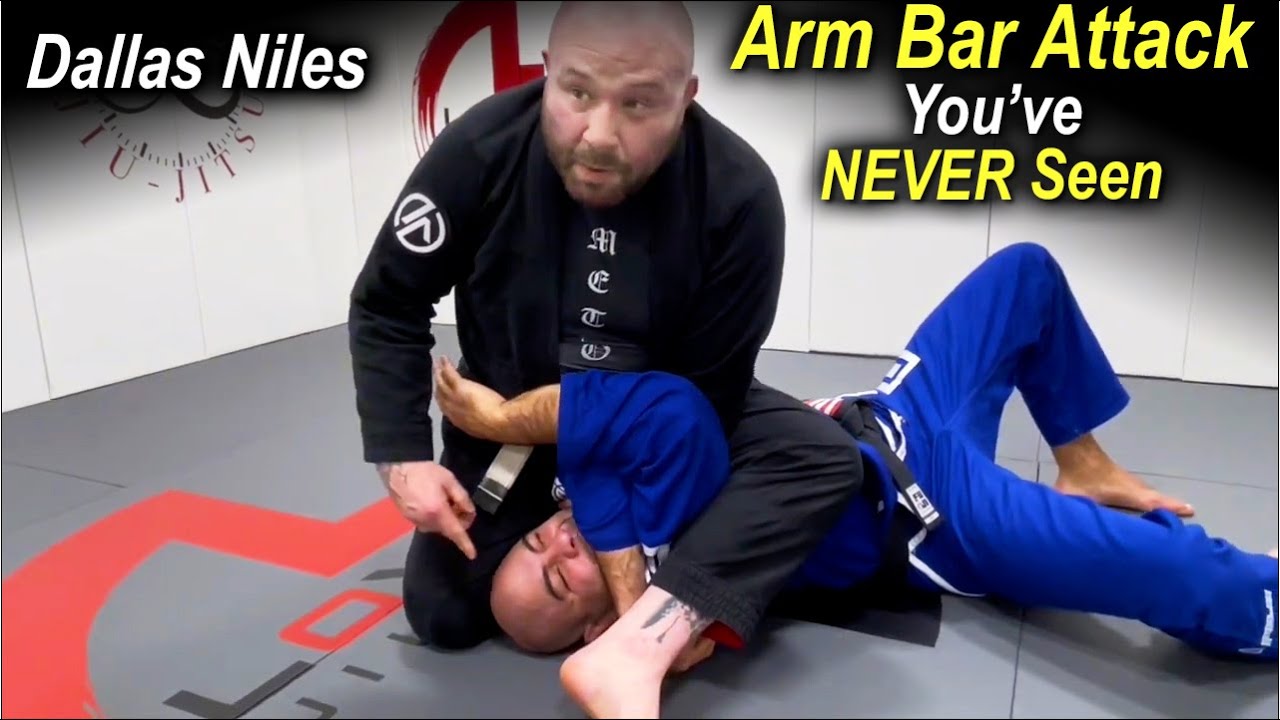
Dallas Niles, head instructor at Method Jiu-Jitsu in Tulsa and a black belt under Rafael Lovato Jr., has a different version. It is a mounted armbar that finishes while you stay on top. If your opponent defends it, you are still in mount. If they escape the submission attempt, you have lost nothing. That trade-off alone makes it worth studying, but the technical details are what make it genuinely effective at high levels.
Dallas recently broke down this technique on Bernardo Faria's YouTube channel, BJJ Fanatics, one of the most respected instructional platforms in the sport. Bernardo is a 5x World Champion, and his channel has become a hub where high-level practitioners share the details that make their games work. Dallas walking through this mounted armbar on that platform says something about the technique itself and about the level of instruction happening at Method Jiu-Jitsu in Tulsa.
Watch the Full Technique Breakdown
Why the Traditional Layback Armbar Fails
Before getting into what Dallas does differently, it helps to understand why the standard mount armbar creates problems for the attacker.
When you mount someone and begin the classic armbar sequence, you have to rotate your body 90 to 180 degrees relative to your opponent. You need to swing a leg over their face, shift your hips beside their shoulder, and lay back to extend the arm. Every one of those steps moves your center of gravity away from the dominant position you already earned. If the finish is there and you get it, great. But if the opponent defends at any point during that rotation, you are now lying on your back with one of their arms between your legs and they are working to stand up and pass.
The risk-to-reward ratio is skewed. You are trading mount, one of the highest-value positions in jiu-jitsu, for a submission attempt that experienced grapplers defend with a high success rate. In competition, that gamble costs you points and position. In a self-defense scenario, it puts you underneath someone who was just underneath you.
The Mounted Armbar: Step by Step
Dallas's approach solves this problem by keeping you mounted throughout the entire attack. Here is how the technique works, broken down from the video above.
Establishing Pressure with the Collar Grip
The sequence begins in a standard mount. Dallas establishes a thumb-in-collar grip on the near side and drives pressure downward. This grip is not the submission itself. It is a forcing function. When you press your weight through the collar grip and into your opponent's neck and chest, their instinct is to use their arms to push you away or create frames. That reaction is exactly what opens up the armbar.
The key detail here is patience. You are not rushing to grab an arm. You are making the position uncomfortable enough that your opponent gives you the arm by trying to solve a different problem.
Pinning the Far Shoulder
Once the opponent starts giving up their arms to deal with the pressure, Dallas shifts his focus to the far shoulder. He pins it to the mat, which eliminates the opponent's primary escape from mount: the bridge and roll.
Most people who get caught in mount armbars made the mistake of ignoring the bridge. Dallas takes the bridge off the table early by pinning that far shoulder, so the opponent cannot generate the rotation they need to reverse the position. With the bridge removed, the opponent has fewer options, and the ones remaining all lead deeper into the armbar setup.
Transitioning to S-Mount
With the shoulder pinned and the opponent's arms busy trying to manage the collar pressure, Dallas transitions from standard mount into what is commonly called S-mount or technical mount. In this position, one leg is posted up near the opponent's head while the other knee stays tight against their body.
The critical structural detail is building a "hip wall" behind the opponent's tricep. Dallas positions his hip directly behind the upper arm so the opponent cannot pull the arm back to their body. The arm is now isolated on one side of that wall with no easy path to retract it.
Killing the Defensive Arm
This is where Dallas's approach diverges most sharply from what you will see taught at most academies. Instead of immediately attacking the arm he wants to finish, he focuses on neutralizing the defensive arm first.
When someone is trapped in mount and they feel an armbar coming, their instinct is to grab their own wrist or bicep with their free hand, linking both arms together so you cannot isolate one. Most attackers respond by trying to pry the grip apart or by fighting the target arm directly. Dallas goes the other direction. He focuses on getting the defensive arm out of the equation entirely.
By bringing the S-mount position high enough, Dallas creates a situation where the free arm physically cannot reach the trapped arm to defend it. The geometry of the position makes the defense impossible before the finish even starts. He is not muscling through a grip. He is making the grip unreachable.
Finishing Without Laying Back
With the defensive arm out of play and the target arm isolated behind his hip wall, Dallas finishes the armbar from the mounted position. He does not need to swing his leg over the head. He does not need to lay back. The extension happens while he remains on top, and the submission is there because every layer of defense was removed in sequence rather than fought through simultaneously.
If the opponent does manage to free the arm before the finish, Dallas is still sitting in mount. Nothing was sacrificed. The position is intact, and the entire sequence can be reset and run again.
Why Staying Mounted Matters
The value of this approach comes down to risk management.
In competition, mount is worth four points. Giving up mount to attempt a submission that fails means you traded four points for zero. If your opponent scores from the resulting scramble, the swing is even worse. A mounted armbar that keeps you on top means every attempt is essentially free. You either finish the submission or you keep your points and try something else.
In training, this principle translates into better positional habits. Grapplers who learn to attack without sacrificing position develop a fundamentally different relationship with submissions. They stop treating every finish as a gamble and start treating them as extensions of control.
For self-defense, the logic is even simpler. Being on top is safer than being on bottom. A technique that keeps you in the dominant position regardless of whether the submission lands is inherently more practical outside the gym.
How This Connects to a Larger Game
This mounted armbar is not an isolated trick. It connects to the broader system Dallas teaches at Method Jiu-Jitsu, where positional dominance is emphasized before submission hunting. If you have watched his crucifix breakdown or the double-over crucifix entry from no-gi, you will notice the same underlying principle: remove the opponent's defensive tools systematically before attacking the finish.
The crucifix traps both arms to expose the neck. This mounted armbar neutralizes the defensive arm to expose the target arm. Different positions, same philosophy. That consistency across positions is what separates a collection of techniques from an actual system, and it is what students at Method get exposed to across both the adult BJJ program and the no-gi program.
If you are looking for more detail on the grappling concepts that make techniques like this work, our breakdown of no-gi grappling techniques covers the broader skill set, including the scramble awareness and submission chaining that support mounted attacks like this one.
FAQ: Armbar from Mount
Can beginners learn this mounted armbar? Yes. The individual components, including mount maintenance, collar grips, and basic arm isolation, are all concepts beginners work on in their first months of training. The full sequence takes some mat time to put together smoothly, but there is no reason a newer student cannot start drilling the pieces early. Dallas teaches this to students at all levels at Method Jiu-Jitsu.
Does this armbar work in no-gi? The core mechanics transfer to no-gi, though the initial collar grip is replaced with other forms of head and neck pressure to force the same defensive reactions. The S-mount positioning and the concept of killing the defensive arm apply regardless of whether you are wearing a gi.
What if my opponent keeps their elbows tight and refuses to give up their arms? That is actually a good outcome for you. If your opponent is focused entirely on keeping their elbows glued to their body, they are not escaping mount. The collar pressure Dallas uses is specifically designed to force a choice: protect the neck and give up the arms, or protect the arms and deal with the choke threat. Either way, you are attacking from the top.
How is this different from a standard S-mount armbar? The key difference is in the sequencing. Many S-mount armbar tutorials focus on isolating the target arm directly. Dallas's version prioritizes neutralizing the defensive arm first by positioning the S-mount high enough that the free hand cannot reach to defend. This eliminates the most common defense before the submission attempt even begins, which dramatically increases the finish rate.
Train This Technique in Person
Watching the breakdown gives you the roadmap, but the details that make this technique actually work, including the exact hip placement, the timing of the transition, and the pressure angle on the collar grip, are things that need to be felt and corrected in real time. If you want to learn this mounted armbar and the system it fits into directly from Dallas, book a free trial class at Method Jiu-Jitsu in Tulsa. Your first class is on us.