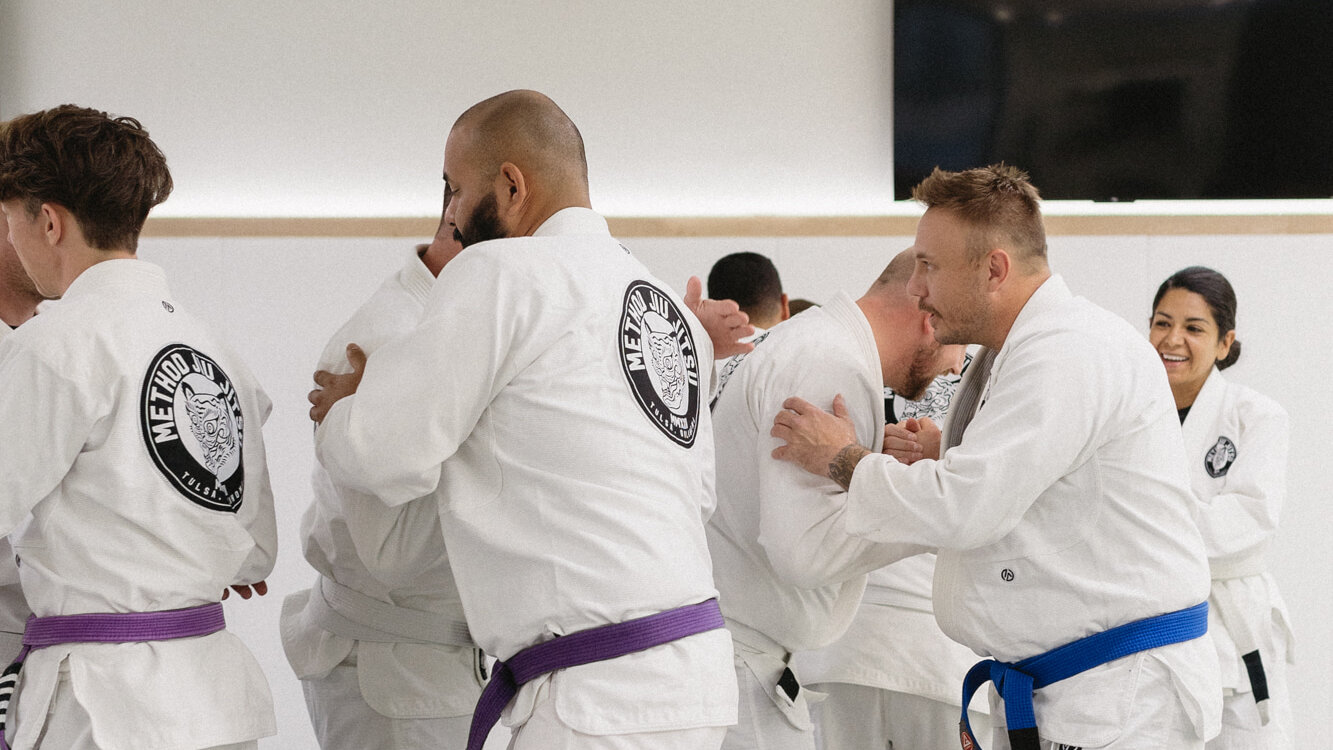
For most new students, the scariest part of starting Brazilian jiu-jitsu is not the warm-up or the technique. It is the moment the coach says "find a partner" and the room starts rolling. Live sparring is where jiu-jitsu becomes real, and it is also where nerves run highest. The good news is that BJJ sparring for beginners is much more manageable than it looks from the outside, especially when you know what to expect.
The photo above shows adult students at Method Jiu-Jitsu in South Tulsa pairing up as a round begins. White belts, blue belts, and purple belts all train together on the same mats, and every one of them had a first roll that felt awkward. This guide walks you through how sparring works, how to stay safe, and how to turn your first rounds into real progress.
What Rolling Actually Means in BJJ
In jiu-jitsu, live sparring is called rolling. Two partners start in a set position, the timer begins, and each person tries to improve their position and eventually finish with a submission while the other resists. There are no strikes, so you can train at a realistic pace without getting punched or kicked.
That is what makes BJJ different from many other martial arts. You get to test your technique against a resisting partner several times a week, which is exactly why it holds up so well for self-defense. If you are still comparing styles, our breakdown of BJJ vs other martial arts explains why live resistance matters so much.
When Beginners Start Sparring at Method Jiu-Jitsu
You will not be thrown into a hard roll on day one. On your first visit, you will most likely watch the live sparring portion from the side of the mat, and that is completely normal. Watching helps you see how the techniques from the lesson show up during real movement.
When a coach decides you are ready, they will pair you with an experienced partner who moves slowly, keeps you safe, and often explains what is happening as it happens. Our guide on what to expect at your first class covers the full class flow, from warm-up to the end-of-class handshake. New adults usually begin in our beginner BJJ program, where sparring is introduced gradually.
Positional Sparring: The Bridge Between Drilling and Rolling
Before full rounds, many classes use positional sparring. One partner starts in a specific spot, such as mount or side control, and the goal is narrow: the bottom person tries to escape, the top person tries to hold or submit. When someone achieves their goal, you reset.
This is the best possible introduction to live training. The problem is small enough to think through, you get dozens of repetitions, and you practice exactly what you learned that night. If you have read our mount escapes guide, positional rounds from mount are where those escapes finally start to work under pressure.
Every roll starts with a small gesture of respect. Partners slap hands and bump fists, which signals that both people are ready and that the round will be friendly. You will see the same gesture when the timer ends.
If you want to roll with someone specific, make eye contact and offer your hand. Do not just grab someone's collar. Our full guide to BJJ etiquette explains the unwritten rules of the mat, including how to ask for a round and how to handle collisions with other pairs.
Your Only Goal in the First Month: Survive and Breathe
Most beginners walk into their first rolls trying to win. That mindset almost always leads to gassing out in ninety seconds. Instead, set a smaller goal: stay calm, keep breathing, and protect your neck and arms.
Survival is a skill. Learning to keep your elbows tight, frame with your forearms, and recover your guard is what lets you stay in the round long enough to learn anything else. The concept of guard is your home base on the bottom, and getting back to it is a win in your first weeks, even if you never sweep anyone.
How to Tap Early and Why It Is a Skill
Tapping means patting your partner twice, patting the mat, or saying "tap" clearly. The moment you tap, your partner lets go. Tapping is not losing. It is how everyone, including black belts, trains for years without serious injury.
Tap early, especially to joint locks. You do not need to wait until something hurts. If you are caught and cannot see a way out, tap, reset, and ask your partner what happened. Learning the most common finishes in our BJJ submissions guide will help you recognize danger before it is too late.
Pick Partners Wisely in Your First Rolls
Your early training partners shape your entire experience. Look for higher belts who are known for being calm and technical. They can control the pace, put you in useful positions, and give you room to try things without feeling like a crash test dummy.
Be a little more careful with other brand-new students who are big, athletic, and nervous. Two beginners going at full speed is where many avoidable injuries happen. At Method, coaches watch the room and will often pair new students intentionally. Our post on why training partners matter explains how good partners build a better academy for everyone.
Control Your Intensity
A useful rule for new students is to roll at about half of your maximum effort. That may sound too relaxed, but it lets you think, see openings, and remember technique. It also earns you trust, which means better partners will want to train with you.
Spazzing, the BJJ term for wild, explosive movement with no plan, is the most common beginner habit. It is understandable, because a resisting partner feels unfamiliar. Slow, deliberate movement will teach you more in a month than a year of flailing. If you are training to get in shape, our BJJ for weight loss program shows how steady, controlled rolling still delivers a serious workout.
Defensive Positions Every Beginner Should Know
You do not need fifty techniques before your first roll. You need a few safe positions to return to when things go wrong:
- Closed guard: Wrap your legs around your partner's waist to control their posture. Our page on closed guard explains how to break posture and stay safe.
- Half guard: Trap one of your partner's legs to slow down their pass. Read more about half guard and why it is a lifesaver for new students.
- Bottom side control frames: Keep your forearm across your partner's neck or hip and work to recover guard.
- Back defense: Keep your chin tucked and hands protecting your collar. The basics of back control will show you what your partner is trying to do.
Knowing where you are on the map matters as much as knowing any single move. Our BJJ terminology glossary is a handy reference when a coach uses a term you do not recognize.
Starting From the Knees vs Standing
Most rounds in a typical class start from the knees or from a seated guard position. It keeps the room safer, since nobody is being thrown into another pair, and it gets you straight to the ground where jiu-jitsu lives.
Some rounds start standing, as you can see in the photo above, especially in classes preparing for competition. Standing rounds add grip fighting and takedowns, so new students should stay with knee or seated starts until they have learned how to fall safely. When you are ready to work from the feet, our breakdown of the over-under throw is a good starting point.
Common Beginner Sparring Mistakes
Nearly every new student makes the same handful of mistakes. Knowing them in advance can save you weeks of frustration:
- Holding your breath. Exhale on effort and keep a steady rhythm. You will last twice as long.
- Posting arms straight out. Extended arms are an invitation for armbars. Keep your elbows close to your body.
- Bridging with no plan. Explosive bridges burn energy fast. Bridge with a purpose, then shrimp to recover space.
- Turning your back to escape. It feels natural, but it often gives up a worse position.
- Skipping questions. After each round, ask your partner one thing. Most people are happy to show you.
If you want to speed up your learning curve beyond sparring, our guide on how to improve at BJJ faster lays out a weekly practice plan.
Is BJJ Sparring Safe?
Jiu-jitsu is a contact sport, so bumps and soreness come with the territory. Still, sparring in a well-run academy is far safer than most people expect. Rounds stop the instant someone taps, there is no striking, and coaches set the tone for respectful training.
The biggest safety factors are under your control: tap early, keep your intensity reasonable, communicate any injuries before a round, and avoid wild scrambles near the wall or other pairs. Our full article on whether BJJ is safe goes deeper on injury rates and prevention. If you are starting later in life, the BJJ over 40 program explains how to train smart around recovery.
Sparring in the Gi vs No-Gi
Rolling feels different depending on what you wear. In the gi, grips on the collar, sleeves, and pants slow the pace down, which many beginners find easier to think through. In no-gi, the action is faster and more slippery, and control comes from underhooks, wrist control, and body position.
Every Method Jiu-Jitsu membership includes a premium Method Jiu-Jitsu gi, so you will be ready for gi classes from the start. When you want to try the faster pace, our no-gi program and the gi vs no-gi comparison explain how to balance both styles in your training week.
What to Do Between and After Rounds
The minutes between rounds matter more than most people realize. Grab water, catch your breath, and think about one moment from the last round. Did you get stuck in the same position again? That is your question for the coach after class.
After class, thank your partners and stick around for a few minutes. Open mat sessions are also a great place to get extra, lower-pressure rounds once you are comfortable. Over time, those small conversations and extra rounds add up, and you will notice your rolls getting calmer and longer. The belt system rewards exactly this kind of steady improvement.
How Sparring Fits Into Your Week in Tulsa
Consistency is what turns nervous rolls into confident ones. Two or three classes per week is plenty for most adults, and many members train early in the morning or after work. You can find current class times on our class schedule, and our guide to adult BJJ classes for busy schedules shows how members fit training around jobs and family.
Method Jiu-Jitsu is located at 8011 S Sheridan Rd, Suite B, in South Tulsa, a short drive for students from Broken Arrow, Jenks, and Bixby. Parents looking for a gentler introduction for younger athletes can explore our kids BJJ program and teen BJJ program, where sparring is tailored to age and experience.
Frequently Asked Questions About BJJ Sparring
Do beginners spar in their first BJJ class?
Usually not. At Method Jiu-Jitsu in South Tulsa, most new students watch the live sparring portion on their first day, which is a useful way to see how rolling works. If a coach feels you are ready, they may pair you with an experienced partner who will move slowly and explain what is happening.
What is rolling in Brazilian jiu-jitsu?
Rolling is the BJJ word for live sparring. Two partners move freely and try to apply the techniques they have learned while the other person resists. The goal is to improve position and finish with a submission, and either person can tap at any time to stop the round.
Is BJJ sparring safe for beginners?
Sparring in a well-run academy is far safer than most people expect. Rounds stop the instant someone taps, coaches watch the room, and experienced students adjust their pace for newer partners. Tapping early, controlling your intensity, and choosing calm partners keep the risk low.
How long are BJJ sparring rounds?
Most academies run rounds of about five to six minutes with a short rest in between. The live sparring portion of a typical class at Method Jiu-Jitsu lasts roughly 15 to 20 minutes, so you will usually get a few rounds with different partners.
What should I wear to spar at a BJJ gym in Tulsa?
For a first class, athletic shorts without pockets or zippers and a rash guard or fitted shirt are fine. Every Method Jiu-Jitsu membership includes a premium Method Jiu-Jitsu gi, so you will have the right uniform for gi classes without buying anything. For no-gi rounds, wear shorts and a rash guard.
Your First Roll Starts With a Free Class
Every experienced grappler at Method once stood on the edge of the mat wondering if they belonged there. They did, and so do you. Sparring is where the confidence of jiu-jitsu is built, one calm round at a time.
Ready to see it for yourself? Book your free first class, meet our head instructor, and watch a live round from the side of the mat. You can also call us at (918) 995-4692 with any questions. If you are still comparing academies, our guide to finding the right BJJ gym in Tulsa and our overview of jiu-jitsu classes in Tulsa will help you choose with confidence.