Getting better at Brazilian jiu-jitsu is less about collecting the largest possible list of techniques and more about learning how to practice. A student who trains with a clear question, pays attention to useful details, and returns consistently can make remarkable progress without living at the gym. If you are searching for how to improve at BJJ faster in Tulsa, start with a plan you can repeat.
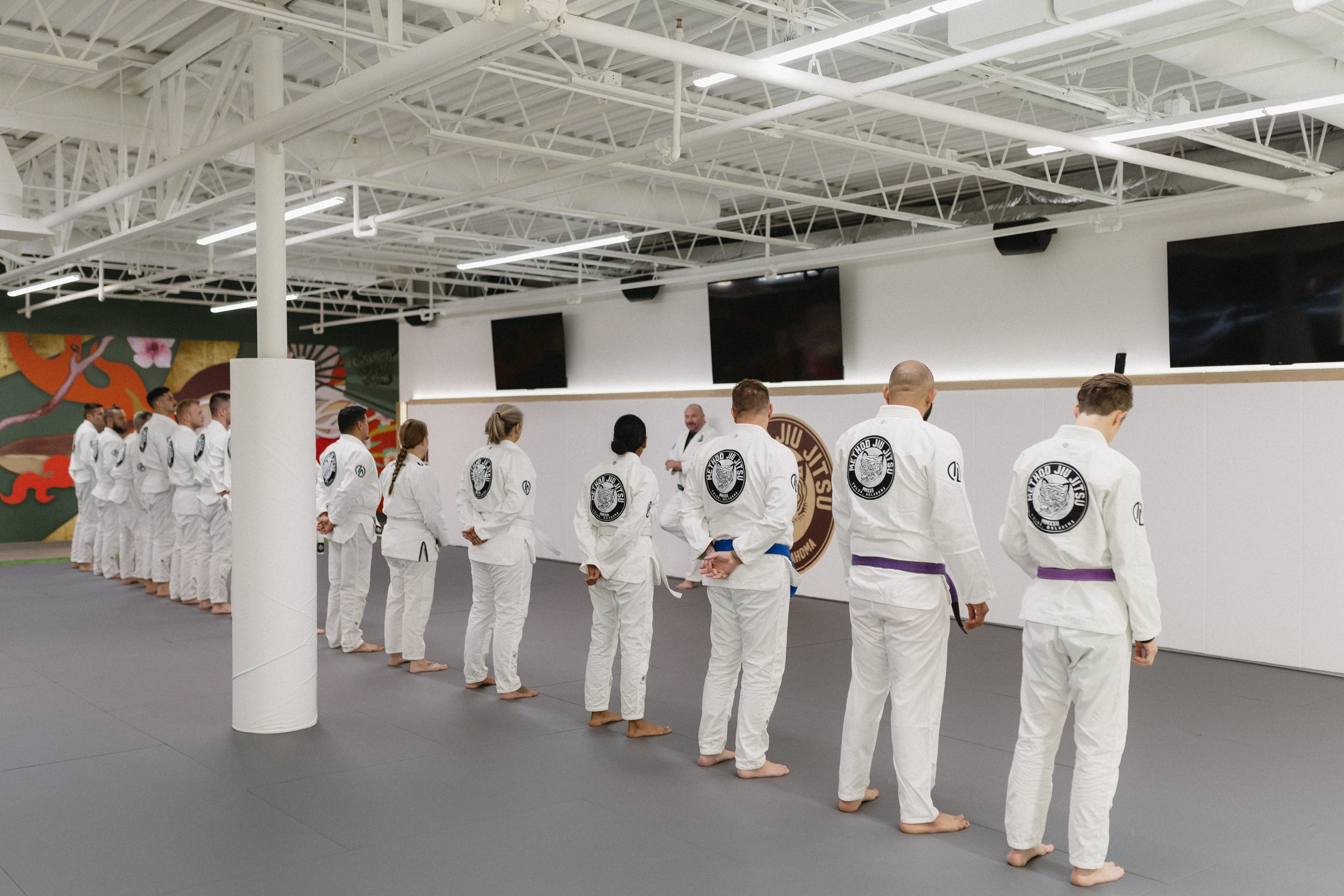
The training photo above shows students working through technique together. It is a reminder that skill development happens through a combination of instruction, focused repetition, live problem solving, and a supportive training room. Here is a practical approach you can use at Method Jiu-Jitsu or any responsible academy.
1. Define What Better Means for You
Improvement can mean escaping mount more often, holding top position, feeling calmer during a round, preparing for competition, or becoming more confident in self defense. Those goals overlap, but they do not always require the same short term plan. A new student may prioritize posture and movement, while a competitor may prioritize a specific scoring sequence.
Write one outcome for the next six weeks. Make it observable, such as recovering guard from side control twice in a round or completing a controlled sequence from closed guard. The BJJ classes in Tulsa at Method Jiu-Jitsu give students a coached environment where a goal can become a measurable practice target.
2. Attend Consistently Instead of Chasing Perfect Weeks
Consistency creates enough repetitions for your brain and body to recognize patterns. Two or three classes every week usually produce more useful learning than one exhausting class followed by a long break. Put sessions on your calendar and choose times that fit your work, family, and sleep schedule.
If you miss a class, return without trying to compensate by training recklessly. Review the schedule, choose the next realistic session, and tell your coach what you missed. Students who are new to the sport can begin with the beginner BJJ program, where fundamental movement is taught progressively.
3. Limit Your Technical Focus
Jiu-jitsu contains too many positions to master at once. For a training block, choose one position and a small group of connected decisions. For example, from closed guard you might study posture breaking, one sweep entry, and how to recover when the opponent stands. This gives your mind a simple map while still allowing live variation.
A narrow focus does not mean ignoring the rest of class. Learn the lesson your instructor presents, then connect it to your current question. The gi jiu-jitsu program can make grips and frames easier to feel, while the no-gi jiu-jitsu program highlights connection, underhooks, and body positioning without fabric grips.
4. Learn Positions Before Submissions
Submissions are exciting, but they are easier to find when you understand control. Ask what makes a position stable, where your partner can move, and which escape you need to prevent. From back control, that may mean controlling the shoulders and managing the hip line before thinking about a finish. From mount, it may mean keeping your base while your partner bridges.
This approach also makes failed attacks useful. If a submission attempt causes you to lose top position, the lesson may be that control came too early. Review what is mount, what is side control, and what is closed guard as simple reference points for your positional vocabulary.
5. Drill for a Specific Reason
Drilling is not a race to perform a technique as many times as possible. Before you start, name the detail you are testing. You might be checking whether your elbow stays connected, whether your head position protects your balance, or whether your hips move before your hands reach.
Begin slowly enough to notice errors. Add a realistic reaction after the movement feels familiar, then reset and repeat. Ask your partner to give accurate resistance rather than pretending the technique works perfectly. A drill for a guard recovery should include a partner who gradually tries to pass, not a partner who freezes forever.
6. Connect Drilling to Live Rounds
A technique becomes a skill when you can recognize the moment to use it. After drilling, start a short positional round from the same situation. The bottom player tries to recover or escape, and the top player tries to maintain control or advance. Switch roles so both people learn the problem.
This format is often more productive than waiting for a full sparring round to produce the exact position. It also lets you manage intensity. The no gi drilling guide explains how deliberate repetitions can build reactions without turning every practice into a maximal effort.
7. Use Sparring to Ask Questions
Do not treat every round as a test of your worth. Enter with one question, such as whether you can keep your frames while escaping side control. If the round moves somewhere else, make sensible decisions and return to your question when the opportunity appears.
Tell your partner the goal when appropriate. “Please give me a chance to work this guard recovery” creates a better learning environment than silently forcing a move. You can also request a slower round when learning a new sequence. The training partner guide covers why communication makes a room better for everyone.
8. Spend Extra Time Where You Get Stuck
Your favorite techniques are useful, but they may not be the reason your progress has stalled. Look for recurring trouble. Do you lose balance when passing? Do you expose your back while escaping? Do you hold your breath when pressure increases? These patterns identify the positions that deserve focused rounds.
After class, write one sentence about what happened and one possible adjustment. Then ask your instructor to check that adjustment. If you repeatedly get trapped under mount, pair this work with the ideas in how to escape mount rather than simply adding another attack to your list.
9. Improve Your Movement Quality
Technical progress depends on basic movement. Practice bridging, hip escapes, technical standups, turning to your side, and maintaining a strong base. These movements are not only warmups. They are the vocabulary used inside escapes, guard retention, takedowns, and transitions.
Move with control and breathe throughout the motion. A smooth hip escape that creates space is more valuable than a frantic burst that leaves your feet disconnected. The BJJ terminology glossary can help newer students connect coaching language to movements they already perform.
10. Use Both Gi and No Gi Training Wisely
Gi and no gi sessions can complement each other. The gi gives you handles that make certain grips and posture battles clear. No gi training places more emphasis on underhooks, head position, hip connection, and timing. The best choice depends on your goals, schedule, and what you enjoy enough to practice consistently.
Do not assume a technique transfers unchanged between formats. Keep the principle and adjust the control. Compare the gi training guide with the no gi overview when planning your week.
11. Ask Better Questions in Class
A useful question is specific and connected to an action. Instead of asking, “Why did that fail?” ask, “When my partner frames on my hip during the knee cut, where should my head and hands go?” This gives your instructor enough information to offer a correction you can test immediately.
Ask after attempting the movement so the answer has context. Listen, try the adjustment, and report what changed. Coaches can help much more when they can see your habits. Learn more about the coaching approach on the Method Jiu-Jitsu about page and the instructor page.
12. Recover Like Training Is a Long Project
Your body learns during training, but it also needs time to recover. Sleep, food, hydration, mobility work, and sensible intensity all affect how well you can pay attention. More classes are not automatically better if every session leaves you exhausted or sore enough to change your movement.
Tell your coach about injuries and avoid treating pain as a character test. Tap early and often when a submission is secure. A sustainable student can accumulate months and years of practice, which is a major advantage over someone who trains hard for two weeks and then disappears.
13. Build Confidence Through Small Wins
Confidence in BJJ should come from evidence, not bravado. Notice when you recognize a position sooner, keep your breathing steady, or make a better decision after a mistake. These small wins show that your understanding is growing even when a round still feels difficult.
Do not compare your chapter one to another student's chapter ten. If you are considering your first class, read what to expect from jiu-jitsu classes and how adults start jiu-jitsu. You can also book an introduction and discuss your goals before training.
14. Track Progress Without Obsessing Over Rank
A belt is a meaningful milestone, but it is not a daily score. Keep a short log with the date, the position covered, one detail you remember, one problem you faced, and one question for next time. Review it every few weeks to find themes.
You may discover that your best evidence of progress is practical: you recover guard more reliably, recognize when your opponent is setting a trap, or help a newer partner learn safely. Competition can provide another test, but it is not the only valid measure. For competition preparation, review the first tournament checklist.
15. Put Your Plan Into Practice at Method Jiu-Jitsu
The fastest sustainable path is usually simple: attend regularly, focus your study, drill with intention, spar with a question, seek feedback, and recover well. Repeat that cycle long enough for skills to become familiar under pressure. If you train in South Tulsa, Broken Arrow, Jenks, or Bixby, Method Jiu-Jitsu offers a welcoming place to begin or continue that process.
The academy is located at 8011 S Sheridan Rd, Suite B, Tulsa, OK 74133. Membership includes a premium Method Jiu-Jitsu gi. Explore kids jiu-jitsu for young athletes, check the class schedule, or contact Method Jiu-Jitsu to choose a starting point. Call (918) 995-4692 if you have questions about classes, goals, or training experience.
If you are deciding between formats, speak with the team instead of guessing from a video. Someone interested in self defense can read about real world self defense through BJJ, while a student who wants athletic conditioning can explore BJJ fitness and weight loss. Families can compare training together as a family. These resources are starting points, not substitutes for an honest conversation about your schedule, experience, and goals.
Improving faster does not mean rushing. It means making each session easier to learn from. Show up, pay attention to the problem in front of you, and let consistent practice compound.