Most people do not walk into a jiu-jitsu academy saying they are there for their mental health. They say they want to get in shape, learn self-defense, or try something new. A few months later, ask them why they keep coming back and you hear something different. "It is the only hour of my day when I am not thinking about work." "I sleep better." "I am calmer with my kids." That is the side of Brazilian jiu-jitsu nobody puts on the flyer, and it is one of the biggest reasons people stick with it.
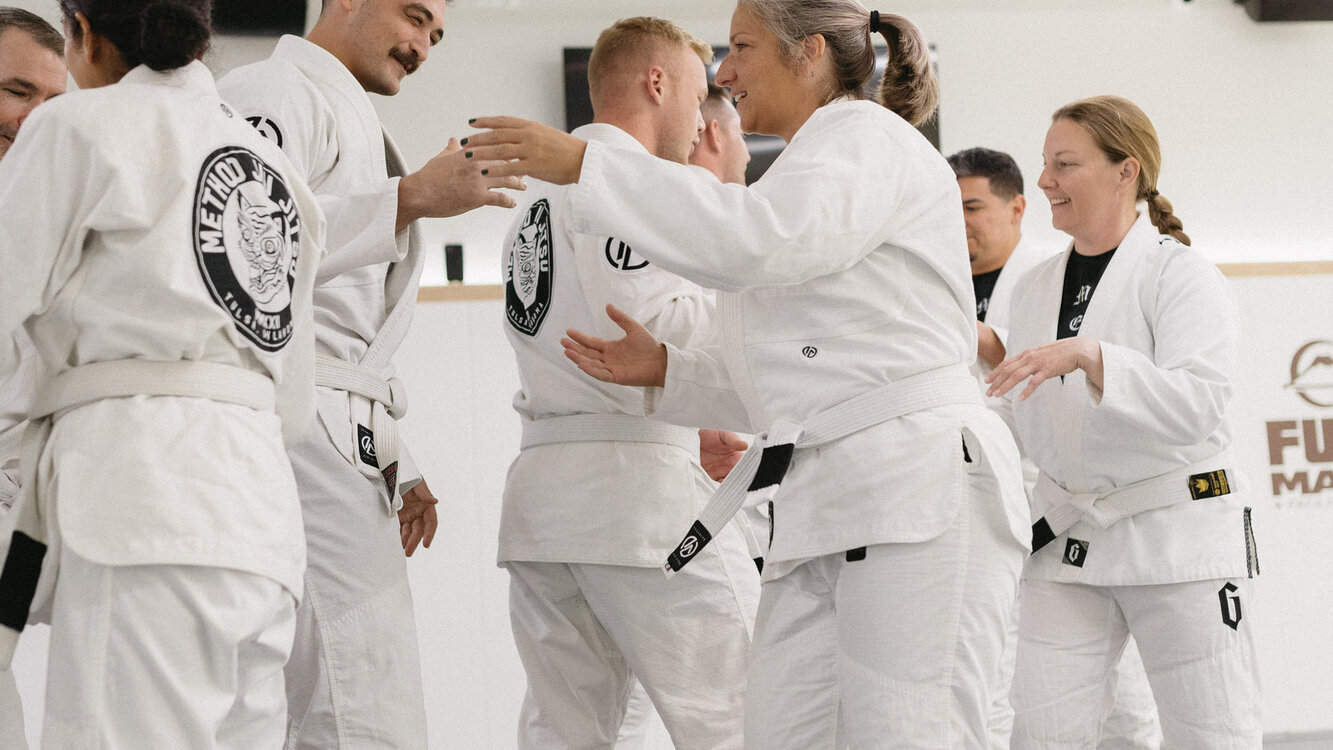
The photo above was taken at the end of a class at Method Jiu-Jitsu in South Tulsa. Look at the faces. These are adults with jobs, families, and full calendars, and they are grinning and slapping hands after an hour of hard training. This guide explains why jiu-jitsu has that effect, what it can and cannot do for your mental health, and how to get started if you are in Tulsa, Broken Arrow, Jenks, or Bixby.
Why So Many Tulsa Adults Are Looking for Something Beyond the Gym
Plenty of people already exercise. They run on a treadmill with a podcast playing or move through a weight routine while answering emails between sets. That kind of exercise helps your body, but your mind often keeps racing the whole time.
Jiu-jitsu is different because it does not leave room for that. You cannot scroll your phone while someone is working to pass your guard. For a lot of adults, that is exactly the break they have been missing. If you are an adult wondering whether it is too late to start, our post on why adults are starting jiu-jitsu in Tulsa answers that question directly, and our BJJ over 40 program shows how older beginners train safely.
What the Research Says About Exercise, Martial Arts, and Mental Health
The link between regular exercise and better mood is one of the most consistent findings in health research. Moderate to vigorous activity is associated with lower stress, fewer symptoms of anxiety and depression, and better sleep. Jiu-jitsu checks every one of those boxes, since a typical class includes a warm-up, technical drilling, and several rounds of live training.
Research on martial arts specifically is newer and smaller, but it points in the same direction. Studies on grappling and martial arts training have reported improvements in self-esteem, emotional regulation, and stress levels, and small pilot studies with military veterans have explored BJJ as a supportive activity alongside traditional care. The honest summary is this: the evidence is encouraging, not magic. What we see on our mats every week lines up with it. For a broader look at the physical and mental upside of training, read our guide to the benefits of BJJ.
Why Jiu-Jitsu Pulls Your Mind Into the Present
Mindfulness is often described as paying full attention to what is happening right now. Many people find that hard to do while sitting still. Jiu-jitsu makes it almost automatic.
When you are holding side control or working to recover your guard, you are reading your partner's weight, grips, and balance every second. Your attention narrows to one problem. The meeting you dread tomorrow and the bill sitting on the counter simply fade out. Students often describe leaving class feeling like they just took a mental shower, and this full engagement is a big part of why.
Learning to Stay Calm Under Pressure
One of the first lessons every white belt learns is what it feels like to be stuck on the bottom of mount with a heavier partner on top. The natural reaction is to panic, push wildly, and burn out in thirty seconds. Coaches teach you to do the opposite: breathe, frame, and move with purpose.
That skill transfers. When you practice staying composed while you are physically uncomfortable, a tense conversation at work starts to feel less overwhelming. Our mount escapes guide and our beginner sparring guide both show how this calm, step by step approach is built into the way we teach.
How Tapping Teaches You to Let Go of Ego
In jiu-jitsu, when a partner catches you in a submission, you tap. The round stops, you reset, and you go again. You will tap hundreds of times on your way to a blue belt, and so will everyone else in the room.
That sounds small, but it reshapes how you handle failure. Losing a position stops feeling like a personal verdict and starts feeling like information. Many students say this is the mental benefit that surprised them most. Perfectionists in particular learn that being "bad" at something for a while is a normal part of getting good at it. Our page on BJJ etiquette explains how tapping and respect for your partners keep training safe and friendly.
Stress Relief You Can Feel After One Class
You do not need months of training to feel a difference. Most first timers walk out of class tired, sweaty, and noticeably lighter. Hard physical effort burns off tension in a way that a scroll through social media never will.
There is also a kind of stress relief that comes from doing something with your hands and body that has nothing to do with screens. For many Tulsa adults who sit at a desk all day, jiu-jitsu becomes a reset button between work and home. If you want the full breakdown of what happens on day one, see what to expect at your first class.
Jiu-Jitsu and Anxiety: What New Students Often Notice
People dealing with everyday anxiety often tell us the first few classes were the hardest part. Walking into a room full of strangers, learning a new skill, and getting close to other people can feel like a lot. Then something shifts. Repeated, controlled exposure to discomfort in a safe setting tends to make that discomfort smaller.
Every round gives you practice noticing your heart rate climb, slowing your breath, and choosing your next move instead of reacting. That is a useful skill for anyone who struggles with racing thoughts. If safety is part of your worry, our honest guide to whether BJJ is safe covers injury risk and how good academies keep training controlled.
The Social Side: Why Community Protects Your Mood
Loneliness is a real problem for adults, especially after school years end and friendships become harder to build. Jiu-jitsu solves that almost by accident. You train with the same faces several times a week, you help each other improve, and you share a hard experience together.
That is exactly what is happening in the photo at the top of this post. Those high fives are not staged. They are the end of class ritual, when every student slaps hands with every partner in the room. Our post on why training partners matter goes deeper into how that community forms, and the women's jiu-jitsu guide shares how female students find their place on the mats.
Confidence That Carries Into Work and Home
Knowing that you can handle yourself physically changes how you carry yourself. It is not about wanting to fight. It is the quiet confidence that comes from solving hard problems under pressure, week after week.
Students often notice they speak up more in meetings, set clearer boundaries, and stay steady during stressful moments with family. Practical self-defense skills are part of that, and our article on the best self-defense you can learn in Tulsa explains why BJJ holds up so well in real situations.
Better Sleep and a Better Routine
Evening training leaves most people genuinely tired in the best way. Many students report falling asleep faster and waking up more rested on training days. Better sleep, in turn, has a big effect on mood, patience, and focus.
Jiu-jitsu also adds structure to a week. Having a set class time gives you a reason to leave work on time, eat a little better, and drink more water. Those small habits stack up. If you are juggling a demanding job or kids, our guide to adult BJJ classes for busy schedules shows how members fit two or three classes into a packed week, and the class schedule lists current times.
Problem Solving on the Mat Builds Focus Off of It
BJJ is often called physical chess, and for good reason. Every position has a goal, every movement creates a reaction, and the best grapplers think a few steps ahead. Learning a guard pass or a submission sequence means breaking a hard problem into small, solvable pieces.
That habit of calm, step by step problem solving helps outside the gym too. Students tell us they feel sharper and more patient when work gets complicated. If you want to see how a world class coach thinks about these problems, our feature on what makes a great BJJ instructor is a good read.
What BJJ Is Not: Know the Limits
It matters to be honest here. Jiu-jitsu is a fantastic support for mental health, but it is not therapy, medication, or a cure. If you are dealing with depression, an anxiety disorder, PTSD, or any serious mental health concern, keep working with a licensed professional and think of training as one helpful part of your plan.
It also helps to choose the right environment. A room full of ego and reckless sparring will add stress, not relieve it. Look for an academy where coaches watch every round, beginners are protected, and people genuinely look out for each other. Our guide on how to choose a BJJ gym and our post on finding the right BJJ gym in Tulsa list exactly what to look for on a visit.
How to Start if You Feel Nervous or Out of Place
Feeling nervous before your first class is completely normal. Almost everyone in the photo above felt the same way once. A few simple steps make it easier:
- Book a free class ahead of time so the coaches know you are coming.
- Arrive ten minutes early to meet the instructor and see the room.
- Tell your coach if you have injuries, worries, or any limitations.
- Focus on learning one thing, not on keeping up with anyone else.
- Watch the live rounds from the side of the mat until you feel ready.
Our beginner BJJ program is built for exactly this, and our what to wear to BJJ page takes the guesswork out of your first visit. Every membership includes a premium Method Jiu-Jitsu gi, so you will not have to shop for gear before you know what you need. If you are still unsure whether jiu-jitsu fits your goals, start with our overview of what Brazilian jiu-jitsu is.
Mental Health Benefits for Kids, Teens, and Families
The same lessons apply to younger students, often even more strongly. Kids learn to handle frustration, follow instructions, and stay calm when things do not go their way. Teens get a healthy outlet for stress, a break from screens, and a group of friends who push them in a good direction.
Parents can learn more in our kids BJJ program and teen BJJ program, and our article on kids martial arts in Tulsa covers confidence and self-defense for ages 4 to 13. Many households now train side by side, and our family jiu-jitsu guide explains how that works.
Frequently Asked Questions About Jiu-Jitsu and Mental Health
Is jiu-jitsu good for mental health?
For many people, yes. Brazilian jiu-jitsu combines hard physical exercise, full concentration, problem solving, and a supportive group, all of which are linked to lower stress and better mood. Students at Method Jiu-Jitsu in South Tulsa often say class is the one hour of the day when their mind finally goes quiet. It works best as part of a healthy routine, not as a replacement for professional care.
Can BJJ help with anxiety?
Many students say it helps. Jiu-jitsu gives you a safe, controlled way to practice staying calm while you are uncomfortable, and you get to repeat that practice several times a week. Over time, that can make everyday stress feel more manageable. If you are dealing with a diagnosed anxiety disorder, keep working with your doctor or therapist and treat BJJ as a helpful addition.
How often should I train jiu-jitsu for stress relief?
Two or three classes per week is a great target for most adults. That is enough to build a routine and feel the mental benefits without wearing your body down. Even one class a week helps, and you can check the Method Jiu-Jitsu class schedule to find morning and evening options in South Tulsa.
Is jiu-jitsu good for people who feel nervous in new settings?
Yes. Beginner classes are structured, coaches walk you through every step, and nobody expects you to know anything on day one. You can watch the live rounds from the side of the mat on your first visit. Most nervous beginners find that the friendly, team feel of the room makes it easier to relax than they expected.
Do I need to be in shape to start BJJ for stress relief?
No. You get in shape by training, not before. Classes start with a warm-up, techniques are taught step by step, and you control your own pace. Every Method Jiu-Jitsu membership also includes a premium Method Jiu-Jitsu gi, so you will have the right uniform from your first weeks without any extra purchase.
Start Training for Your Body and Your Mind in South Tulsa
If you have been looking for something that clears your head, builds real confidence, and connects you with good people, jiu-jitsu is worth a try. You do not need experience, a certain fitness level, or any special personality. You just need to show up once.
Method Jiu-Jitsu is located at 8011 S Sheridan Rd, Suite B, in South Tulsa, an easy drive for students from Broken Arrow, Jenks, and Bixby. Book your free first class, meet our head instructor, and see how you feel walking out the door. Questions first? Call us at (918) 995-4692. You can also read more about our jiu-jitsu classes in Tulsa or how BJJ supports fitness and weight loss.