The turtle position in BJJ is a defensive shape where you are balled up on your knees and elbows, chin tucked, with your partner usually on top or beside you. It protects your neck and blocks an easy guard pass, but it also exposes your back, so the real skill is knowing how to defend it for a moment and then get out.
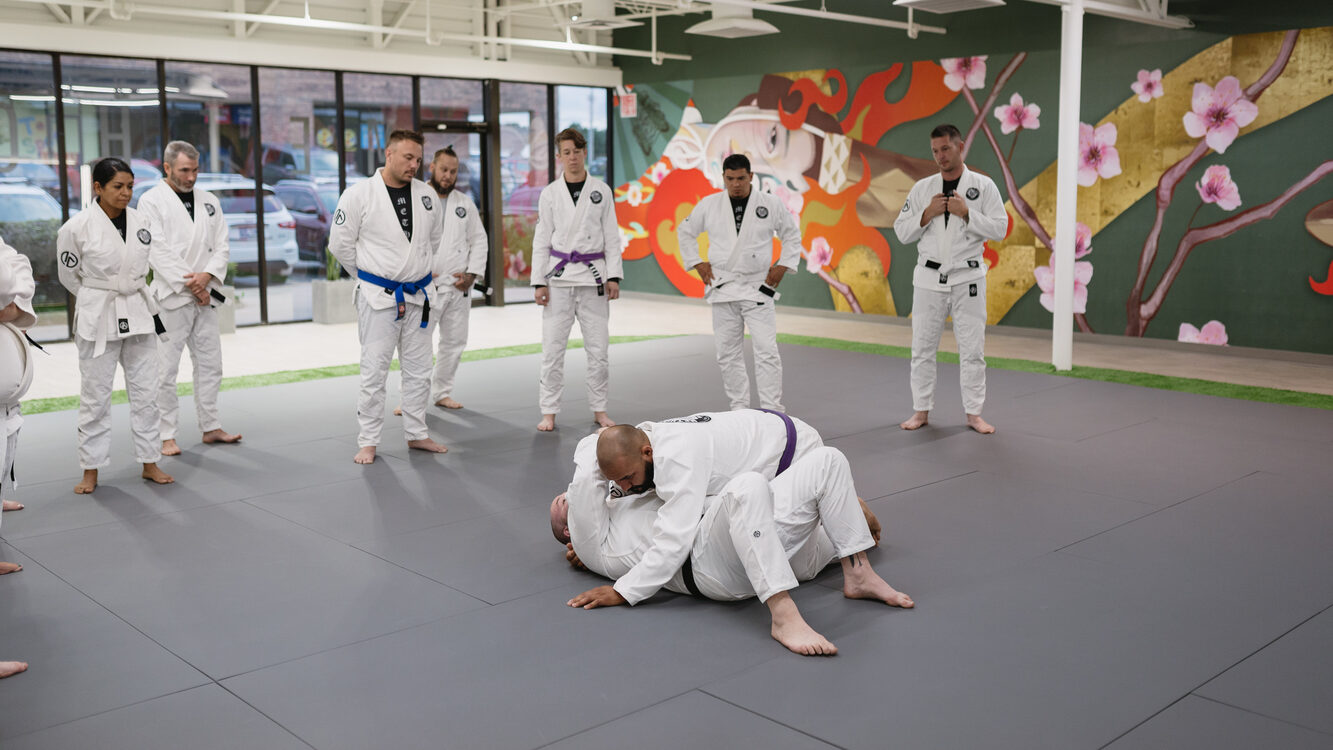
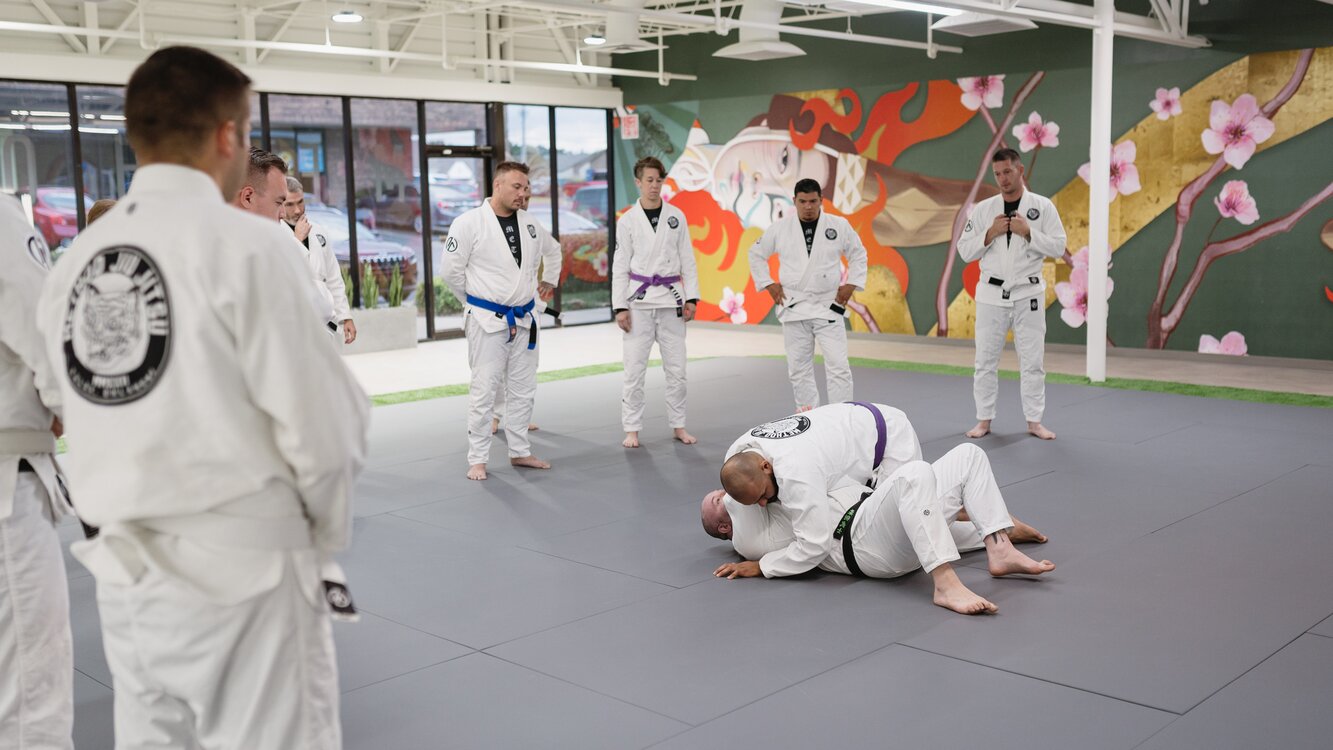
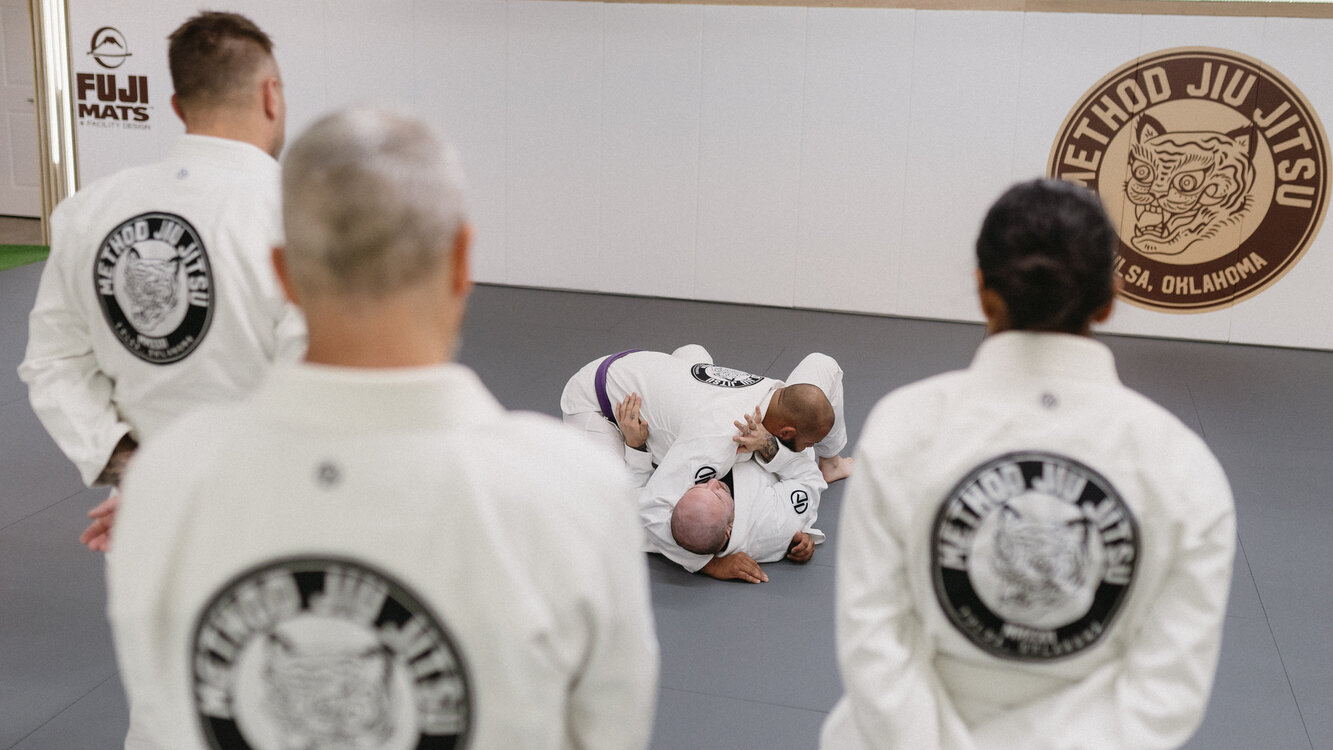
The photo above was taken during class at Method Jiu-Jitsu in South Tulsa. A coach is showing how to control a partner who has dropped into turtle while the rest of the group watches the details before drilling it themselves. This guide covers what the turtle is, three escapes worth learning first, and how to attack it from on top.
What Is the Turtle Position in BJJ?
Picture someone kneeling on the mat, folded forward, elbows tight against their thighs and head tucked down. From above, the rounded back looks like a turtle shell, which is where the name comes from.
The person on top usually controls from the side, from the front near the head, or from behind near the hips, and each spot creates different attacks. If some of these terms are new, our BJJ terminology glossary explains the vocabulary you will hear in class.
Turtle sits in a unique place in jiu-jitsu. It is not a guard, because your legs are not between you and your partner, and it is not a pinned position like side control or mount. It is a transition, and how you treat it decides whether it helps or hurts you.
Why Beginners End Up in Turtle So Often
Almost every white belt finds themselves in turtle within their first few weeks of live rounds. A few situations cause it over and over:
- A guard pass is about to land. Turning away onto your knees is a natural reaction when you feel your partner getting past your legs.
- A scramble goes sideways. When both people are fighting for position, the person who loses the scramble often ends up on all fours.
- A takedown attempt fails. If you shoot for a leg and your partner sprawls, you can land on your knees with their weight on your back.
None of these are mistakes in themselves. Our guide to BJJ guard passing for beginners explains passing from the top,, and a good pass often forces the bottom player to choose between flattening out or turtling.
Is Turtle a Bad Position?
It depends on how long you stay there and what you do with it.
Turtle is good when you use it as a short bridge. Turning to your knees can stop a pass cold and give you a split second to recover your guard, stand up, or start a wrestling exchange.
Turtle is bad when you treat it as a place to rest. If you freeze in a ball, your partner gets time to settle their weight, insert hooks, and take your back. Back control is widely considered the most dangerous position to be stuck in, and turtle is the most common doorway to it. The rule of thumb coaches give beginners is simple: arrive in turtle, protect yourself, then leave as soon as you can.
How to Build a Safe Turtle
Before learning any escape, learn the shape. A tight turtle buys you time, and a loose one gets broken down in seconds.
- Elbows to knees. Glue your elbows to the inside of your knees so there is no space for your partner to slide a hand or a hook through.
- Chin tucked. Keep your chin down toward your chest. This makes chokes much harder to apply.
- Hands guarding the collar or neck. In the gi especially, keep your hands near your collar so your partner cannot grab a deep lapel grip.
- Weight on your knees and toes, not flat on your belly. Staying up on your base lets you move. Lying flat gives your partner a free back take.
- Eyes on your partner. Turn your head slightly so you can feel and see which side they are working from.
Spend a few minutes during open mat holding this shape while a partner applies light pressure. It is the foundation for every escape below.
Common Turtle Mistakes White Belts Make
Most turtle problems come from the same handful of habits:
- Reaching out with your arms. Posting a hand far away to push your partner gives them an arm to trap and opens a path to your back.
- Lifting your head and looking up. This exposes your neck and often loosens your elbows from your knees at the same time.
- Waiting. The longer you sit in turtle, the more grips your partner collects. Movement should start early.
- Forgetting to breathe. Panic burns energy fast. Slow breaths keep you calm enough to pick the right escape.
If you want a broader look at staying calm while you are under pressure, our guide to BJJ sparring for beginners covers the mindset for your first live rounds.
Turtle Escape: Rolling Back to Guard
The granby roll is a shoulder roll that turns you from your knees onto your back so your legs end up between you and your partner again. It is one of the most useful turtle escapes because it leads directly back to guard.
- From a tight turtle, tuck your head toward the side away from your partner's weight.
- Roll across your shoulders, not your neck, keeping your knees tucked toward your chest.
- As you come over, shoot your legs out toward your partner and catch their hips or legs with your feet.
- Finish by framing with your arms and settling into open guard or half guard.
Practice the roll by itself first, slowly and on both sides, until you can do it without putting weight on your neck.
Turtle Escape: Sitting Out to Face Your Partner
The sit out works well when your partner is beside you and leaning their weight onto your back.
- Post one foot on the mat on the side away from your partner.
- Thread your opposite leg underneath your body toward the far side, turning your hips as you go.
- Keep turning until you are sitting and facing your partner instead of facing the mat.
- From there, pull guard, frame, or work back to your knees in a better position.
The sit out works best when your partner's weight is heavy on your back. If they are light and mobile, try the granby roll or a wrestling escape instead.
Turtle Escape: Wrestling Up to Your Feet
Sometimes the best escape from turtle is simply standing up. This is especially common in no gi, and it overlaps with wrestling.
- From turtle, turn toward your partner and grab one of their legs behind the knee.
- Drive your head into their side or hip for leverage.
- Step one foot up, then the other, while keeping your hold on the leg.
- Finish by coming to your feet in a single leg position or by breaking free entirely and resetting.
If takedowns are new to you, our post on the over under throw shows how standing exchanges work at Method Jiu-Jitsu. Students who enjoy this side of the game often lean toward our no gi jiu-jitsu program, where scrambles and wrestling ups happen in nearly every round.
How to Attack the Turtle From the Top
When your partner turtles, you have two broad choices: break them down or ride them.
Breaking down means flattening the turtle onto its side or belly so your partner loses their base. You can do this by driving your weight forward and to one side, chopping an arm, or pulling an ankle out from under them.
Riding means staying on top, keeping your partner balled up, and patiently working for grips and hooks. This takes good balance, because a turtled opponent will try to roll, sit out, or stand at any moment.
Either way, keep your hips heavy and stay attached, or your partner will use one of the escapes above. Our guide to drilling no gi has ideas for building the reactions you need to stay on top during scrambles.
Taking the Back From Turtle
The most common goal from on top of the turtle is to take the back.
- Get a seatbelt grip: one arm over your partner's shoulder and one arm under the opposite armpit, hands clasped across their chest.
- Keep your chest glued to their back and your weight slightly toward the side of the over arm.
- Insert your first hook by sliding your foot inside their thigh, then follow with the second hook as they react.
- Once both hooks are in, roll to your side or stay on top and start working toward a choke.
Under IBJJF competition rules, establishing back control with both hooks in scores four points, which is one reason competitors work so hard on this transition. For more details on keeping the back once you get there, read our explainer on what back control is.
Submissions From the Turtle: Clock Choke, Front Headlock, and Crucifix
Turtle is also a great position for direct submissions. Three families come up often:
- The clock choke (gi). From the side, you grip deep in your partner's collar and walk your legs around their head while your chest pressures their back. It is a classic gi attack against a turtled opponent who is protecting their hooks.
- Front headlock attacks. When you are in front of the turtle, controlling the head and one arm opens chokes and leads to back takes. These positions put pressure on the neck, so drill them slowly and give your partner time to tap.
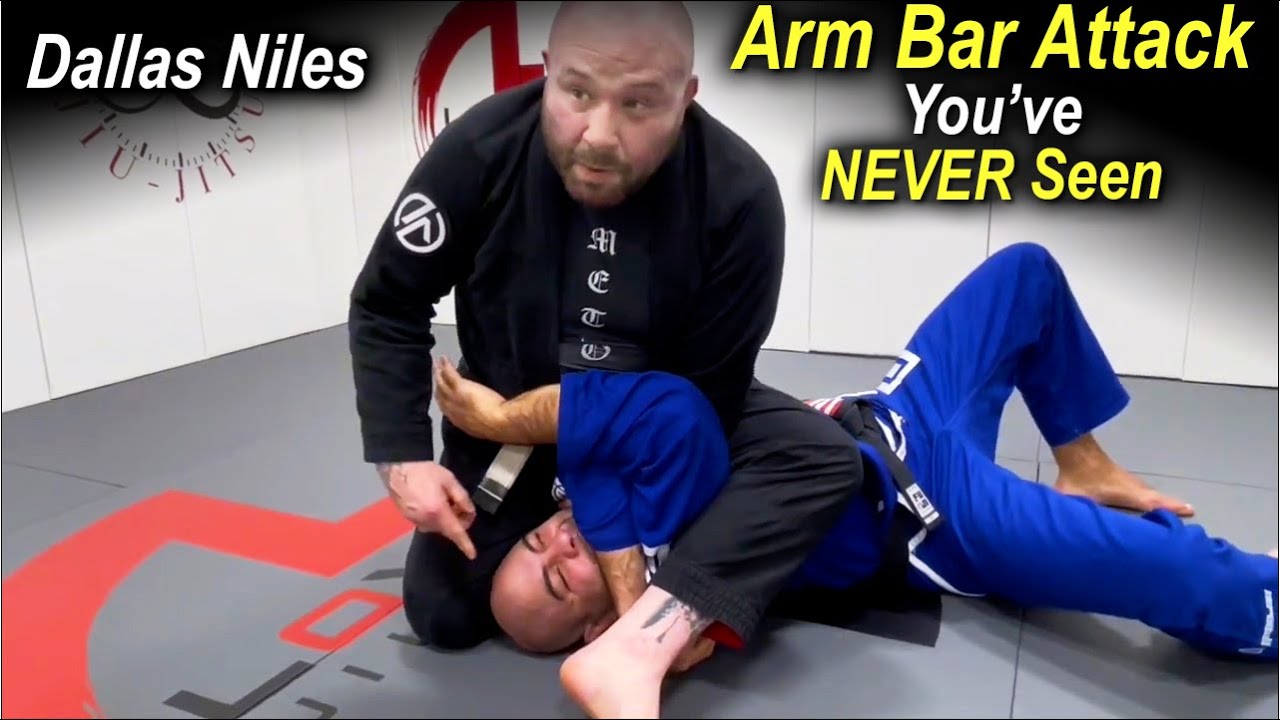
- The crucifix. By trapping one of your partner's arms with your legs and controlling the other with your arms, you leave their neck and arms open. Head instructor Dallas Niles is known for this position, and our deep dive on the crucifix in BJJ explains why it works so well. You can also study the arm drag to crucifix and double over to crucifix entries.
For a full overview of chokes, joint locks, and their names, see our BJJ submissions guide.
Turtle in the Gi vs No Gi
The turtle looks the same in both styles, but it plays very differently.
In the gi, collar and belt grips make it easier to control the turtle and set up chokes, so defenders must protect their collar constantly. Our gi jiu-jitsu program is where these grip battles are taught in detail.
In no gi, there is less friction, so the bottom player can often scramble or stand more easily, and top players rely on wrist control, body locks, and the seatbelt. Our page on gi vs no gi breaks it down.
How to Practice Turtle Safely in Class
Turtle work involves rolling, neck pressure, and scrambles, so a little care goes a long way.
- Start slow. Learn each escape at walking speed before adding resistance.
- Tap early to neck attacks. Front headlocks and chokes can come on fast. There is no prize for waiting.
- Tell your coach about neck or back issues. They can suggest alternatives, such as sitting out instead of rolling.
- Use positional rounds. Starting from turtle with a partner on top is one of the best ways to build both escapes and attacks without the chaos of a full roll.
Our page on whether BJJ is safe covers general injury prevention, and our BJJ etiquette guide explains how tapping and partner respect keep training friendly. If you want a structured plan for getting better between classes, read how to improve at BJJ faster.
Frequently Asked Questions About the BJJ Turtle Position
What is the turtle position in BJJ?
The turtle is a defensive position where you are on your knees and elbows, curled into a tight ball with your chin tucked and your elbows pressed to your knees. It protects your neck and stops your opponent from passing straight to side control, but it also exposes your back, so the goal is usually to escape it quickly rather than stay there.
Is turtle a bad position in jiu-jitsu?
Turtle is not bad on its own, but it is risky if you stay there too long. Used as a short bridge between positions, it can save you from a guard pass and set up a sit out, a roll back to guard, or a single leg. It becomes a problem when you freeze, let your elbows drift away from your knees, or allow your partner to settle hooks and take your back.
How do you escape the turtle position as a beginner?
The three most common beginner escapes are rolling back to guard with a granby roll, sitting through to face your partner, and wrestling up to your feet with a leg grab. All three start with the same habits: keep your elbows tight, keep your chin tucked, and start moving before your partner settles their weight and grips.
How do you attack someone in turtle?
From the top, you either break the turtle down flat or ride it while you work toward the back. Common routes include the seatbelt grip to take the back with hooks, the clock choke in the gi, front headlock attacks, and the crucifix, which traps one arm and leaves the neck open. Always apply neck attacks slowly and give your partner time to tap.
Can beginners learn the turtle position at Method Jiu-Jitsu in Tulsa?
Yes. Fundamentals classes at Method Jiu-Jitsu in South Tulsa are built for brand new students and cover basic positions, core movements, and essential techniques at a comfortable pace, with coaches breaking each step down before you try it with a partner. Every membership includes a premium Method Jiu-Jitsu gi, and your first class is free.
Learn the Turtle Position at Method Jiu-Jitsu in South Tulsa
The details really click when a coach adjusts your elbows and shows you where your weight should be. That is what our beginner BJJ program is built for. Fundamentals classes meet Monday and Wednesday at 5:30 PM, and you can see every other adult, kids, competition, and open mat session on the class schedule. If you plan to compete, our competition program and first tournament checklist will help you prepare.
Method Jiu-Jitsu is located at 8011 S Sheridan Rd, Suite B, Tulsa, OK 74133, in South Tulsa, a short drive for students from Broken Arrow, Jenks, and Bixby. Every membership includes a premium Method Jiu-Jitsu gi. Book your free first class, read what to expect at your first class, or call us at (918) 995-4692 with any questions. You can also browse all of our programs, including options for teens and adults over 40.