A side control escape is any technique that gets you out from under a partner who is pinning you chest to chest from the side, usually by recovering your guard or coming up to your knees. Almost every version follows the same recipe: protect your neck and arms, build frames with your forearms, move your hips, and use the space before your partner takes it back.
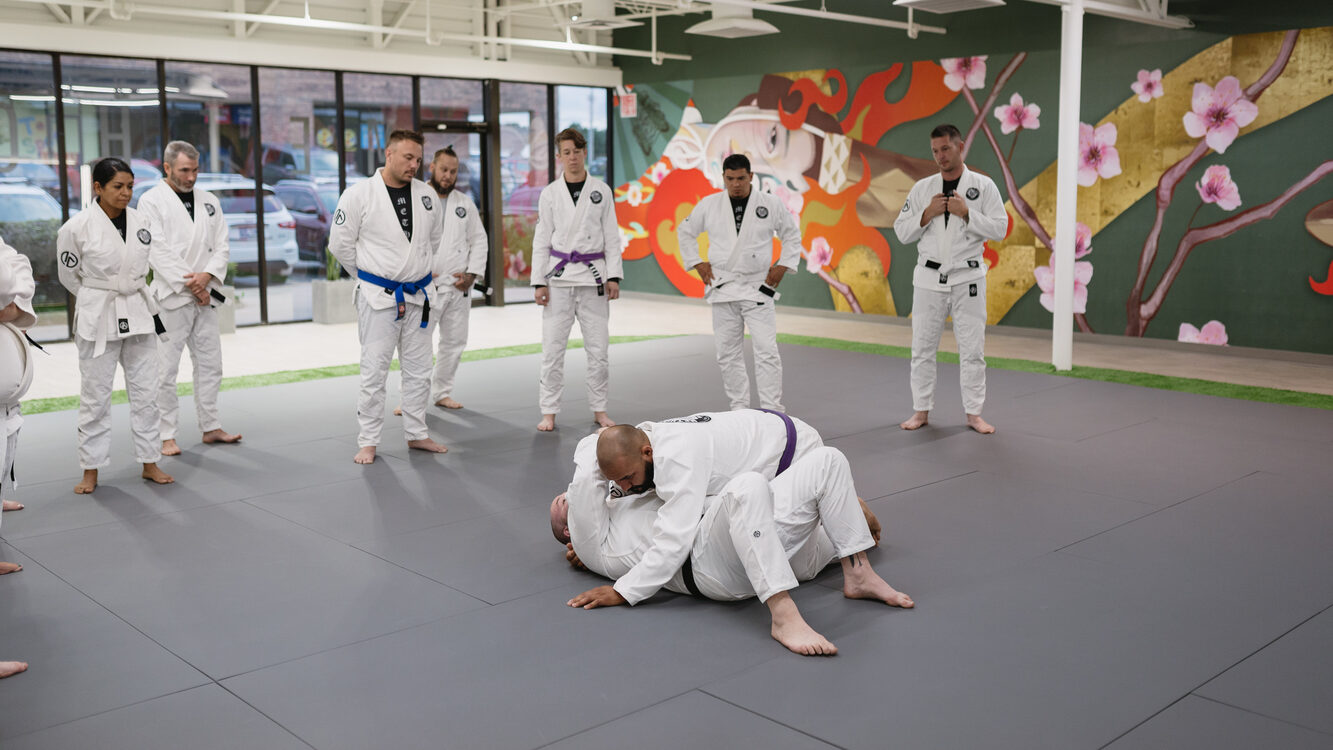
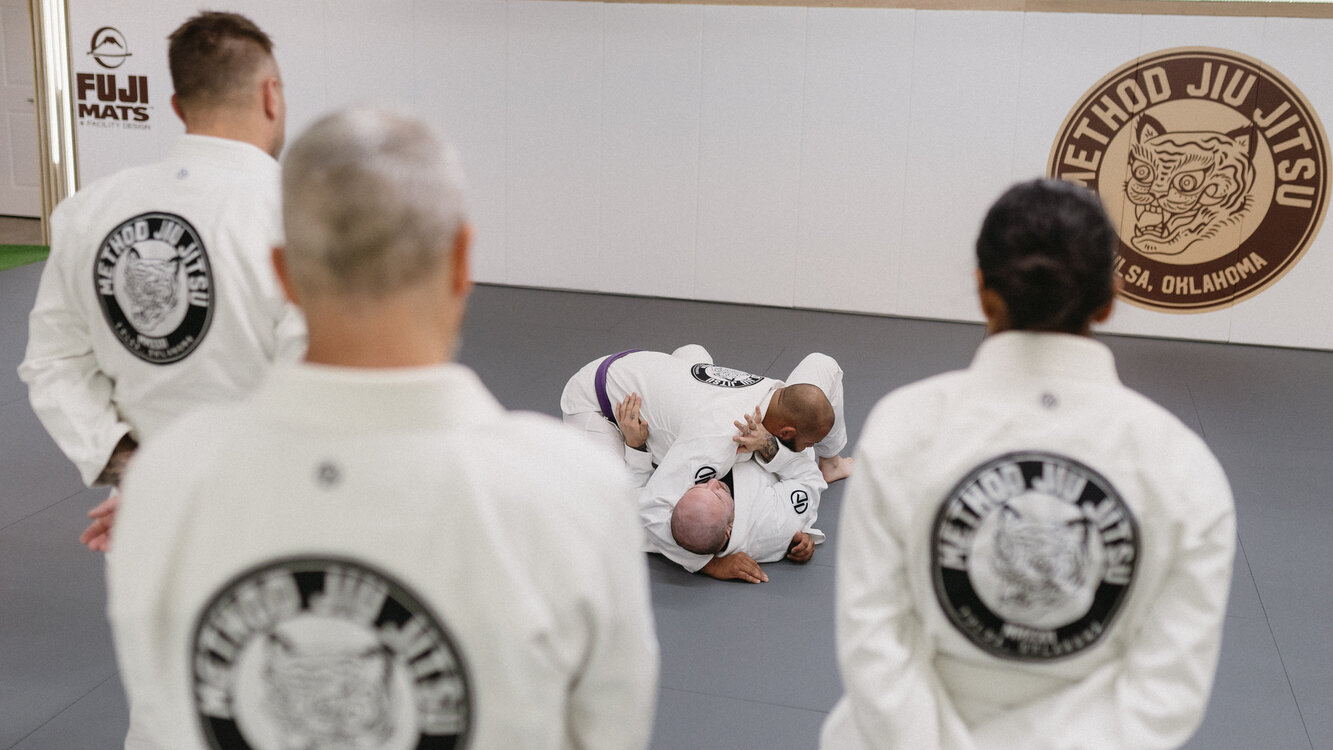
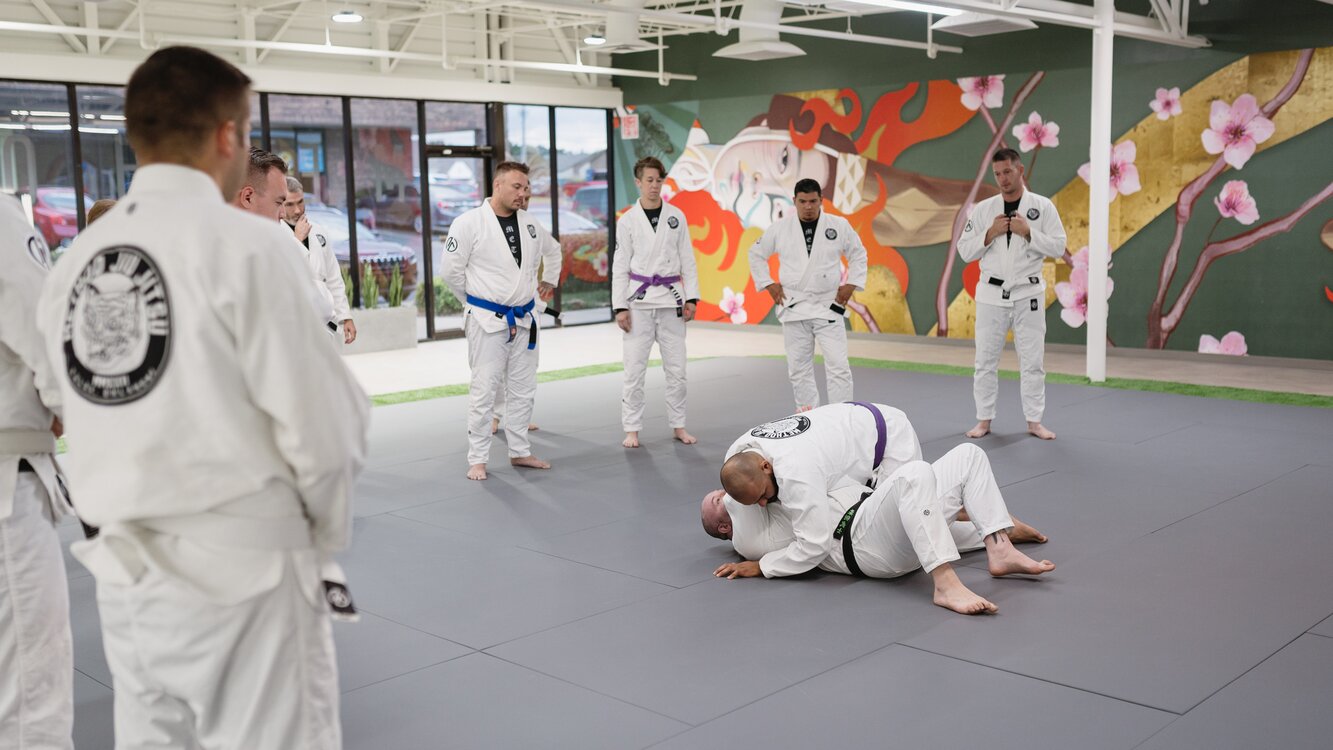
The photo above was taken during class at Method Jiu-Jitsu in South Tulsa. A black belt is flat on his back under a purple belt's chest-to-chest pressure while the group watches. This guide covers how to survive that heavy, pinned feeling, how to make space, and three escapes worth learning first.
What Side Control Looks Like From the Bottom
In side control, your partner lies across you chest to chest, roughly perpendicular to your body, with their legs out to the side instead of between yours. For the full picture from the top, including variations and attacks, see our guide to what side control is. This article stays on the bottom.
Side control usually follows a guard pass or a scramble. From there, your partner can step to mount, take your back, or hunt submissions, so escaping early matters. New to the vocabulary? Our BJJ terminology glossary explains many of the terms you will hear on the mat.
Why Side Control Feels So Heavy
Most beginners describe side control as being stuck under a mattress. That feeling comes from a few controls working together:
- The crossface. Their shoulder drives across your jaw and turns your face away, which makes it hard to turn toward them. That turn is how most escapes start.
- The near side underhook. Their other arm scoops under your near arm or blocks your near hip, keeping your elbow away from your side.
- Chest pressure. A heavy chest and low hips make every breath feel like work.
- Hip blocking. Their knees and hips sit tight against your side, leaving no gap for your knee.
Escapes work by taking these controls away one at a time.
First Priority: Survive Before You Escape
Before you try anything fancy, get safe. A good survival posture buys time and keeps side control from turning into a submission.
- Turn onto your side. Flat on your back, you carry their full weight. Turning toward them, even a little, frees your shoulder and hip to move.
- Keep your elbows tight. Your near elbow stays glued to your ribs and your far arm stays bent and close. Loose elbows get isolated.
- Protect your neck. Keep your chin tucked and never reach your far arm across their head, which can trap your head and arm together.
- Breathe. Slow, steady breaths keep you from panicking and burning out early.
Staying calm under pressure is a skill of its own, which is one reason we wrote about jiu-jitsu for stress relief.
How to Build Frames That Actually Work
A frame is a bent arm or forearm placed against your partner so their weight rests on your bones instead of your chest. Frames do not push. They hold a little distance steady so your hips can do the real work.
- The hip frame. Your near forearm or hand goes against the front of your partner's near hip. It keeps their hips from sliding tight against you and leaves a gap for your knee later.
- The neck or shoulder frame. Your far forearm goes against the side of their neck, their collarbone, or their shoulder. Keep the elbow bent so your arm works like a brace, not a lever.
Good frames are active and shift when your partner shifts. A frame that just sits there gets walked around or pinned, which is why coaches tell you to frame and move at the same time.
Shrimping: The Hip Escape Behind Most Side Control Escapes
Shrimping, also called the hip escape, is the movement that turns a frame into real space. You roll onto one side, push off one foot, and drive your hips back, so your body curls into a shape a bit like a shrimp.
To practice it on your own:
- Lie on your back with both knees bent and your feet flat on the mat.
- Turn onto one side so your weight is on your shoulder.
- Push off your top foot and drive your hips straight back.
- Return to your back and repeat to the other side.
From side control, turn onto your side facing your partner, plant your top foot, and push your hips back and away while your frames hold the distance. Shrimping up and down the mat is one of the most useful habits a beginner can build, and moving on the ground is part of what Fundamentals classes in our beginner BJJ program cover.
Escape 1: Frame, Shrimp, and Recover Guard
This is the escape coaches often teach first, because it uses structure and movement rather than strength. The goal is to get a knee back between you and your partner, which puts you back in some form of guard.
- Turn onto your side facing your partner and set your frames, one forearm at their hip and one at their neck or shoulder.
- Make a small bridge. You are not trying to roll them, only to lift their weight off your hips for a moment.
- As the weight lifts, shrimp your hips away using your top foot.
- Slide your bottom knee into the gap, across the front of their hips. Your knee and elbow should come together and seal the space.
- Trap one of their legs to recover half guard, or keep turning and bring your other leg in to close your closed guard.
Half guard is still a win, and our post on deep half guard shows how much offense can come from there.
Escape 2: Get the Underhook and Come Up to Your Knees
Sometimes your partner blocks your hips so well that there is no room for your knee. Then the underhook escape gives you another direction: up to your knees instead of back to guard.
- Shrimp slightly to create a little room near your partner's hips.
- Swim your near arm under your partner's near arm and reach high on their back. This is your underhook.
- Turn in toward them and drive off your feet to bring your knees underneath you, keeping your head tight against their body.
- From your knees, go for a single leg, come up to your feet, or work toward their back if they are slow to react.
This escape carries more risk than recovering guard, but it turns a bad spot into a scramble you can win. Keep your head tight as you come up so you do not give up a front headlock. If you end up balled up on your knees, our guide to the turtle position explains what to do next.
Escape 3: Catch Half Guard When They Try to Mount
Most top players will not stay in side control forever. To step over to mount, they have to move a leg across your hips, and that transition is one of your best chances.
- Keep your near elbow and near knee close together so there is no clear path across your belly.
- When your partner slides their knee over your stomach, block it with your near elbow and lift your near knee to meet it.
- As their leg comes across, trap it between your legs to lock half guard.
- Get your frames back right away and start working toward a better guard.
If they do make it to mount, our mount escapes guide breaks down the bridge and roll and the elbow knee escape step by step.
When to Move: Timing and Chaining Your Escapes
Strength rarely wins from the bottom of side control. Timing does. Your partner is heaviest when settled and lightest when moving, so the best moments to escape are when they:
- Adjust their grips or switch arm controls
- Try to step over to mount or move up to knee on belly
- Walk around toward your head for north-south
- Reach for a submission and take weight off your hips
Between those moments, stay safe and keep your frames.
The escapes also feed each other. If you shrimp and your partner follows, they often leave space for an underhook. If they squeeze their elbow tight to stop the underhook, their hips tend to drift away, leaving room for your knee. Our side control guide describes how we teach it at Method the same way: as a connected system, introduced in the first months of training.
What If They Switch to Scarf Hold or North-South?
A good top player will move between side control variations. Two you will see often:
- Scarf hold (kesa gatame). Your partner sits up beside you, facing your head, with an arm around your neck and your near arm trapped under their armpit. Fight to free that arm, turn in toward them, and work up toward your knees.
- North-south. Your partner lies chest to chest from above your head, facing your legs. Turn to one side, frame against their shoulders or hips, and use the same hip escape to rotate your legs back underneath them.
The principles do not change: protect your neck, keep your elbows in, frame, and move your hips.
Escaping Side Control From a Bigger, Heavier Partner
Getting stuck under someone fifty pounds heavier is humbling, and it is where technique matters most. BJJ was built around leverage rather than size and strength, and side control escapes show it clearly.
- Let your bones carry the weight. Bent arms with your forearms in the right place hold far more than your muscles can push.
- Make small movements. A short shrimp and a small knee entry are easier to finish than one huge push.
- Wait for transitions. Heavier partners still have to move to attack, and that is when you go.
- Set smaller goals. A knee in or half guard is a real win, even if full guard takes a few more steps.
That idea is at the heart of our women's BJJ program and our post on women's jiu-jitsu in Tulsa. Starting later in life? Our BJJ over 40 page explains how you can train at your own pace.
Common Side Control Escape Mistakes
- Bench pressing. Pushing your partner straight up with extended arms wears you out fast and hands them arm locks such as the americana and kimura, two of the most common submissions from side control.
- Staying flat. Lying on your back gives your partner your whole chest to rest on. Get to your side.
- Turning away. Turning your back to your partner often hands them your back. Most good escapes turn toward them first.
- Exploding too early. A big bridge while your partner is fully settled usually just burns energy.
- Giving up the near elbow. Once your partner gets an arm between your elbow and your ribs, framing gets much harder. Keep that elbow home.
- Holding your breath. Tension and breath holding tire you out in seconds.
Side Control Escapes in the Gi vs No Gi
The core escapes are the same in both. In gi jiu-jitsu, collar, sleeve, and belt grips make your partner's control tighter and open up chokes from side control, such as the paper cutter, so keep your chin tucked and your frames in place.
In no-gi jiu-jitsu, there is nothing to grab but limbs, and sweat makes everyone slippery, so underhooks and scrambles matter more and escapes tend to happen faster. Our gi vs no-gi guide covers the broader differences if you are deciding where to start.
How to Drill Side Control Escapes Safely
Escapes only stick when you practice them against real pressure, but you can build up to that.
- Start with solo movement. Shrimp up and down the mat until the motion feels automatic.
- Drill with a cooperative partner. Your partner holds side control with light pressure while you run each escape slowly.
- Add resistance step by step. Your partner gradually adds weight and starts reacting, the same idea behind our advice on how to drill.
- Finish with positional sparring. The bottom person tries to escape side control while the top person tries to hold. Our sparring guide for beginners explains how these rounds work.
Side control puts a lot of pressure on the chest, jaw, and neck, so tap early if a crossface or choke becomes painful and tell your partner if you need them to ease up. Our guides to whether BJJ is safe and to BJJ etiquette cover the habits that keep partners healthy, and our tips on how to improve at BJJ faster help you get more from every round.
Frequently Asked Questions About Side Control Escapes
What is the easiest side control escape for beginners?
For most beginners, the easiest place to start is the frame and shrimp back to guard. Turn onto your side, set one forearm against your partner's hip and the other against their neck or shoulder, then move your hips away and slide your knee into the space. It relies on structure and movement rather than strength, which is why coaches often teach it first.
Why can't I escape side control?
Most failed escapes come from lying flat on your back, pushing with straight arms, and trying to move while your partner's weight is fully settled. Turn onto your side, keep your elbows close, use your forearms as frames instead of pushing, and save big movements for the moments when your partner shifts their weight or changes position.
How do you escape side control against someone bigger and heavier?
Set your frames so their weight rests on your forearm bones instead of your chest, breathe steadily, and wait for them to adjust or transition before you move. Small, well-timed hip escapes work better than one big push, and getting a knee in or reaching half guard is a good first goal.
Is it safe to push someone off with straight arms in side control?
It is one of the riskiest habits on the bottom. Straight arms give the top player a clear path to arm locks such as the americana and kimura, and reaching your far arm across their head can set up an arm triangle. Keep your elbows bent and close, and use your forearms as frames that hold space instead of pushing.
Where can I learn side control escapes in Tulsa?
Method Jiu-Jitsu in South Tulsa teaches side control in its Fundamentals classes, which cover how to fall safely, how to move on the ground, and the basic positions of guard, mount, side control, and back. Fundamentals meet Monday and Wednesday at 5:30 PM, your first class is free, and every membership includes a premium Method Jiu-Jitsu gi.
Learn Side Control Escapes at Method Jiu-Jitsu in South Tulsa
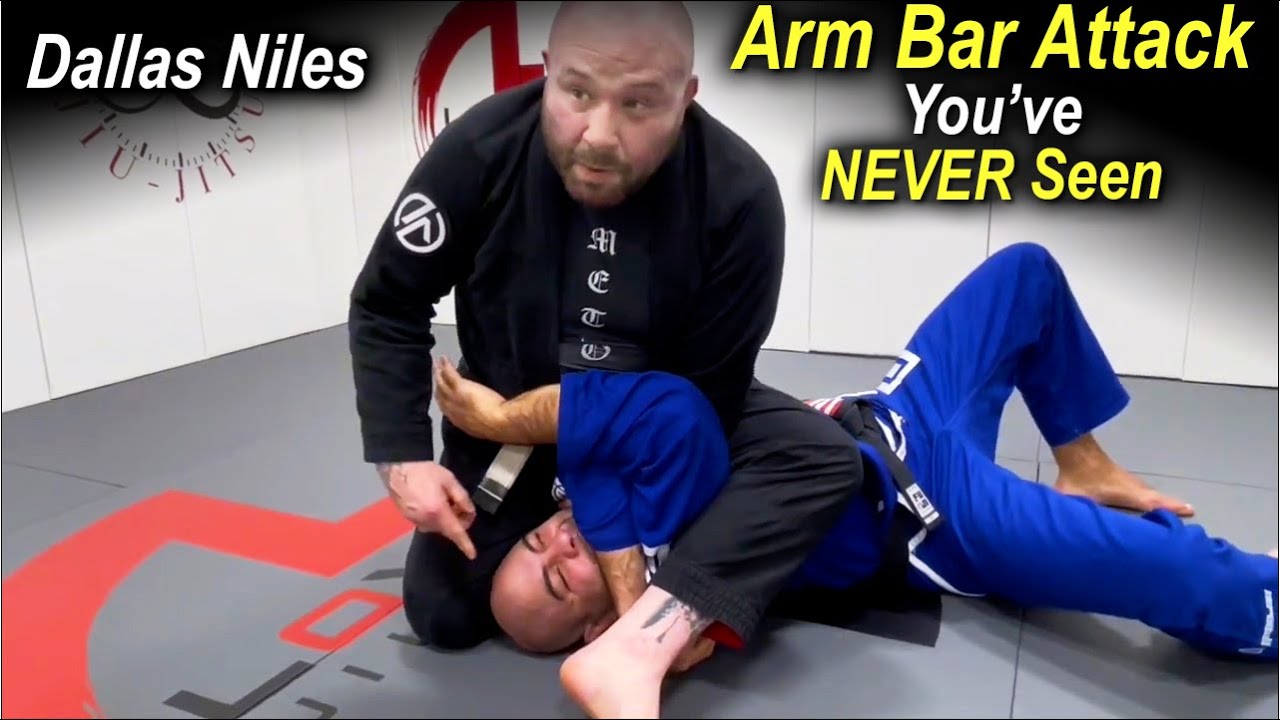
Side control escapes click fastest when a coach can fix your frames and show you where your hips should go. That is what our Fundamentals program is built for. Classes cover how to fall safely, how to move on the ground, and the basic positions, including side control, and they meet Monday and Wednesday at 5:30 PM. The class schedule lists every other adult, kids, competition, and open mat session, and you can read about our head instructor, black belt Dallas Niles, before your first visit.
Method Jiu-Jitsu is located at 8011 S Sheridan Rd, Suite B, Tulsa, OK 74133, in South Tulsa, a short drive from Broken Arrow, Jenks, and Bixby. Every membership includes a premium Method Jiu-Jitsu gi. Book your free first class, read what to expect at your first class, or call us at (918) 995-4692. You can also browse all of our programs, including self-defense classes for anyone who wants to know what to do on the ground.