A BJJ warm up is 10 to 15 minutes of jiu-jitsu movements done at an easy pace that builds as you go: hip escapes, bridges, technical stand ups, rolls, and light partner work. It raises your body temperature, loosens the joints you are about to load, and rehearses the exact movements you will need once training gets real.
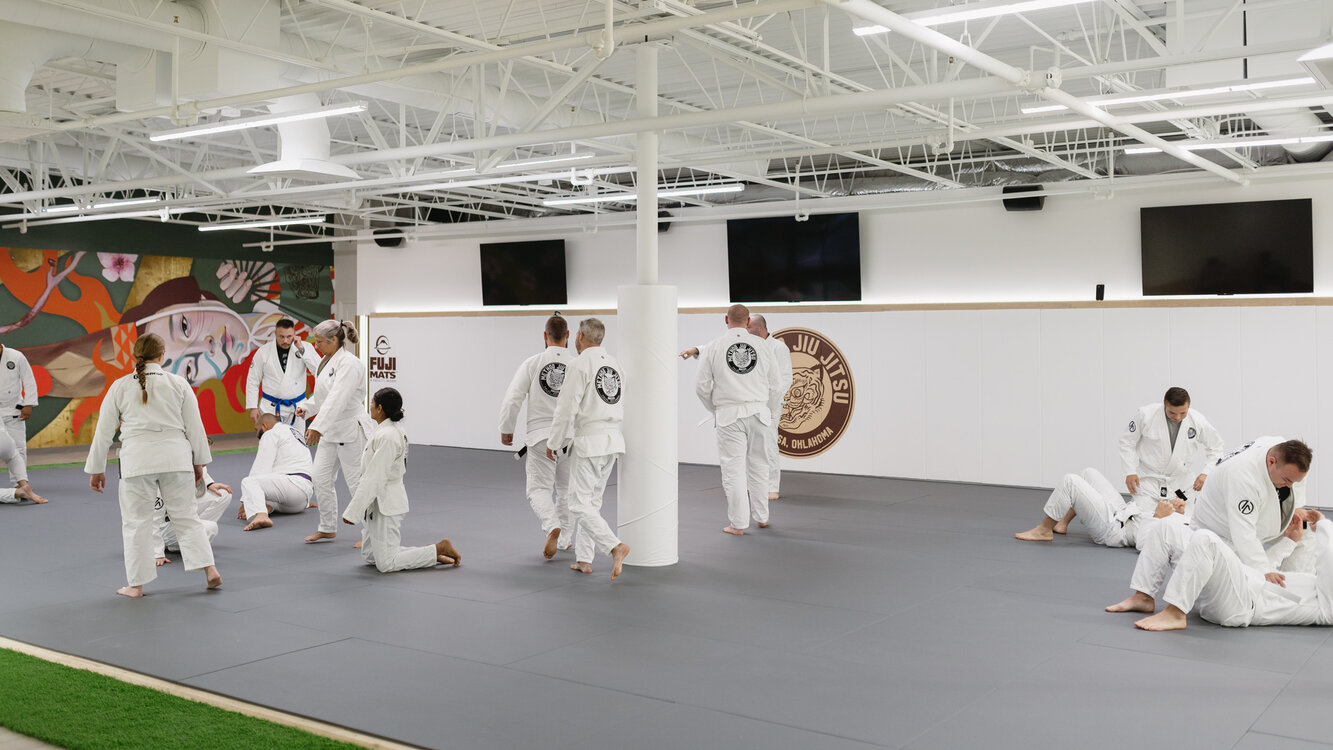
The photo above is from a gi class at Method Jiu-Jitsu in Tulsa, as students move across the mat and pair up for drills. Every class here begins with a group warm up, and new students often ask why it looks nothing like the jumping jacks they remember from gym class. This guide answers that one drill at a time. For the rest of the hour, see what to expect in your first class and what a real BJJ class looks like.
What Is a BJJ Warm Up?
A BJJ warm up is a short sequence of movements taken straight from jiu-jitsu, done at low intensity before technique and sparring. Instead of jogging laps, you move the way grappling asks you to move: on your back, on your side, from your knees to your feet, and over your shoulders.
That makes the warm up two things at once. It is physical preparation, and it is practice. The hip escape you repeat down the length of the mat is the same hip escape you will need when a heavier partner is pinning you in side control. If Brazilian jiu-jitsu is new to you, think of the warm up as learning the alphabet before you start reading.
What a Warm Up Actually Does for Your Body
Mayo Clinic explains that a warm up raises your body temperature and increases blood flow to your muscles, and that it may help lower muscle soreness and lessen injury risk. It describes a good warm up as the movements of your sport done at a slow pace that gradually builds, enough to cause mild sweating but not enough to leave you tired.
The research on performance is encouraging. A 2010 review in the Journal of Strength and Conditioning Research pulled together 32 high quality studies and found that warming up improved performance in 79 percent of the measures examined, with little evidence of harm.
The research on injuries is less settled, and we would rather be straight with you about that. A 2006 review of randomized trials in the Journal of Science and Medicine in Sport found there was not enough evidence to say for certain that warming up prevents injuries, although the weight of the evidence leaned toward a lower risk. Mayo Clinic agrees there is debate, but notes that a proper warm up poses little risk. Think of it as cheap insurance, not a guarantee. Our guide to BJJ safety covers the other habits that matter just as much, like tapping early and choosing partners who match your intensity.
How Every Class Starts at Method Jiu-Jitsu
Every class at Method begins with a group warm up that runs about 10 to 15 minutes. The movements are specific to jiu-jitsu. For adults that usually means hip escapes, bridging, technical stand ups, forward and backward rolls, and guard retention drills, and every one of those movements connects to positions you will use later on the mat.
The format changes with the class:
- Kids: our kids jiu-jitsu classes open with about 10 minutes of movement games and drills that build coordination, body awareness, and listening skills.
- Teens: teen classes start with a group warm up that gets everyone moving and focused before technique begins.
- Competitors: competition classes open with about 15 minutes of movement drilling, including shrimping, granby rolls, guard recovery drills, and takedown setups that match the theme of the day.
Hip Escapes (Shrimping)
What it prepares you for: making space when someone is on top of you.
Lie on your back with your knees bent and your feet flat. Push off one foot, turn onto your side, and drive your hips away as if you were sliding them out from under a weight, with your hands framing in front of you. Come back to your back and repeat to the other side, traveling down the mat as you go.
The most common mistake is moving your shoulders instead of your hips. Think hips back, not head forward. Our BJJ terminology glossary calls the shrimp the most important movement in jiu-jitsu, and once you feel it inside the side control escapes and mount escapes you learn in class, the reason is obvious.
Bridging (Upa)
What it prepares you for: getting someone off you when they are sitting on your chest.
Start on your back with your feet flat and close to your hips. Drive through your feet to lift your hips as high as you can, then turn over one shoulder so your hips finish pointing up and across your body. Come down with control and alternate sides.
Keep your head light on the mat instead of pushing into it with your neck. The bridge is the engine behind the classic bridge and roll escape from mount, where you trap an arm and a foot on one side and roll your partner over that side. In Portuguese it is called the upa, which is why you will hear both names on the mat.
Technical Stand Up
What it prepares you for: getting back to your feet safely when someone is standing in front of you.
Sit on the mat with one hand posted behind you and the opposite foot planted, keeping your free arm up in front of your face. Lift your hips off the mat using the posted hand and planted foot, swing your other leg back underneath you, and stand up into a balanced stance a step away from where you started.
Beginners tend to stand straight up, which leaves their head and hands exposed. The technical stand up keeps one hand on the mat for base and one arm up for protection until you are fully on your feet. It is one of the most practical skills in our self-defense program, because getting knocked down is far less dangerous when you know how to stand back up without being tackled again.
Forward, Backward, and Granby Rolls
What they prepare you for: moving through scrambles without landing on your head or neck.
A forward shoulder roll travels diagonally across your back, from one shoulder to the opposite hip, so your head never touches the mat. A backward shoulder roll works the same way in reverse: sit back, turn your head to one side, and roll over the opposite shoulder onto your knees. In both, a tucked chin is the whole game.
The granby roll comes from wrestling. It is a shoulder roll that takes you from your knees onto your back so your legs end up between you and your partner, which makes it one of the most common beginner escapes from the turtle position. Rolls are inversions, so take them slowly while you learn, and tell the coach before class if you have a neck or back problem so you can swap in a different movement.
Sprawls, Sit Outs, and Breakfalls
What they prepare you for: defending takedowns, turning from your base, and falling without getting hurt.
A sprawl is takedown defense. From your stance, shoot your legs back, drop your hips toward the mat, and land with your chest heavy, as if a partner were driving into your legs. Then pop back up to your stance. Every match starts standing, which is why both takedowns, like the over-under throw Coach Dallas breaks down here, and takedown defense belong in your training.
A sit out starts on your hands and feet, facing the mat. Lift one hand, thread the opposite leg underneath your body so your hips turn toward the ceiling, then come back and switch sides. It builds the same hip turn you use to sit through and face your partner from turtle.
A breakfall is the skill of landing safely. As you fall back, tuck your chin and slap the mat with your arms angled out from your body so your arms absorb the impact instead of your head and spine. Some coaches use the Japanese name, ukemi. It is worth practicing long before you ever get thrown.
Partner Warm Ups: Pummeling, Guard Retention, and Flow Rolling
What they prepare you for: feeling a resisting body before the rounds start.
Pummeling is a standing partner drill where you take turns sliding an arm under each other's armpit, called an underhook, and swimming it back out in a steady rhythm. It teaches you to fight for inside position without straining.
Guard retention drills put one partner on their back while the other walks around their legs at an easy pace. The bottom partner uses feet, knees, and hips to keep facing the passer. It is a gentle version of what happens in guard passing, and it warms up your hips in a way no solo drill can. If the guard is new to you, start there.
Flow rolling is slow, cooperative grappling where nobody tries to win. It sits between drilling and sparring, and it is a good way to finish a warm up before live rounds.
Dynamic Warm Up vs Static Stretching
A dynamic warm up means moving through the motions of your sport at a low, slow pace and building from there, which is exactly what the drills above do. Static stretching means holding one position, like reaching for your toes for 30 seconds.
Both have a place, but the order matters. Mayo Clinic's guidance on stretching is blunt: don't consider stretching a warmup, because stretching cold muscles can hurt you, and holding long stretches right before intense activity may reduce performance. Its advice is to warm up first and stretch afterward, when your muscles are warm.
For jiu-jitsu, that means saving long hip, hamstring, and shoulder stretches for after class. If flexibility and conditioning are part of why you train, our page on BJJ for fitness explains how the two build together over time.
Common BJJ Warm Up Mistakes
- Racing to the wall. Clean reps at an easy pace do more for you than fast, sloppy ones.
- Going so hard you are gassed before technique. A warm up should leave you sweating lightly, not breathing too hard to listen.
- Loading your neck. Tuck your chin on rolls and go over the shoulder, never straight over your head. If your class includes neck bridges, build into them gradually.
- Holding your breath. Breathe through every rep. Calm breathing on easy drills makes it easier to stay calm when rounds get hard.
- Skipping it because you are late. Our BJJ etiquette guide covers this: enter quietly, bow, and wait for your instructor to acknowledge you before joining. Then take a minute to move before you jump into anything hard.
Adjusting the Warm Up for Your Body
If you are over 40: our safety guide recommends increasing warm up time as you get older, along with less sparring volume and more drilling. In practice, that can mean arriving a few minutes early to move on your own before the group starts. Members in our over 40 program most often train two to three times a week, which leaves room to recover between sessions.
If you are starting jiu-jitsu as an adult: expect hip escapes and rolls to feel awkward at first and routine with repetition. The warm up is often where adults notice their first progress.
If you have an injury: tell the coach before class starts. Most drills have an easier version, and you can skip any movement that aggravates the problem. For anything more than everyday soreness, check with your doctor or a physical therapist, which is the same advice Mayo Clinic gives about stretching with an injury.
A 10 Minute BJJ Warm Up You Can Do on Your Own
This routine works before an open mat (our class schedule lists open mat sessions), before a tournament, or any day you get to the academy early. Each block builds on the one before it:
- Minutes 1 to 2: easy movement to raise your heart rate, such as jogging in place, arm circles, hip circles, and leg swings.
- Minutes 3 to 4: bridges and hip escapes down the mat and back.
- Minutes 5 to 6: technical stand ups and sprawls, alternating sides.
- Minutes 7 to 8: forward and backward shoulder rolls, then granby rolls if you already know them.
- Minutes 9 to 10: sit outs, then a minute of slow shadow movement where you run through an escape or guard recovery on your own.
You should finish with a light sweat and plenty left in the tank. Doing a short routine like this between classes is also one of the easiest ways to work on your movement quality, a big part of improving faster.
How to Warm Up Before a Tournament Match
Tournament days involve a lot of waiting, followed by a sudden call to the mat. Our first BJJ tournament checklist puts it simply: arrive early enough to check in and move before your first match, but do not turn the warm up into another match. Light movement, a few familiar entries, and controlled positional rehearsal are plenty.
Use the routine above, listen for bracket calls, and stay warm between matches. Our competition team travels and warms up together at events, so nobody has to figure this out alone.
Frequently Asked Questions
How long should a BJJ warm up be?
Most BJJ warm ups run 10 to 15 minutes, which is how long the group warm up lasts at the start of every class at Method Jiu-Jitsu. On your own, about 10 minutes of jiu-jitsu movements done at a building pace is enough for most people. Aim for a light sweat without feeling tired before technique starts.
Do warm ups prevent injuries in jiu-jitsu?
They may help, but they are not a guarantee. A 2006 review of randomized trials in the Journal of Science and Medicine in Sport found too little evidence to say for certain that warming up prevents sports injuries, though the weight of the evidence pointed toward a lower risk. Mayo Clinic notes that a proper warm up poses little risk and may lessen injury risk, so it is worth doing every time you train.
Should you stretch before BJJ class?
Save long, held stretches for after class. Mayo Clinic advises against treating stretching as a warm up, because stretching cold muscles can cause injury and long stretches right before intense activity may reduce performance. Start with a dynamic warm up of jiu-jitsu movements, then stretch once your muscles are warm.
What are the most common BJJ warm up drills?
The most common BJJ warm up drills are hip escapes (shrimping), bridging, technical stand ups, forward and backward shoulder rolls, granby rolls, sprawls, sit outs, and breakfalls. Many classes add partner drills such as pummeling, guard retention, or slow flow rolling before live rounds.
Do I need to know the warm up drills before my first BJJ class?
No. Coaches teach every warm up movement, and nobody walks in doing them correctly. At Method Jiu-Jitsu, the group warm up at the start of each class is where new students learn hip escapes, bridges, technical stand ups, and rolls. Arrive 10 to 15 minutes early, wear athletic shorts and a t-shirt, and follow along at your own pace.
Start Your Warm Up at Method Jiu-Jitsu in South Tulsa
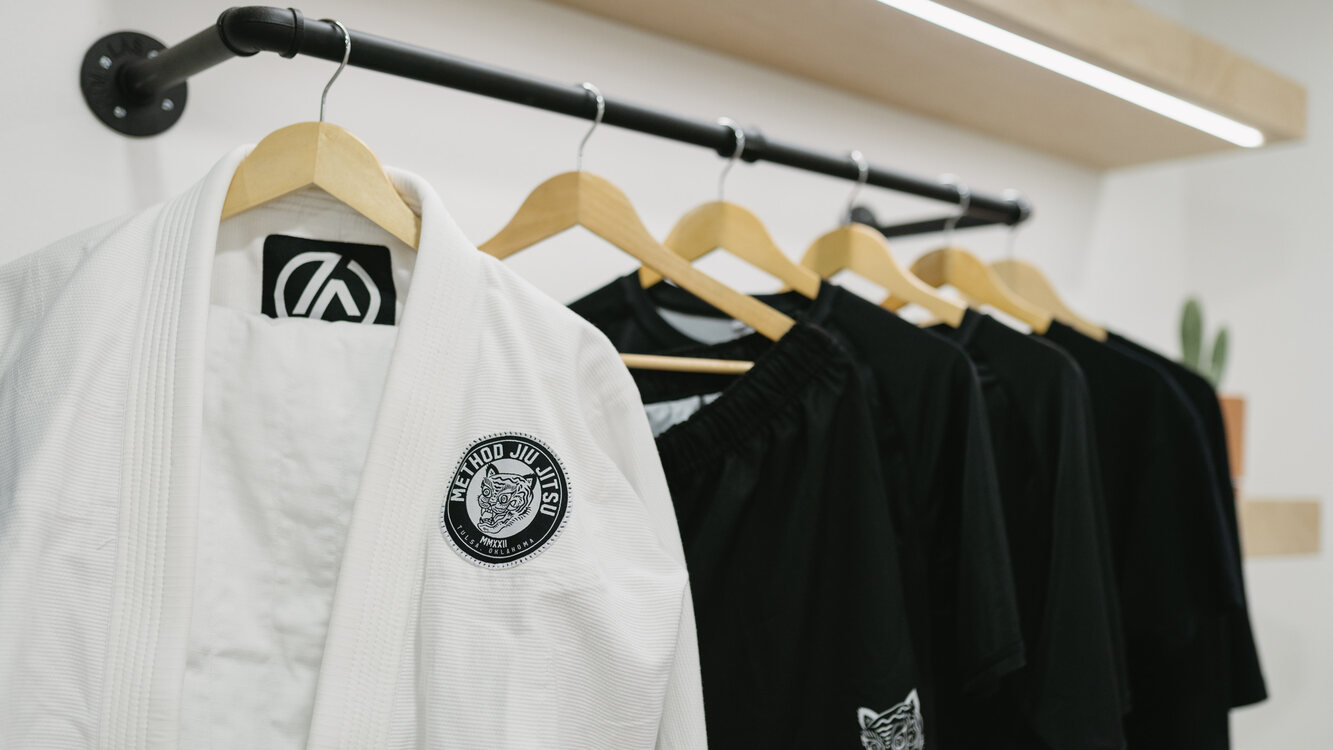
The best place to learn these drills is on the mat with a coach watching. If you are new, our Fundamentals classes meet Monday and Wednesday at 5:30 PM, your first class is free, and every membership includes a premium Method Jiu-Jitsu gi. Meet Coach Dallas Niles and our team, see how our gi and no-gi programs differ, browse all of our programs, or book your free class. Curious how progress is measured once you start? The BJJ belt system guide explains every rank.
We train at 8011 S Sheridan Rd, Suite B, Tulsa, OK 74133, a short drive for students from South Tulsa, Broken Arrow, Jenks, and Bixby. Call (918) 995-4692 with any questions.